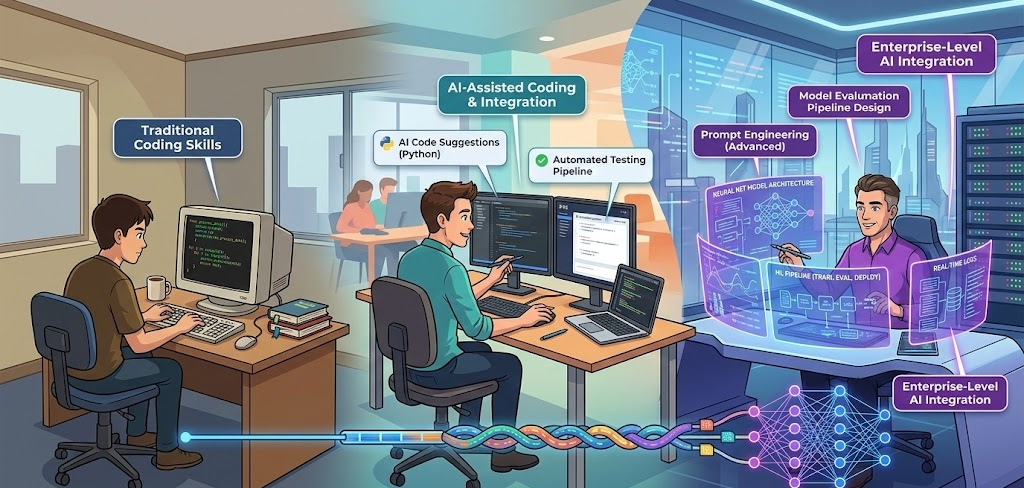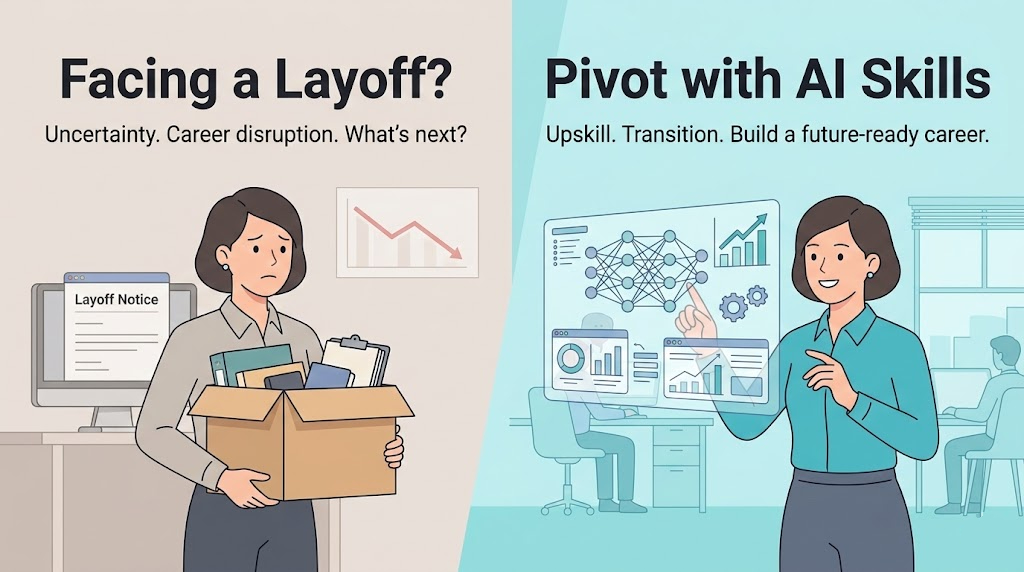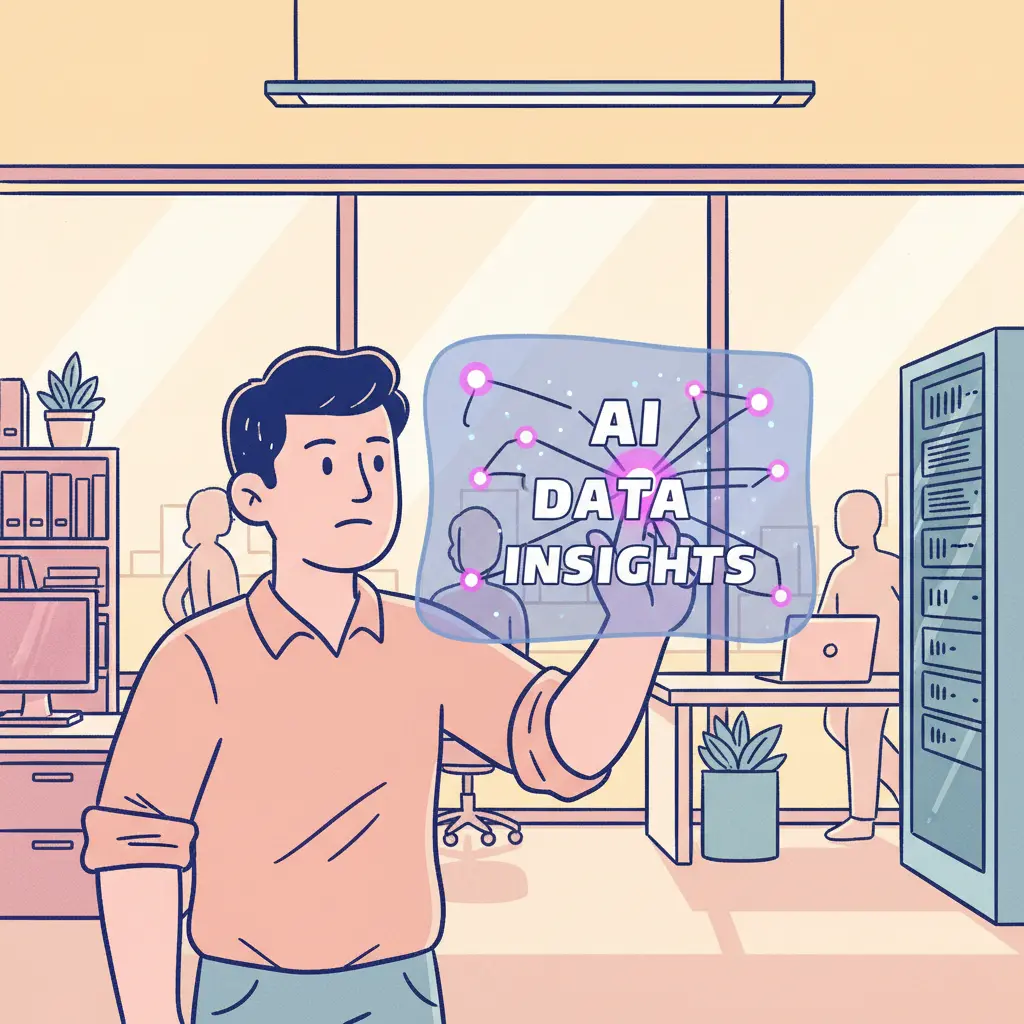

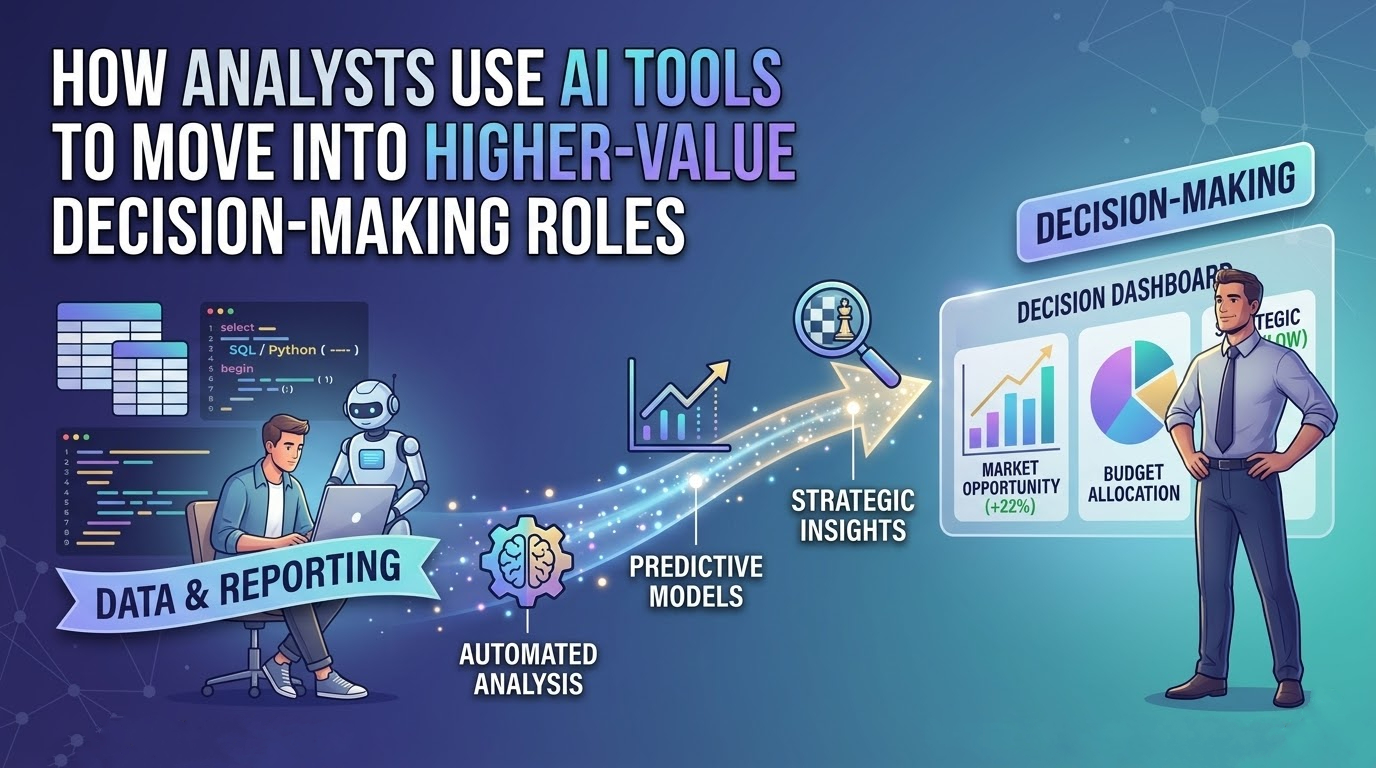
Analytics roles are rapidly evolving as artificial intelligence automates routine tasks such as data preparation and basic reporting. Organizations now expect analysts to focus more on strategic interpretation and decision support rather than manual analysis.
According to Deloitte, 69% of organizations in early-adopter markets already use autonomous AI agents, shifting analysts toward overseeing automated insights and actions. Similarly, 60% of executives regularly rely on AI for decision support, while McKinsey & Company reports that AI agents can improve productivity by up to 25%.
To understand how analysts use AI tools today, one must also understand what artificial intelligence is. The two fields are now merged because of the growing demand for artificial intelligence (AI).
Professionals limited to basic queries risk stagnation, while those who leverage AI to solve complex business problems are advancing into more strategic, high-value roles.
Here is how successful professionals are making the shift:
How AI Enables Analysts to Create High-Impact Insights
1. Shift From Manual Reporting To Insight Generation
In the past, analysts spent most of their days fixing broken spreadsheets and building simple dashboards.
Today, the demand is for rapid insights rather than just updated charts. By using tools like Microsoft Copilot, Tableau Pulse, or Alteryx, professionals can automate the tedious parts of data cleaning and routine reporting.
The core skill now is knowing which business questions to ask, rather than writing the SQL code from scratch. This shift allows you to act as a strategic advisor who focuses on the following key areas:
- Automating data cleaning and table joins so you spend your time interpreting data patterns instead of preparing data.
- Using AI copilots to quickly summarize large datasets and generate natural-language answers to "why did this metric drop?"
- Shifting your daily focus from executing repetitive tasks to identifying the next best action for the business.
Understanding using AI to automate reporting is the first step in this journey. If you want to see how these efficiencies translate to the wider organization, reading about AI and automation to improve employee productivity provides excellent context for how your role impacts the entire company.
2. Turn Raw Data Into Decision Scenarios
Raw data is rarely useful to business leaders who need to make fast choices. Using platforms like Snowflake Cortex, analysts can quickly process huge volumes of unstructured data without needing advanced statistical backgrounds.
The high-value skill here is scenario planning, mapping out what the business should do next based on the data. You can transform raw numbers into strategic choices by focusing on:
- Relying on AI to handle the heavy lifting of data preparation allowing you to focus purely on context and meaning.
- Moving beyond the simple question of "what does the data say" to answering "what are our strategic options?"
- Presenting leaders with clear best-case and worst-case scenarios based on the patterns the AI highlights.
While understanding the shift toward decision scenarios is vital, executing it requires a structured mastery of the modern analytics stack.
To transition from an analyst who merely "reports" to one who "advises," you need a formal framework that aligns technical execution with executive strategy.
The Online Data Analytics Essentials Program from the McCombs School of Business at UT Austin is specifically designed to facilitate this move into higher-value roles.
UT Austin Data Analytics Essentials Program
Build a strong foundation in data analytics with no prior coding experience. Master Python, SQL, Excel, and Tableau to transform data into actionable business solutions.
How does this program help?
- Mastering the Four Stages of Value: You will learn to navigate the full spectrum of analytics, Descriptive, Diagnostic, Predictive, and Prescriptive. This allows you to move beyond explaining "what happened" to recommending "how to win," which is the hallmark of a high-value analyst.
- Command of the "Power Stack": AI tools are only as good as the data feeding them. You will gain hands-on proficiency in SQL, Python, Excel, and Tableau, ensuring you have the technical authority to audit and direct AI-generated insights.
- Translating Data into Strategy: The program focuses on Business Problem Solving, teaching you how to align data projects with organizational goals so your work directly influences the C-suite.
- Strategic Visualization: You will master Data Visualization and Storytelling, transforming complex AI outputs into clear, persuasive narratives that drive immediate executive action.
By building these capabilities, you move beyond simply analyzing data to actively shaping business decisions.
3. Use Predictive And Prescriptive Models To Shape Strategy
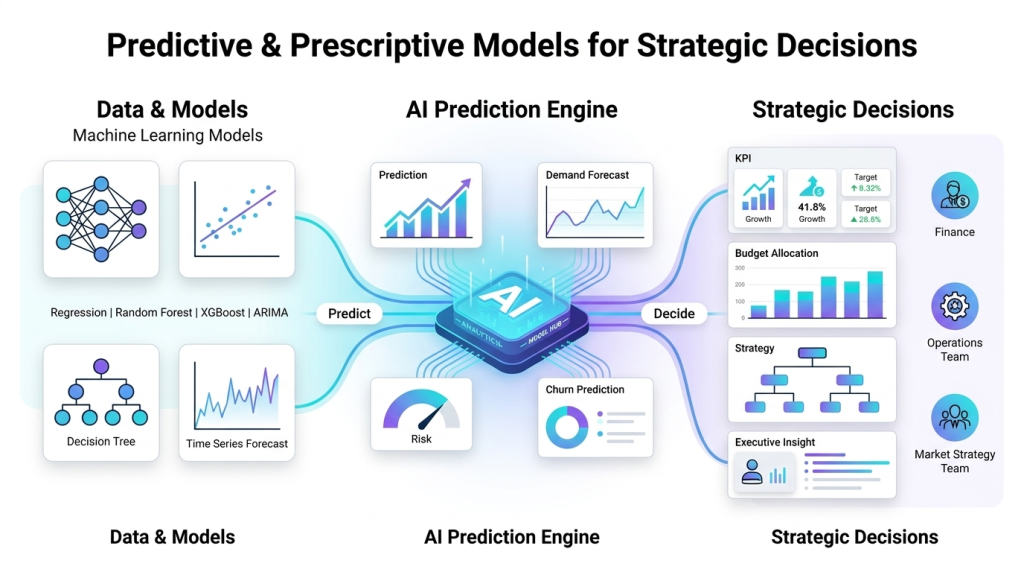
Analysts can use tools like DataRobot, AWS SageMaker, or H2O.ai to run machine learning models such as Linear Regression, Random Forest, Gradient Boosting (XGBoost), Neural Networks, and Time Series models like ARIMA. These models help predict customer churn, market demand, or revenue risks.
The required skill is no longer just building the model, but translating its predictions into strategic actions such as budget shifts or policy changes. Analysts create value by:
- Letting machine learning models handle the complex math of forecasting risk and demand while focusing on business impact.
- Designing stress tests to ensure model assumptions hold under different market conditions.
- Translating technical predictions into clear portfolio decisions or operational recommendations for executives.
To see exactly how this works in practice, you can explore how generative AI can enhance predictive analytics and modeling. Additionally, reading up on machine learning in business: how to get started will help you align these technical tools with real-world business goals.
4. Use AI as a Thinking Partner For Hypotheses
When faced with a sudden drop in sales or a spike in user growth, finding the root cause can be like finding a needle in a haystack.
Today, analysts use conversational AI tools like ChatGPT and Microsoft Copilot to brainstorm potential drivers and segments instantly.
The market demand has shifted from simple "query executors" to "hypothesis architects." Your value comes from your domain knowledge and critical thinking, which you apply by:
- Prompting AI tools to generate a wide range of possible causes or customer segments for any given business problem.
- Using your unique industry knowledge to validate, refine, and test the ideas the AI suggests.
- Framing the right decision questions and designing targeted tests to prove or disprove the AI-generated theories.
Using tools like ChatGPT for data analysts can drastically speed up your workflow and help you overcome blank-page syndrome. If you want to understand the core logic behind these tools, the Foundations of AI program is a great next step. This free course provides foundational knowledge in AI.
5. Integrate External Signals Into Decision Frameworks
Internal company data is no longer enough to make safe decisions in a fast-moving economy. Leaders need to know what competitors are doing, what the news is saying, and how the overall market is shifting.
Analysts must use AI tools like AlphaSense or specialized AI agents to read and summarize thousands of news articles, earnings calls, and customer reviews in seconds.
The crucial skill here is contextual intelligence. You become indispensable by managing these insights through the following actions:
- Using AI to constantly ingest and summarize macro data, news, and competitor moves to spot weak market signals early.
- Weighing these external signals against internal data to find conflicts or validate current business strategies.
- Updating your company's decision frameworks for pricing or market entry based on a complete view of the global landscape.
This level of broad analysis is a key part of using generative AI for business to stay ahead of the competition. For professionals who want to lead these advanced initiatives, the AI for Business Innovation: From GenAI to PoCs program is ideal. This premium academy course covers AI for business innovation, moving from GenAI to PoCs.
AI for Business: From GenAI to POCs
Learn how AI drives business innovation, from GenAI to POCs. Gain practical skills to implement AI solutions and lead in your industry.
6. Build Always-On Monitoring Instead Of One-Off Reports
Business moves too fast to wait for an end-of-month review. Leaders need to know what is happening the exact moment a trend shifts.
In the past, analysts pulled ad hoc reports whenever a manager had a question. Today, professionals use real-time streaming tools like Splunk, Datadog, or the AI-driven alert features within Power BI and Tableau.
The core skill has shifted from running queries to designing intelligent alert systems. Your focus moves to proactive risk management by acting on the following areas:
- Replacing manual, ad-hoc data requests with automated, AI-driven monitors that detect anomalies the second they happen.
- Prioritizing which alerts actually matter to the business to prevent managers from suffering from alert fatigue.
- Recommending immediate interventions to leadership based on the live, real-time trade-offs presented by the data.
To build effective automated monitoring systems, professionals must master core business intelligence tools. Courses such as the Data Visualization with Power BI certificate program and Tableau Data Visualization Essentials help develop skills in data modeling, advanced visualizations, interactive dashboards, and data storytelling.
Through hands-on projects and practical training, these programs prepare professionals to create dynamic dashboards and deliver clear, data-driven insights in modern BI environments.
7. Design Decision Processes And Guardrails
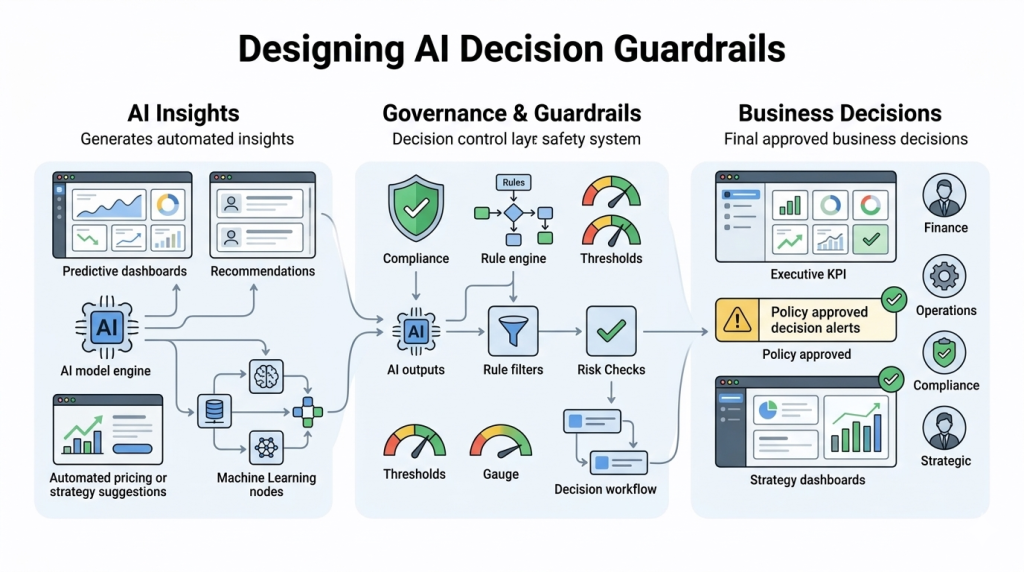
AI models are powerful, but they are not perfect. A model might suggest a highly profitable pricing strategy that legally or ethically violates company policy.
Because of this, analysts now act as the bridge between raw AI outputs and actual business execution. Using platforms like IBM Watsonx or custom rule engines, you must build the safety nets that guide how the business uses automated insights.
The highly valued skill here is governance and risk management, which you execute by:
- Using AI outputs to help define clear business rules, thresholds, and operational playbooks for the wider team.
- Owning the decision architecture to determine exactly when to trust the AI model and when a human must override it.
- Aligning all automated decisions with company ethics, regulatory compliance, and long-term business strategy.
These governance and architecture capabilities are the core AI skills leaders must master to succeed at the highest levels of any modern organization.
8. Automate Narrative And Visuals, Own The Storyline
Data without a clear, compelling story is just noise that executives will ignore. Previously, creating slide decks, formatting charts, and writing executive summaries took days of manual effort.
Now, tools like Microsoft Copilot for PowerPoint or Canva AI can draft these visuals instantly. The analyst's job is no longer to draw the chart, but to ensure the chart tells the right truth. You secure your seat at the decision-making table by:
- Letting AI draft the initial report outlines, executive summaries, and baseline visuals directly from your data analysis.
- Refining the core message to ensure the true business narrative is not lost in automated, robotic text.
- Framing business risks and strategic options clearly so the story resonates and drives action from different decision-makers.
By combining AI-powered tools with strong business understanding, professionals can move beyond routine analysis and directly influence strategy, risk management, and organizational growth.
You can test your readiness for this level of tailored advisory by taking targeted quizzes to assess your current knowledge gaps. From there, reviewing detailed careers and roadmaps will help you align your learning path with the specific stakeholder roles you want to advise.
Those who embrace this shift will position themselves as key drivers of data-driven decision-making in modern enterprises.
Conclusion
The integration of artificial intelligence into the workplace does not replace data analysts; rather, it elevates their role.
As AI automates routine tasks such as data cleaning and standard reporting, professionals can focus on higher-value work like strategic analysis, business context, and complex problem-solving.
Organizations now seek individuals who can apply digital skills to solve real business challenges. By leveraging AI and strengthening capabilities in critical thinking and business strategy, data analysts can position themselves as essential contributors to organizational success.