AI in Operations Management Free Course
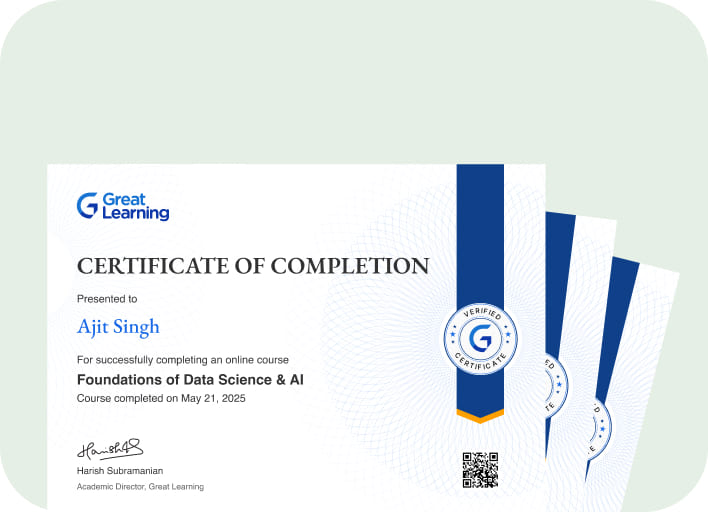
AI Applications in Operations Management
 4.69
Beginner level
3.0 learning hrs
4.69
Beginner level
3.0 learning hrs
Learn operations basics, AI/ML, forecasting, inventory, supply chains, route planning, predictive maintenance, quality control, and automation. Join this operations management course with AI to improve workflows and decisions.



What you'll learn


About this course
This AI in Operations Management free course equips you with the essential skills to understand how AI improves business operations, workflow efficiency, and decision-making. You’ll learn operations management fundamentals, including how inputs become outputs and how teams manage flow, capacity, demand, inventory, quality, and continuous improvement. The course also covers AI and machine learning basics, including text reading, computer vision, forecasting, and optimization capabilities used in operations.
You’ll learn how AI supports demand forecasting, inventory and supply chain optimization, delivery route planning, predictive maintenance, quality control, reporting and summarizing, and rule-based workflow automation. Through case studies from Amazon, retail forecasting, and factory maintenance, you’ll see how AI solves real operations problems. By the end of this free AI for business operations course, you’ll be able to identify where AI adds value, prepare data, tools, and teams for adoption, measure results, scale AI responsibly, and build future-ready skills in autonomous agents, digital twins, and self-managing supply chains.
Course outline
Operations Management Foundations
In this module you'll learn what operations management is, how inputs become outputs, and the core building blocks every operation balances: flow, capacity, demand, inventory, quality, and continuous improvement.
AI Foundations for Operations
In this module you'll learn what artificial intelligence is, how machine learning finds patterns in data, and the everyday AI capabilities like text reading, computer vision, forecasting, and optimization that power operations.
AI Across the Core Operations Functions
In this module you'll learn how AI sharpens demand forecasting, optimizes inventory and supply chains, plans delivery routes, and prevents equipment breakdowns and product defects through predictive maintenance and quality control.
Advanced AI Tools for Operations
In this module you'll learn how to use generative AI assistants for daily work like reports and summaries, and how to automate repetitive, rule-based workflows to free staff for higher-value tasks.
AI Operations in Action - Case Studies
In this module you'll learn from real examples how Amazon runs AI-powered warehouses, how a footwear retailer cut lost sales with forecasting, and how predictive maintenance reduced factory downtime.
Implementing AI in Your Operations
In this module you'll learn how to find the right problems for AI, prepare your data, tools, and people, and launch, measure, and scale AI responsibly with human oversight.
The Future of AI in Operations
In this module you'll learn where AI in operations is heading, including autonomous AI agents, digital twins, self-managing supply chains, and the skills professionals need to stay valuable.
Get access to the complete curriculum once you enroll in the course
This course is ideal for
- Beginners wanting to learn how AI supports operations management.
- Students and job seekers exploring operations management roles.
- Working professionals who manage supply chains and inventory.
- Learners who want an AI in operations management certificate.
 4.69
4.69












Frequently Asked Questions
Will I receive a certificate upon completing this free course?
Is this course free?
What will I learn in this AI in Operations Management free Course?
You’ll learn how AI improves operations management across forecasting, inventory, supply chains, delivery routes, predictive maintenance, quality control, reporting, workflow automation, and responsible implementation. The course also covers the basics of operations, such as flow, capacity, demand, inventory, quality, and continuous improvement.
Is this course suitable for beginners?
Yes, this course is designed for beginners who want to understand operations management with AI. It starts with operations fundamentals, then explains AI, machine learning, forecasting, optimization, computer vision, generative AI assistants, and automation in simple business terms.
What topics are covered in this Operations management with AI free course?
The course covers the following modules:
Operations Management Foundations
AI Foundations for Operations
AI Across the Core Operations Functions
Advanced AI Tools for Operations
AI Operations in Action - Case Studies
Implementing AI in Your Operations
The Future of AI in Operations
What skills will I gain from this AI for business operations free course?
You’ll gain the following skills:
Operations management fundamentals
AI and machine learning basics
AI demand forecasting
Supply chain and inventory optimization
predictive maintenance
quality control
Generative AI literacy
workflow automation
ROI evaluation
oes this course teach AI process optimization for beginners?
Yes, the course explains how AI supports process optimization by finding patterns in data, improving forecasts, reducing repetitive work, supporting faster reporting, optimizing routes, preventing equipment downtime, and improving operational decisions with human oversight.
What operations management concepts will I learn?
You’ll learn what operations management is, how inputs become outputs, and how teams balance flow, capacity, demand, inventory, quality, and continuous improvement. These concepts help you understand how businesses deliver products and services efficiently.
What AI concepts are included in the course?
The course introduces artificial intelligence, machine learning, pattern recognition, text reading, computer vision, forecasting, and optimization. These concepts help you understand how AI tools support daily operations and business decision-making.
How does AI help in demand forecasting and inventory management?
AI helps analyze historical data, detect demand patterns, improve forecast accuracy, and support smarter inventory decisions. This can help businesses reduce stockouts, avoid excess inventory, improve planning, and respond faster to customer demand.
Does the course cover supply chain and route planning?
Yes, the course explains how AI supports supply chain and inventory optimization, as well as delivery route planning. You’ll learn how AI can help operations teams improve visibility, reduce delays, plan routes, and make supply chains more efficient.
Will I learn about predictive maintenance and quality control?
Yes, the course covers predictive maintenance and quality control. You’ll learn how AI can help identify equipment failure risks before breakdowns happen and detect product defects earlier, improving reliability, reducing downtime, and supporting better quality outcomes
Does this Free AI in operations management course with certificate include real-world case studies?
Yes, the course includes real-world examples such as Amazon’s AI-powered warehouses, a footwear retailer using forecasting to reduce lost sales, and predictive maintenance helping reduce factory downtime. These examples show how AI is applied in actual operations settings.
How does this course teach generative AI for operations?
The course explains how generative AI assistants can support daily operations tasks such as writing reports, creating summaries, organizing information, and reducing repetitive work. This helps teams save time and focus on higher-value business activities.
What will I learn about implementing AI in operations?
You’ll learn how to identify the right problems for AI, prepare data, tools, and teams, launch AI projects, measure results, scale responsibly, and maintain human oversight. This helps you understand AI adoption beyond tools alone.
Why should I learn AI applications in operations management?
Learning AI applications in operations management helps you understand how modern teams improve efficiency, reduce waste, forecast demand, optimize resources, automate workflows, and make better operational decisions. These skills are useful for business, supply chain, manufacturing, logistics, and operations roles.
What outcome should I expect after completing this course?
By the end, you’ll be able to explain how AI supports operations management, identify practical AI use cases, understand key tools and techniques, assess data and people readiness, and apply AI thinking to improve workflows, quality, planning, and decision-making.
Recommended Free Management courses
-
FREE
 2.5 hrs
 -
FREE
-
FREE
-
FREE
-
FREE
-
FREE
-
FREE
2 hrs
-
FREE
2.5 hrs
 FREE
FREE








Related Management Courses

-
6 Weeks · Online · Weekend
Money Back GuaranteeKnow More
-
Johns Hopkins University
Certificate Program in AI Business Strategy10 weeks · Online
Know More
-
Walsh College
MS in Artificial Intelligence & Machine Learning2 Years · Online
Know More