
Machine Learning Modelling Free Course
Machine Learning Modelling
 4.62
Beginner level
3.75 learning hrs
4.62
Beginner level
3.75 learning hrs
Take up free machine learning modelling course and use the expertise in real-world problems.
Instructor:
Ms. Sampriti Chatterjee





About this course
Machine Learning (ML) is an Artificial Intelligent (AI) suite that deals with training a machine to self-learn and carry out the processes from previously trained inputs. The philosophy behind machine learning is that the machines can learn from sample data, recognize patterns, and make independent decisions without or with minimal human intervention. Most industries with a large amount of data use machine learning models to work efficiently, and it also helps them take over their competitors. Industries such as Oil and Gas, Health Care, Government, Financial Services, Retail, Transportation, etc., use machine learning technology.
Machine learning models are the mathematical engine for artificial intelligence. It helps to make predictions faster than humans. The machine learning modelling is the output of the training process. In this course, you will learn different types of machine learning models such as Linear Regression, Logistic Regression, and Naive Bayes models using the hands-on. It will help you understand different types of machine learning models and use them in real-world problems.
Check out our PG Course in Machine learning Today.
Course outline
Get access to the complete curriculum once you enroll in the course
 4.62
4.62






What our learners enjoyed the most
Skill & tools
61% of learners found all the desired skills & tools
Our course instructor

Ms. Sampriti Chatterjee
Machine Learning Expert


Frequently Asked Questions
Will I receive a certificate upon completing this free course?
Is this course free?
What is ML Modeling?
Machine Learning modeling is a file that has been trained to identify certain types of patterns.
What are the different Machine Learning Models?
There are different types of models in Machine learning, such as linear regression, graphic model, classification, decision trees, random forest, deep learning, neural networks, etc.
What machine learning model should I use?
It depends upon particular points :
-
The quality, size, and nature of the data
-
Available computational time
-
The urgency of the tasks
-
What do you want or need from the data
How do you build a machine learning model?
Building a machine learning model requires diligence, experimentation, and creativity. The machine learning approach requires data-centric needs, and results require data collection, cleaning, training, model building, and iteration stages.
What are the 7 steps to making a machine learning model?
Here are the 7 steps in a machine learning model :
-
Understand the business problem
-
Data Identification
-
Data collection and cleaning
-
Determine model feature and Train it
-
Estimate the model performance and set the benchmark
-
Put the model in operation and monitor its performance.
-
Iterate and adjust the model
How do you train a machine learning model?
We can train the Machine learning model in 3 steps :
-
Train the model using existing data
-
Analyze Data to identify patterns
-
Make predictions
Will I get a certificate after completing this Machine Learning Modelling free course?
Yes, you will get a certificate of completion for Machine Learning Modelling after completing all the modules and cracking the assessment. The assessment tests your knowledge of the subject and badges your skills.
How much does this Machine Learning Modelling course cost?
It is an entirely free course from Great Learning Academy. Anyone interested in learning the basics of Machine Learning Modelling can get started with this course.
Is there any limit on how many times I can take this free course?
Once you enroll in the Machine Learning Modelling course, you have lifetime access to it. So, you can log in anytime and learn it for free online.
Can I sign up for multiple courses from Great Learning Academy at the same time?
Yes, you can enroll in as many courses as you want from Great Learning Academy. There is no limit to the number of courses you can enroll in at once, but since the courses offered by Great Learning Academy are free, we suggest you learn one by one to get the best out of the subject.
Why choose Great Learning Academy for this free Machine Learning Modelling course?
Great Learning Academy provides this Machine Learning Modelling course for free online. The course is self-paced and helps you understand various topics that fall under the subject with solved problems and demonstrated examples. The course is carefully designed, keeping in mind to cater to both beginners and professionals, and is delivered by subject experts. Great Learning is a global ed-tech platform dedicated to developing competent professionals. Great Learning Academy is an initiative by Great Learning that offers in-demand free online courses to help people advance in their jobs. More than 5 million learners from 140 countries have benefited from Great Learning Academy's free online courses with certificates. It is a one-stop place for all of a learner's goals.
What are the steps to enroll in this Machine Learning Modelling course?
Enrolling in any of the Great Learning Academy’s courses is just one step process. Sign-up for the course, you are interested in learning through your E-mail ID and start learning them for free online.
Will I have lifetime access to this free Machine Learning Modelling course?
Yes, once you enroll in the course, you will have lifetime access, where you can log in and learn whenever you want to.

Recommended Free Machine Learning courses
 FREE
FREE



Similar courses you might like



Related Machine Learning Courses

-

6 Weeks · Online · Weekend
Money Back GuaranteeKnow More
-
Johns Hopkins University
Certificate Program in AI Business Strategy10 weeks · Online
Know More
-
Walsh College
MS in Artificial Intelligence & Machine Learning2 Years · Online
Know More






Relevant Career Paths >


Machine Learning Modelling
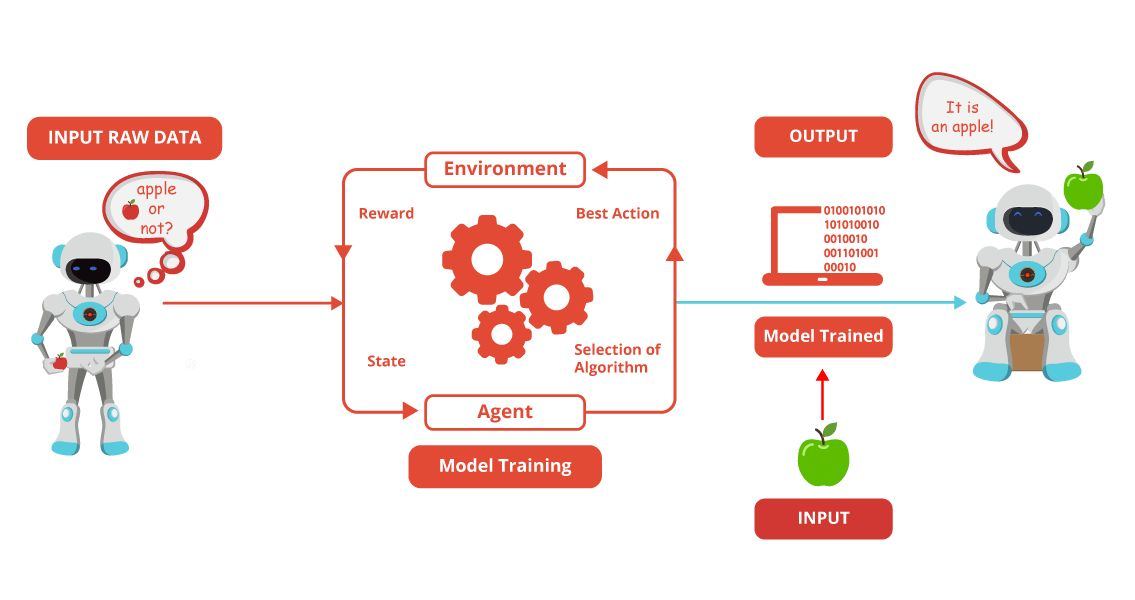
What is Machine Learning?
The term Machine learning was coined by Arthur Samuel, a pioneer in artificial intelligence and computer gaming. According to Arthur Samuel, machine learning is – “Field of study that gives computers the capability to learn without being explicitly programmed.”
In layman language, machine learning improves the automating process by making computer learns from experience without human interventions.
A Brief Taxonomy of ML Models
|
ML Model Type |
Uses Cases |
|
Linear regression / Classification |
Patterns in numeric data, such as stock market prediction |
|
Graphic models |
Fraud detection or sentiment awareness |
|
Decision trees / Random forests |
Predicting outcomes |
|
Deep learning Neural networks |
Computer vision, natural language processing (NLP), and more |
Types of Machine Learning Models
Based on tasks, we can define different types of Machine Learning Models :
1. Classification Models: Classification is used to define the class or type of an object. In the classification model, the output variable is always a categorical variable. Such as predicting whether the email is spam or not. Here are different types of classification algorithms.
-
Naïve Bayes : It is based on Bayes Theorem
-
SVM: SVM or Support Vector Machine is used for binary or multiclass classification.
-
Decision Tree: A decision tree produces a sequence of rules used to classify the data.
-
Logistic Regression: Linear model for binary classification
-
K-Nearest Neighbors Algorithms: A lazy learning algorithm does not construct the general internal model. The classification is calculated by the majority of k nearest neighbor of each point.
2. Regression: In a regression model, the output variable can have a continuous value, for example, predicting stock prediction. Here are some important regression models.
-
Linear Regression: It is used to predict the value of a variable known as a dependent variable. It is predicted based on another variable known as the independent variable.
-
Lasso Regression: It is a linear regression with L2 regularization.
-
Ridge Regression: It is a linear regression with L1 regularization.
3. Clustering: Clustering or Cluster analysis is a way of grouping a set of objects of the same group. For example, different fruits such as apple, mango, oranges, and grapes are categories into separate sections. Here are some widely used clustering models.
-
K means: It is an unsupervised learning algorithm whose objective is to combine similar data points and find underlying patterns.
-
K means ++: It is a modified version of K means.
-
DBSCAN: This is a density-based clustering algorithm.
-
Agglomerative Clustering: This is a hierarchical-based clustering algorithm.
4. Dimensionality Reduction: Dimensionality Reduction is a process or technique to reduce the number of input variables in the dataset. More input variables make it more challenging and can overfit the model; this is generally referred to as the curse of dimensionality. Here are some commonly used models for dimensionality reduction.
-
PCA: PCA stands for Principal component Analysis. PCA helps to reduce the dimensionality of large data set into smaller ones, and new variables are independent of each other but less interpretable.
-
SVD: SVD stands for Singular Value Decomposition, which is used to decompose the matrix into smaller parts for efficient calculations.
5. Deep Learning: Deep Learning is considered a subset of machine learning based on artificial neural networks with representation learning. Here are some important deep learning models based on the architecture of neural networks.
-
Multi-Layer perceptron
-
Convolution Neural Networks
-
Recurrent Neural Networks
-
Boltzmann machine
-
Autoencoders, etc
There are many machine learning models, but how to figure out which is best? So, it depends upon the type of problem we are trying to solve and attributes associated with it, such as outliers, quality of data, the volume of data, feature engineering, and many more. Choosing a specific model is necessary to obtain the correct result for a machine learning problem. Evaluation metrics or KPIs are defined for particular business problems to find the performance between different models. After going through the statistical performance checking, the best model is selected for production.
It is always recommended to start with the simplest model first and then increase the complexity by proper parameter tuning and cross-validation. In the world of data science, it is said, “Cross-validation is more trustworthy than domain knowledge.”