
As the global financial environment becomes increasingly complex and unpredictable, organizations require visionary leaders who can navigate emerging technologies, strategic risks, and shifting market dynamics.
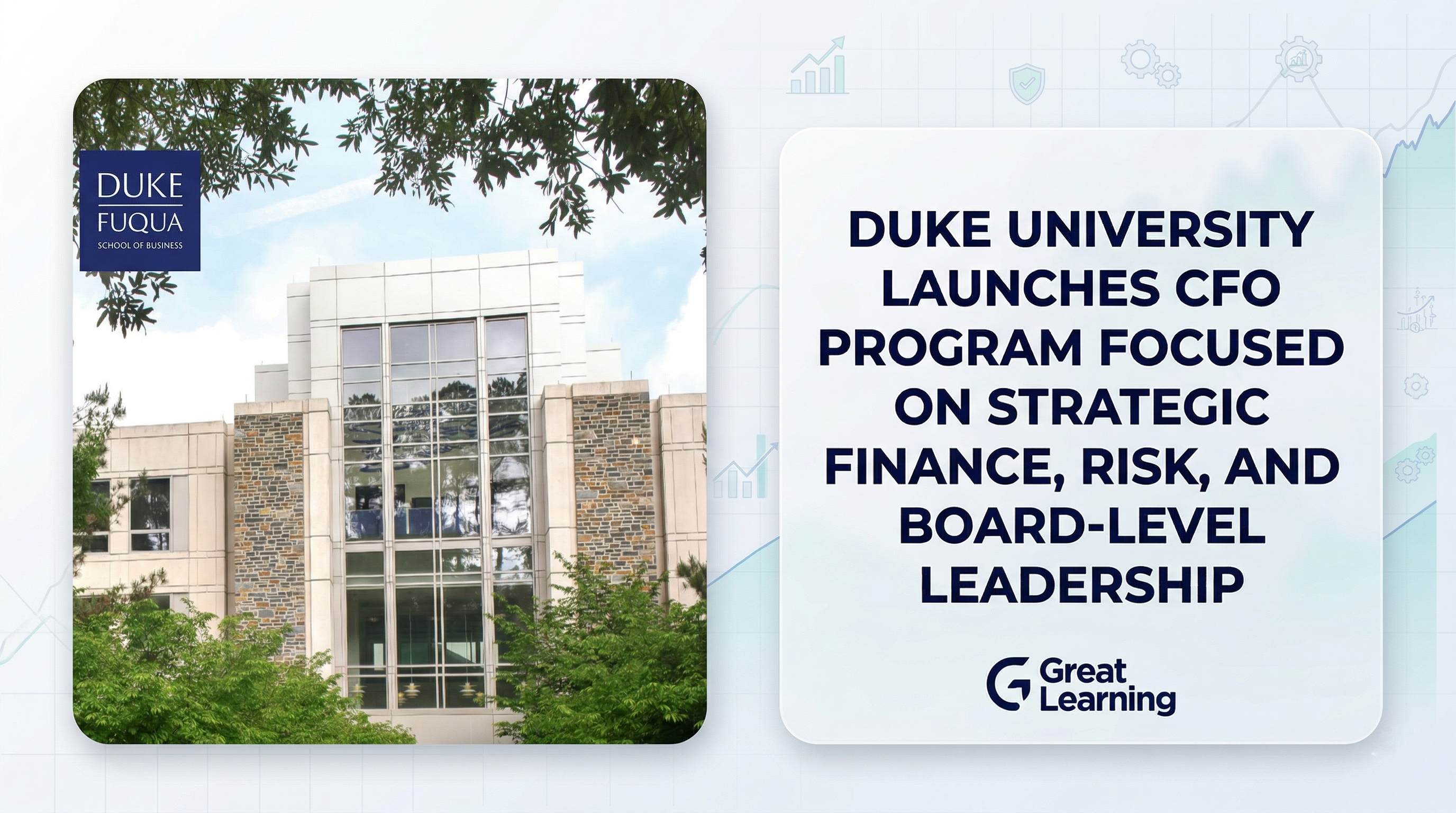
To meet this critical need, Duke University's Fuqua School of Business offers the Chief Financial Officer (CFO) Program. This 8-month, multi-modular experience is designed to shape seasoned financial professionals into transformative agents who can steer their organizations toward sustained growth and success.
Under the guidance of world-class Fuqua faculty, the cutting-edge curriculum empowers finance leaders with the knowledge, skills, and insights necessary to drive transformative financial growth.
Participants will explore the frontiers of financial leadership, gain tools to tackle emerging challenges, and build the expertise to thrive as a judicious CFO in today's dynamic corporate era.
About the Duke CFO Program
Designed specifically for busy working professionals, this program provides an extensive learning experience that blends classroom modules with live online sessions.
It is meticulously crafted to meet the specific needs of finance professionals ready to lead their organizations through the rapidly evolving ers of financial leadership.
By joining, participants will establish valuable connections with fellow financial leaders committed to shaping the future of finance.
Program Highlights
To ensure a comprehensive and flexible learning experience, the program features several key highlights:
- Blended Format: Immersive live-online sessions are paired with classroom sessions at Duke University to enhance both learning and networking.
- World-Renowned Faculty: Participants gain insights directly from distinguished faculty and industry experts.
- Leading-Edge Curriculum: The expansive curriculum is highly focused on vital areas of modern finance.
- Real-World Application: A carefully designed learning approach promotes the immediate application of critical financial concepts to the workplace.
- Exclusive Network: Learners are included in the exclusive Fuqua and Duke Executive Education networks.
What Makes This Program Unique?
Upon completion, graduates become an integral part of the global Duke Executive Education network and receive premier benefits as part of Duke University’s Fuqua School of Business.
- Prestigious Credentials: Graduates earn the Duke CFO Program certificate from Duke Executive Education and Duke University's Fuqua School of Business.
- Global Alumni Network: Participants gain inclusion in The Fuqua School of Business alumni LinkedIn network (a private group with 15,000+ members) and the Duke University alumni directory, granting access to affinity, industry, and regional groups.
- Career Advancement Tools: Graduates receive access to CareerBridge, Fuqua's exclusive job board, and can post targeted career opportunities for their own organizations through Fuqua's Career Management Center job portal.
- Exclusive Resources: Learners gain access to Fuqua's alumni events, webinars, the Ford Library while on campus, and the monthly "Team Fuqua Flash" alumni newsletter.
Who Should Enroll?
The program is designed for forward-thinking financial executives entrusted with leading financial strategy and driving organizational growth. It is specifically tailored for:
- Executive Leadership: CXOs, Directors, Presidents, and VPs with significant experience and demonstrated career progression.
- Functional & Business Leaders: Senior functional managers, business heads, and managers of managers.
- Driven Professionals: Individuals with outstanding careers who have a strong drive to succeed beyond obvious milestones and can adapt to varied situations.
Application Requirements:
- A minimum of 10 years of work experience in functional, technical, or business roles.
- A graduate degree with a strong academic track record is preferred.
- Fluency in written and spoken English.
What You Will Learn?
The extensive curriculum encompasses essential topics that equip participants with strategic, analytical, and managerial competencies.
- Evolving Technology Trends in Finance: Explores AI/ML, Web 3, Cybersecurity, Big Data analytics, and Fintech evolution.
- Strategic & Human Capital Investment: Covers Mergers & Acquisitions, divestitures, compensation, and future-proofing the organization.
- Strategic Financial & Payout Decisions: Focuses on risk management, debt vs. equity, dividends, and repurchases.
- Global Issues in Accounting, Tax, and Governance: Addresses contemporary taxation/accounting issues, managing narratives with analysts/investors, and interacting with activist investors.
- C-Suite Leadership: Guides participants through agile leadership during crises, executive presence, interacting with the Board of Directors, and serving as a strategic partner to the CEO.
- Funding Innovation & Private Capital Markets: Teaches how to fund innovation and how private capital markets operate.
Capstone Strategy Project
Participants will apply their knowledge through a capstone project unfolding in five phases:
- Identify the Opportunity: Methodically analyze a chosen area to identify a topic.
- Develop a Plan: Design a plan for improvement based on the identified opportunity.
- Stakeholder Communication: Develop strategies to convey the financial strategy to stakeholders.
- Implementation Roadmap: Create a detailed roadmap including key milestones and resource allocation.
- Continuous Monitoring and Adaptation: Establish a framework to monitor financial performance and market dynamics.
Key Learning Outcomes
Upon completing the program, participants will be able to:
- Understand strategic risk management and recognize growth opportunities within the evolving financial era.
- Acquire expertise in advanced, data-driven financial decision-making tailored for leadership.
- Envisage the role of technologies like Web3/Crypto, Fintech, Cybersecurity, and AI/ML to drive innovation.
- Create a blueprint for mergers and acquisitions and lead its implementation.
- Understand private capital markets and develop perspectives for financing and payout decisions.
- Cultivate agile leadership to navigate ambiguity, along with exceptional communication and negotiation skills critical for interacting with the board of directors.
- Build and lead high-performing, diverse teams for the global organization.
Next Step
The admission process follows a simple 3-step format. First, candidates submit an online application including a resume (Word or PDF) and two professional references.
Admissions are conducted on a rolling basis, meaning the team assesses applications as soon as they are received.
Finally, candidates may be required to complete an interview before the Admissions team notifies them of a final decision.