
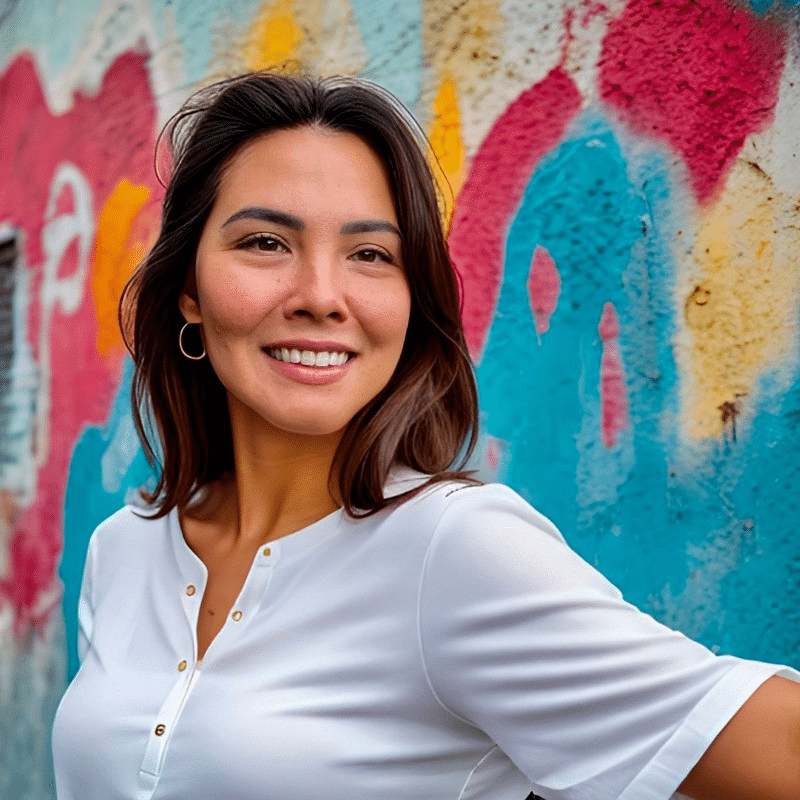
In every successful product or brand story, there’s a silent force that connects people to what they need. For Valerie Vargas, that force was ‘user experience’. This connection wasn’t just professional; it was deeply personal. Her career had always revolved around understanding people, from studying Psychology to crafting marketing campaigns that reached millions. But she began to wonder what it would mean to go beyond messaging and truly design experiences that people find meaningful.
That question led her to the Post Graduate Program in User Experience Design from the McCombs School of Business at The University of Texas at Austin, a decision that redefined her career and reshaped her perspective on design, learning, and resilience.
Sometimes, Healing Begins With Learning
After more than a decade in digital marketing, Valerie reached a point of reflection. She had built a strong career managing marketing and operations at Chegg and later at Headspace, where her work helped millions navigate their mental health journeys. Yet she felt a growing pull toward the product experience itself.
“I wanted to expand beyond campaigns and acquisition to the product experience,” she shares. “The bridge between marketing and user experience is where trust is built. I wanted to learn how to design with the user at the center, not just market to them.”
Her decision to return to learning wasn’t just about professional growth; it was also a deeply personal one. In 2023, Valerie lost her father. During that time, she felt disoriented, and she was motivated to grow. Learning became a way to process grief and focus her energy on something constructive. “I wanted to honor his legacy by investing in myself and creating opportunities for the future,” she says. “Returning to study after years in the industry was not about starting over; it was about expanding my toolkit,” she shares.
Learning to Listen, Observe, and Solve: Valerie’s UX Transformation
The Post Graduate Program in User Experience Design offered Valerie the rigor and creativity she was seeking. It challenged her to think differently, ask better questions, and rely on research rather than instinct.
“The program pushed me to think differently about problems and gave me new ways to frame solutions,” she explains. “The most impactful parts of the program for me were competitor and market research, persona creation, usability testing, and designing UX flows that encourage app habituation.”
Each assignment allowed her to bridge theory and application. The hands-on projects became not just a learning exercise but a source of comfort and direction during a difficult period. She learned to translate user pain points into actionable design opportunities and to approach every challenge with humility and curiosity.
Experiences That Touch Lives, Not Just Screens
What made the program truly transformative for Valerie was how seamlessly she could apply her learning to her new role at CakeClub, a fintech startup focused on helping users build community around money management.
“At CakeClub, I use the UX research skills I gained to study competitors in the fintech space, identify gaps, and shape how our app differentiates itself,” she says. “I’m building detailed user personas and conducting usability testing to uncover where the app becomes confusing or counterintuitive.”
By analyzing user behavior and feedback, she and her team are redesigning onboarding flows that feel intuitive and engaging. This ability to connect research with real impact is what Valerie values most about her learning experience. The program helped her internalize one key principle: design is not just about visuals, it’s about understanding people and creating systems that support them meaningfully.
Designing User-First Experiences That Build Trust and Confidence
Valerie’s move to CakeClub was a natural progression of her journey at the intersection of psychology, marketing, and design. What drew her in was the company’s refreshing approach to financial empowerment.
“Most financial tools focus on what you cannot do or what you are missing,” she explains. “CakeClub takes a different approach. It focuses on what you can build, how you can grow, and the rewards you can unlock,” she shares.
This philosophy aligned perfectly with her human-centered approach to design. She aimed to create user-first experiences in every app she worked on, ensuring that UX was not just about functionality but about crafting experiences that made users feel capable, seen, and supported.
One Design Decision at a Time
For professionals considering returning to learning, Valerie offers thoughtful advice. “Personal learning is an investment in your future,” she says. “The skills you put your energy into learning today can open doors you never imagined tomorrow.”
For her, the program was as much about resilience as it was about professional growth. It gave her structure and purpose during a difficult chapter, and the confidence to contribute more meaningfully at work. “Whether you are facing change, uncertainty, or simply want to grow, education can be the path forward,” she reflects.
Looking back, Valerie sees her journey as a continuous thread, one that connects her Psychology background, her experience in marketing and mental health, and her newfound expertise in design. “User experience is not just about interfaces,” she says. “It is about empathy, trust, and empowerment.”