
Free AI for Financial Analysis Course
AI in Financial Analysis
 4.75
Beginner level
3.0 learning hrs
4.75
Beginner level
3.0 learning hrs
Learn financial statements, ratios, valuation, risk, ML, NLP, GenAI, forecasting, fraud detection, & AI workflows. Join this free AI for Finance Analysis course to analyze data, report insights, and build finance-ready AI skills.




What you'll learn


About this course
This Free AI Course for Finance Professionals equips you with the essential skills to understand how AI is changing modern finance and analyst workflows. You’ll learn financial analysis foundations, including financial statements, key ratios, valuation methods, core risk types, and where human judgment remains critical. The course also covers how AI, machine learning, NLP, and generative AI support forecasting, valuation, credit analysis, risk management, fraud detection, trading, compliance, and financial reporting. You’ll learn from real-world AI use cases at JPMorgan, Morgan Stanley, Mastercard, and BlackRock, then understand how to build an AI-assisted workflow from data collection and analysis to interpretation, reporting, and governance. The course also covers agentic AI, global regulations, ethical concerns, prompt writing, and a 12-month plan to become AI-fluent. By the end of this AI for financial analysis course, you’ll be able to evaluate AI use cases in finance, apply AI more confidently to analysis tasks, and build future-ready skills for financial analyst roles.
Course outline
Understanding Financial Analysis
In this module you'll learn the foundations every analyst needs: the three financial statements, key ratios, valuation methods, and the core types of risk, plus where human judgment still matters most.
What Is AI and Why Does Finance Need It
In this module you'll learn what AI really is, the three types used in finance, why traditional analysis has limits, and how institutions deploy AI across analysis, trading, fraud, and compliance.
Core AI Techniques in Financial Analysis
In this module you'll learn how Machine Learning, NLP, and generative AI power modern finance, driving forecasting, valuation, credit analysis, risk management, and real-time fraud detection, along with their limits.
Real-World Case Studies
In this module you'll learn how JPMorgan, Morgan Stanley, Mastercard, and BlackRock use AI in production, saving hundreds of thousands of hours, catching fraud, and managing trillions in assets at scale.
Implementing AI in Financial Analysis
In this module you'll learn how to choose the right AI tools and build a repeatable, end-to-end AI-assisted workflow, from data collection and analysis to interpretation, reporting, and governance.
The Future of AI in Financial Analysis
In this module you'll learn about agentic AI that acts autonomously, emerging global regulations, ethical concerns like bias and accountability, and the skills analysts need to stay relevant tomorrow.
AI and your Finance Career
In this module yIn this module you'll learn how AI is reshaping analyst roles, which skills matter most, how to write effective prompts, and a concrete 12-month plan to become AI-fluent.ou'll learn how AI is reshaping analyst roles, which skills matter most, how to write effective prompts, and a concrete 12-month plan to become AI-fluent.
Get access to the complete curriculum once you enroll in the course
This course is ideal for
- Beginners wanting to learn AI in financial analysis.
- Students and job seekers exploring financial analyst roles.
- Working professionals who build financial models in Excel.
- Job seekers adding an AI finance certificate to their CV.
 4.75
4.75














Frequently Asked Questions
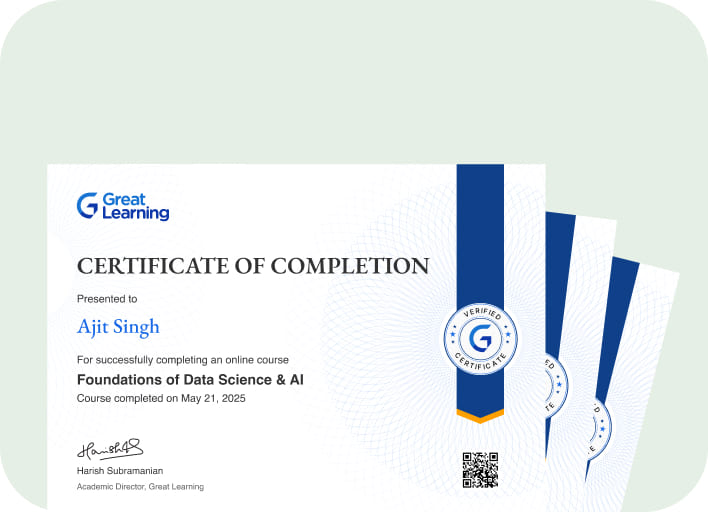
Will I receive a certificate upon completing this free course?
Is this course free?
What topics are covered in this free AI in finance course?
The course covers the following modules:
Understanding Financial Analysis
What Is AI and Why Does Finance Need It
Core AI Techniques in Financial Analysis
Real-World Case Studies
Implementing AI in Financial Analysis
The Future of AI in Financial Analysis
AI and your Finance Career.
What will I learn in this AI for Financial Analysis Course?
You’ll learn financial analysis foundations and how AI is applied across modern finance workflows. The course covers the three financial statements, key financial ratios, valuation methods, risk types, AI in finance, machine learning, NLP, generative AI, forecasting, credit analysis, fraud detection, compliance, and AI-assisted reporting.
How long does this course take to complete?
The course takes 3.0 learning hours to complete. It is designed to give learners a focused introduction to the fundamentals of financial analysis, AI use cases, AI-assisted workflows, and future-ready finance skills.
What skills will I gain from this free AI course for finance professionals
You’ll gain the following skills:
Financial statement analysis
Valuation and forecasting
Credit and risk assessment
Machine learning fundamentals
Natural language processing (NLP)
Generative AI applications
Fraud detection and compliance
AI tool selection
Prompt literacy
Is this AI financial statement analysis course suitable for beginners in finance and AI?
Yes, this course is designed for beginners who want to understand both financial analysis and AI applications in finance. It starts with finance fundamentals, then explains how AI supports analysis, trading, fraud detection, compliance, risk management, and reporting.
Does this course cover AI financial statement analysis?
Yes, the course covers the three financial statements and key ratios used in financial analysis. It also explains how AI can support faster review, pattern identification, forecasting, anomaly detection, and interpretation while showing where human judgment remains important.
How does AI for financial analysis help finance teams?
AI for financial analysis helps finance teams process data faster, identify trends, improve forecasts, detect fraud signals, assess credit risk, prepare reports, and support compliance. The course also teaches the limits of AI, so learners understand when human review is required.
What AI techniques are taught in the course?
The AI for Financial Analysis course covers machine learning, natural language processing, and generative AI. You’ll learn how these techniques are used for forecasting, valuation support, credit analysis, risk management, fraud detection, compliance review, document analysis, and financial reporting.
Does this AI courses for finance professionals include real-world AI finance examples?
Yes, the course includes case studies from JPMorgan, Morgan Stanley, Mastercard, and BlackRock. These examples show how AI is used in production for workflow efficiency, fraud detection, asset management, analysis, and large-scale financial decision support.
What will I learn about AI-assisted financial workflows?
You’ll learn how to choose AI tools and build a repeatable workflow from data collection and analysis to interpretation, reporting, and governance. This helps you use AI in a structured way while maintaining accuracy, accountability, and business context.
Is this one of the best AI courses for finance professionals starting with AI?
This course is a strong starting point because it combines finance fundamentals with practical AI applications. It covers financial statements, valuation, risk, machine learning, NLP, generative AI, case studies, governance, regulations, and career skills in one course.
Will I learn about agentic AI in financial analysis?
Yes, the course introduces agentic AI and explains how autonomous AI systems may shape the future of financial analysis. You’ll learn what this means for analyst roles, AI-assisted decision-making, workflow automation, and future finance skills.
Does the AI for Financial Analysis course cover AI risks, ethics, and regulations in finance?
Yes, the course covers emerging regulations, responsible AI concerns, bias, accountability, and governance. These topics are important because AI is increasingly used in credit analysis, fraud detection, compliance, forecasting, and financial decision support.
What outcome should I expect after completing this best AI course for finance professionals?
By the end, you’ll be able to explain how AI supports financial analysis, identify useful AI applications in finance, understand key risks and limitations, choose suitable AI tools, build AI-assisted workflows, and create a practical plan to become more AI-fluent in finance.

Recommended Free Finance courses
 FREE
FREE