Free GCD of Two Numbers Course
GCD of Two Numbers
 4.65
Beginner level
2.25 learning hrs
4.65
Beginner level
2.25 learning hrs
GCD of Two Numbers free course basics help you understand logic, syntax, and debugging as connected ideas, so the subject reads like a skill you can practice.






About this course
A free gcd of two numbers course is useful when students, developers, and hands-on beginners need a practical entry point into the subject. The course introduces setup, syntax, core logic, and debugging in a way that shows how the pieces work together. Instead of treating gcd of two numbers as a list of terms, it explains what to look for, how to reason through common tasks, and why the subject appears in real projects, teams, or business decisions.
The course is a good fit if you want to build small working examples and explain the logic behind them. You can use it to prepare for assignments, interviews, workplace conversations, or a first hands-on project depending on your goal. After finishing, you should be able to explain the core idea of gcd of two numbers, recognize when it is relevant, and choose a sensible next step such as practice exercises, deeper tools, related frameworks, or a more advanced course.
Course outline
Python Operators: Arithmetic, Relational, and Logical
Execute programmatic calculations using Python Operators. Apply Arithmetic operators for math, Relational operators for value comparison, and Logical operators (AND, OR, NOT) for complex Boolean evaluations.
Python Lexical Structure: Tokens, Keywords, and Identifiers
Analyze the lexical components of Python syntax. Identify standard Python Tokens including reserved Keywords, user-defined Identifiers, hardcoded Literals, and functional Operators.
If Statement in Python
This section explains why and when to use “if-else” statements and demonstrates how to use them with an example.
Looping Statements in Python
This section explains why and when to use “loop” statements and demonstrates how to use them with an example.
Interactive Coding with the Jupyter Notebook Environment
Execute Python scripts interactively using Jupyter Notebook. Navigate the browser-based REPL (Read-Eval-Print Loop) environment for data analysis, code testing, and inline visualization.
Python Setup: PyCharm, Anaconda, and Jupyter Installation
Configure a professional Python development environment. Install the Python interpreter, set up the PyCharm IDE, deploy Anaconda for package management, and launch Jupyter Notebooks.
Variables and Data types in Python
This section will demonstrate how to declare variables using integer, floating point, string, and boolean data types and store them depending on the declared variable size.
Get access to the complete curriculum once you enroll in the course
 4.65
4.65








What our learners enjoyed the most
Curriculum
65% of our learners found our curriculum helpful
Frequently Asked Questions
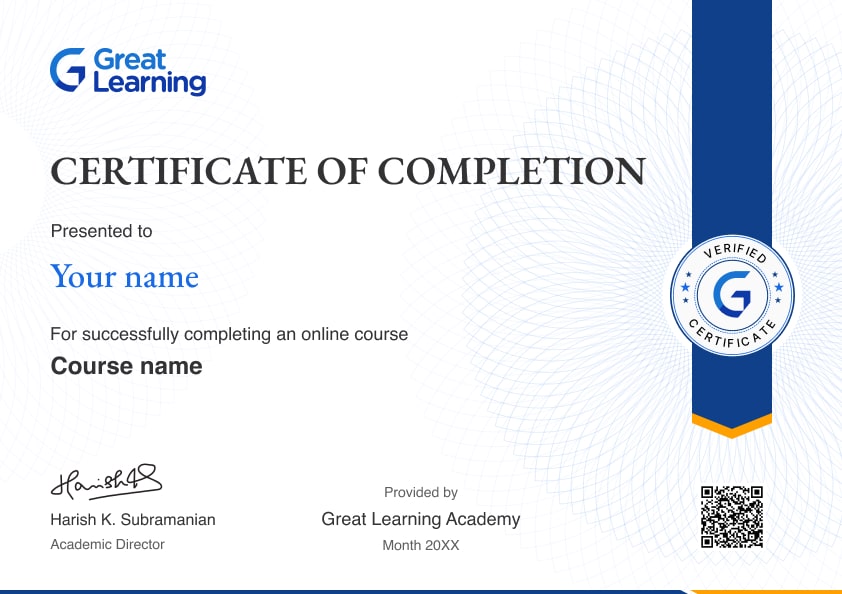
Will I receive a certificate upon completing this free course?
Is this course free?
What will I learn in this free GCD of Two Numbers course?
Who should start with this GCD of Two Numbers course?
How does GCD of Two Numbers help in practical learning?
What GCD of Two Numbers basics should I know before advanced study?
Can beginners learn GCD of Two Numbers online through this course?
What makes this GCD of Two Numbers training useful for projects?
How should I practice after finishing GCD of Two Numbers?
What questions does this free GCD of Two Numbers course answer for learners?

Recommended Free Software Course courses
 FREE
FREE


Similar courses you might like


.jpg "Course thumbnail image")
Related IT & Software Courses

-

McCombs School of Business at The University of Texas at Austin
Post Graduate Program in Cyber Security20 weeks · Online
Know More