Free Natural Language Processing Course

Introduction to Natural Language Processing

star 4.53  Beginner level 6.75 learning hrs 47.4K+ Learners

Learn NLP fundamentals, libraries, terminology, language models, deep learning, TextBlob, sentiment analysis, and semantic segmentation. Enroll in this free NLP course to build a strong base in language AI.

Instructor:

Georg Huettenegger
Key Highlights

Get free course content

Master in-demand skills & tools

Test your skills with quizzes

About this course

This free NLP training course equips you with the foundational skills to understand how machines process, analyze, and interpret human language. You’ll learn NLP fundamentals, common challenges, essential libraries, key terminology, real-world applications, domain-specific use cases, and the workflow used to solve NLP problems. The course also introduces language models and the role of deep learning in building more effective NLP solutions.


You’ll also learn how TextBlob supports NLP tasks such as sentiment analysis and how semantic segmentation concepts, including U-Net, are applied through practical demonstrations. By the end of this NLP courses online free, you’ll be able to explain core NLP concepts, identify useful NLP applications, understand how language models support text-based AI systems, and build a strong foundation for advanced learning in AI, machine learning, and natural language technologies.


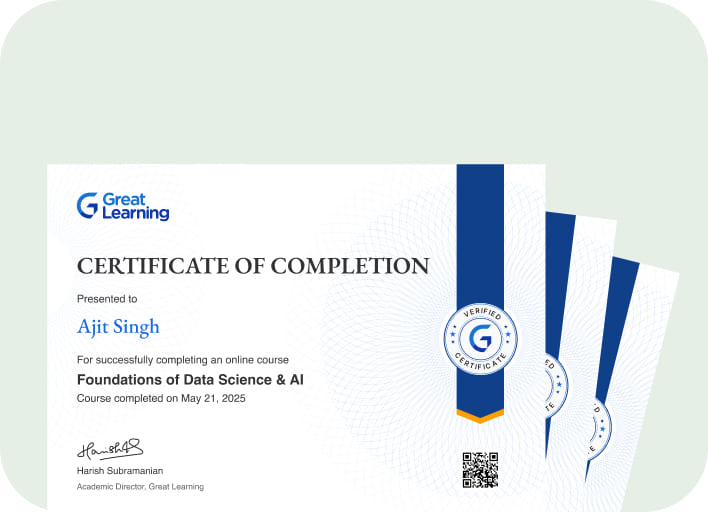
Stand out with an industry-recognized certificate

10,000+ certificates claimed, get yours today!

Get noticed by top recruiters

Share on professional channels

Globally recognised

Land your dream job

Certificate Image

Course outline

Introduction to Natural language processing

In this module, you will learn the fundamentals of NLP, common challenges, essential libraries, and key NLP terminologies.

Applications of NLP

In this module, you will explore NLP applications, domain-specific use cases, and the workflow of solving NLP problems.

Language Models & Deep Learning

In this module, you will be introduced to language models and understand the role of deep learning in NLP.

TextBlob

In this module, you will learn about TextBlob, its functionalities, and its use in sentiment analysis.

Semantic Segmentation

In this module, you will be introduced to U-Net, semantic segmentation concepts, and practical demonstrations of segmentation techniques.

Get access to the complete curriculum once you enroll in the course

Introduction to Natural Language Processing

rating icon 4.53

6.75 Hours

Beginner

47.4K+ learners enrolled so far

Get free course content

Master in-demand skills & tools

Test your skills with quizzes

Level up with advanced skills & become job ready with Pro+

Subscribe to Pro+ today to build skills with 50+ Pro courses and prep for jobs with advanced AI tools.

PRO

Pro+ course thumbnail image
Master Artificial Intelligence
3 projects 12.5 hrs video content

Practice exercises

Guided Projects

AI Resume Builder

AI mock interviews

Start 7-Day Free Trial

Trusted by 10 Million+ Learners globally

Learner reviews of the Free Courses

4.53
★★★★
★ ☆
★
★
★
★
★
69%
★
★
★
★
☆
22%
★
★
★
☆
☆
6%
★
★
☆
☆
☆
1%
★
☆
☆
☆
☆
2%
Reviewer Profile

5.0

★★★★ ★
India
“It was a great course, I got to learn many things.”
I recently completed a course on Natural Language Processing (NLP) that provided me with valuable insights into how machines interpret, process, and generate human language. The course covered foundational concepts such as tokenization, text preprocessing, and sentiment analysis, as well as more advanced topics like neural networks, transformers, and language models. Through hands-on exercises, I gained practical skills in building NLP models and applying them to real-world applications, like text classification and translation.
Reviewer Profile

5.0

★★★★ ★
India
“The NLP course enhanced my skills in text preprocessing, tokenization, and model implementation for tasks like sentiment analysis, classification, and translation.”
The NLP course provided hands-on experience with text preprocessing, tokenization, part-of-speech tagging, and named entity recognition. I learned how to implement models like TF-IDF, word embeddings, and transformers for tasks such as text classification, sentiment analysis, and machine translation, enhancing my understanding of language processing techniques.
Reviewer Profile

5.0

★★★★ ★
India
“Natural Language Processing (NLP) is a rapidly evolving field within Artificial Intelligence (AI) that focuses on the interaction between computers and human languages.”
NLP is one of the most exciting and transformative fields in AI, with applications spanning nearly every industry. While there are significant challenges—particularly around bias, interpretability, and resource usage—the rapid pace of innovation suggests that these issues will continue to be addressed in the coming years. As NLP becomes increasingly powerful, ensuring it is used responsibly, transparently, and ethically will be critical to realizing its full potential.
Reviewer Profile
fazila maher

5.0

★★★★ ★
“In My NLP Course, I Am Learning About POS-Tagging, Sentence Ambiguity, and Tokenization”
During my course on Natural Language Processing (NLP), I have gained hands-on experience in tackling some of the fundamental challenges of working with human language. One of the key areas I’ve explored is POS-tagging (Part-of-Speech Tagging), where I learned how to identify the grammatical categories of words in sentences. For example, I practiced labeling words like nouns, verbs, and adjectives in different contexts, which helped me understand sentence structure better.
Reviewer Profile

5.0

★★★★ ★
India
“Natural Language Processing (NLP) has made remarkable progress over the past few years, transforming industries and enhancing how humans interact with machines.”
Modern NLP models, such as GPT-4 and BERT, are highly accurate at understanding and generating human language. They can process vast amounts of data in seconds, making tasks like sentiment analysis, translation, summarization, and text classification faster and more reliable than traditional methods.
Reviewer Profile

5.0

★★★★ ★
India
“Learning Natural Language Processing (NLP) has been an incredibly fascinating and enriching experience.”
The most intriguing aspect of NLP for me was working with real-world data, like processing large datasets of tweets or product reviews, to build models that can extract meaningful insights.
Reviewer Profile

5.0

★★★★ ★
India
“My learning experience in Natural Language Processing (NLP) has been shaped by the vast amount of text data I’ve been trained on, spanning a wide range of domains and topics.”
Language is full of subtleties, idioms, and cultural references. Being able to process these complexities and understand the intent behind words gives me a sense of how dynamic and multifaceted communication can be. NLP helps me understand how people from different backgrounds and cultures express themselves. I enjoy learning how the same idea can be communicated in countless ways, each influenced by personal, cultural, and contextual factors.
Reviewer Profile

5.0

★★★★ ★
“Глубокое понимание архитектуры энкодеров и декодеров”
Курс предоставил отличное введение в архитектуру энкодеров и декодеров. Особенно понравилось, как объяснялись практические применения, такие как обработка изображений и текстов. Тесты и задания помогли закрепить материал, а структура курса позволила легко следовать учебному плану. Рекомендую всем, кто интересуется NLP и компьютерным зрением.
Reviewer Profile

5.0

★★★★ ★
India
“Natural Language Processing is my favorite.”
Natural Language Processing (NLP) is a subfield of artificial intelligence (AI) focused on the interaction between computers and human language. It aims to allow machines to understand, interpret, and generate human language in a way that is both meaningful and useful. NLP combines linguistics and computer science to bridge the gap between human communication and machine understanding.
Reviewer Profile

5.0

★★★★ ★
India
“Learning of Natural Language Processing leads to knowledge.”
Natural Language Processing (NLP) is a field focused on the interaction between computers and human languages. It has progressed significantly with applications ranging from language translation and sentiment analysis to chatbots and complex predictive text models. Here’s an overview of key areas, recent advancements, and challenges in NLP.

What our learners enjoyed the most

Our course instructor

instructor img

Georg Huettenegger

Hybrid AI Chief Architect, Generative and Conversational AI Leader

Artificial Intelligence Expert

learner icon
47.4K+ Learners
video icon
1 Courses
Georg is a customer-focused, high-performing team leader with a proven track record of launching new products and platforms, driving strategic initiatives worth over $30MM for global Fortune 500 companies. Known for a hands-on management style, Georg excels in communication, leadership, and problem-solving. With significant experience in the Financial Services sector and additional expertise in Insurance and Telecommunications, he has successfully led diverse teams and projects. Specializing in digital workforce solutions, artificial intelligence, machine learning, natural language processing, and speech-to-text technologies, Georg has extensive experience in presales, product, program, and project management. He is skilled in stakeholder, vendor, and offshore management, as well as enterprise architecture across business, application, data, integration, security, and systems/solution architecture. Georg’s expertise is grounded in hands-on development and scaling of Conversational AI platforms, Business Process Management, Java and C/C++ Internet and Enterprise Intranet applications, Middleware, Messaging, Microservices, REST, SOA, and Python, often utilizing agile development and CI/CD methodologies.

Frequently Asked Questions

Will I receive a certificate upon completing this free course?

Yes, upon successful completion of the course and payment of the certificate fee, you will receive a completion certificate that you can add to your resume.

Is this course free?

Yes, you may enroll in the course and access the course content for free. However, if you wish to obtain a certificate upon completion, a non-refundable fee is applicable.

What prerequisites are required to learn this Introduction to Natural Language Processing course?

There are no prerequisites required to get started with this free NLP course. It is a beginner’s course; hence novice learners can start NLP from scratch.
 

How long does it take to complete this free NLP course?

This free Introduction to Natural Language Processing course contains 4.5 hours of self-paced videos that learners can take up according to their convenience.
 

What are my next learning options after this Introduction to NLP course?

You can enroll in Great Learning’s Best PG Artificial Intelligence Course online by the University of Texas at Austin’s McCombs School of Business.


Will I get a certificate after completing this Introduction to Natural Langauge Processing course?

Yes, you will be rewarded with a free NLP course completion certificate after completing all the modules and the quiz at the end of this free Introduction to Natural Language Processing course. 

How much does this NLP course cost?

This Introduction to NLP course is offered for free by Great Learning Academy.

Is there a limit on how many times I can take this Introduction to Natural Language Processing course?

No, there are no such limits on the number of times you can attain this Introduction to NLP course.

Can I sign up for multiple courses from Great Learning Academy at the same time?

Yes, you can sign up for more than one free course offered by Great Learning Academy that fastens your effective career development.
 

Why choose Great Learning for this Introduction to NLP course?

Great Learning Academy is an initiative taken by the leading e-learning platform, Great Learning. Great Learning Academy provides you with industry-relevant courses for free, and Introduction to Natural Langauge Processing is one of the free courses that empowers you with in-demand skills.


What are the steps to enroll in this course?

  • Search for the free “Introduction to Natural Language Processing” course in the search bar present at the top corner of Great Learning Academy.
  • Register for the course through the Enroll Now button and start learning.

Will I have lifetime access to this free online course?

Yes. You will have lifetime access to this free online Introduction to Natural Language Processing course.
 

Is it worth learning NLP?

Natural Language Processing comes under computer science and artificial intelligence that focuses on the interactions between computers and human languages, particularly how to program computers to process and analyze large amounts of natural language data. As a result, learning about NLP is worthwhile.
 

What is NLP used for?

Natural Language Processing is used for various tasks, including text classification, topic modeling, sentiment analysis, and text generation. Various tasks involving the analysis and processing of text data include the usage of Natural Language Processing (NLP). Speech recognition, named entity recognition, and language detection are a few of these tasks that can be performed. Due to its ability to improve understanding and communication can also be employed in commercial settings, such as sales and marketing.
 

Why is NLP so popular?

Due to its focus on how people and computers communicate, the field of Artificial Intelligence known as Natural Language Processing is very well-liked. Natural Language Processing is a particularly efficient method for processing and analyzing massive amounts of data, which is one of the key reasons it is so popular. This is particularly true for text-based data, as it can be quite challenging to examine this data using conventional techniques. This procedure can be automated with the help of Natural Language Processing, making it much simpler to comprehend and evaluate the data.

What jobs demand that you learn NLP?

Jobs that demand you learn Natural Language Processing include:

  • Artificial Intelligence Researcher
  • Computational Linguist
  • Data Analyst
  • Data Miner
  • Data Scientist
  • Information Retrieval Specialist
  • Machine Learning Engineer
  • NLP Developer
  • NLP Engineer
  • Research Scientist
     

What knowledge and skills will I gain upon completing this NLP course?

By the end of this Introduction to NLP course, you will learn about Natural Language Processing, tokenization, stemming, lemmatization, removing stopwords, various modeling techniques in NLP, sentiment analysis, TextBlob, U-Net, and Semantic segmentation. 
 

Who is eligible to take this NLP course?

Any beginner or novice learner who wants to get acquainted with Natural Langauge Processing can enroll in this free NLP course.

 

Subscribe to Academy Pro+ & get exclusive features

$29/month

No credit card required

Learn from 40+ Pro courses

Access 500+ certificates for free

700+ Practice exercises & guided projects

Prep with AI mock interviews & resume builder

Recommended Free AI courses

Similar courses you might like

Related Artificial Intelligence Courses

50% Average salary hike
Explore degree and certificate programs from world-class universities that take your career forward.
Personalized Recommendations
checkmark icon
Placement assistance
checkmark icon
Personalized mentorship
checkmark icon
Detailed curriculum
checkmark icon
Learn from world-class faculties

Other Artificial Intelligence tutorials for you

Enroll For Free