
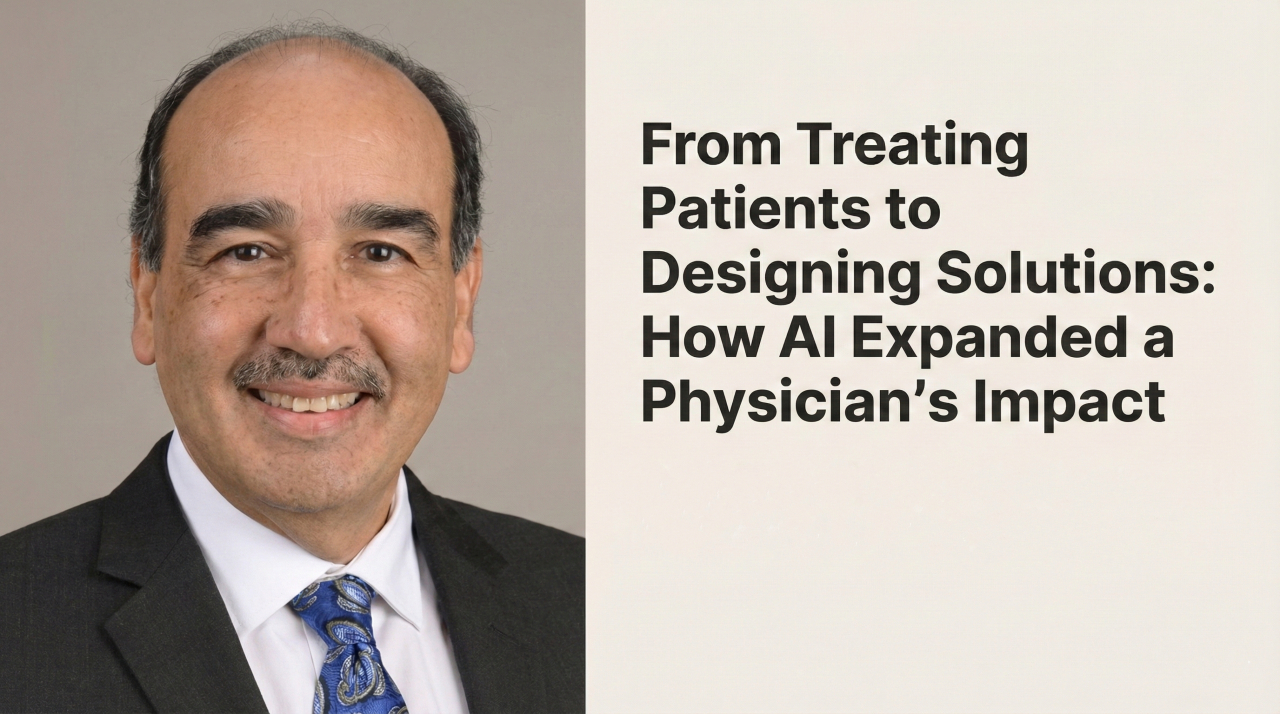
Sanjay Awasthi’s work has long been rooted in molecular biology and medical research. As his research increasingly involved large volumes of biological data, understanding how AI could be applied to his work became essential.
To develop a practical understanding of Artificial Intelligence and Machine Learning for molecular and medical data, Sanjay enrolled in the Postgraduate Program in Artificial Intelligence and Machine Learning at the McCombs School of Business at the University of Texas at Austin.
PG Program in AI & Machine Learning
Master AI with hands-on projects, expert mentorship, and a prestigious certificate from UT Austin and Great Lakes Executive Learning.
What began as a focus on molecular data naturally extended into medicine, particularly in areas such as target discovery and drug development.
Building a Foundation in Medical Research and Academic Leadership
Sanjay’s formal training and early research laid the foundation for a career in medicine and scientific inquiry. He traces this trajectory back to his first exposure to research that shaped his long-term engagement with institutional research environments.
“I did student research at The University of Texas Medical Branch (UTMB) starting in 1976, graduated from UT Austin and UT Southwestern Medical School, Professor at several medical schools, and principal investigator for the NIH,” he says.
He became a physician in 1986 and an oncologist in 1991, beginning what would become a more than 35-year career as an academic medical oncologist treating tens of thousands of patients. His experience spanned both facilitated and impeded access to cancer care, shaping not only his clinical outlook but also the questions he pursued as a researcher.
This progression later expanded into leadership roles, including serving as the Director of the Cancer Center at Texas Tech University, and eventually into entrepreneurship. Today, he is the founder and Chief Scientific Officer of Avesta Bio, where his focus remains on advancing medical research through biotechnology.
Recognizing the Role of Artificial Intelligence in Modern Medical Research
During his tenure as Director of the Cancer Center at Texas Tech University, Sanjay observed a growing need to understand Artificial Intelligence from a practical, programming-led perspective. As research questions became more data-intensive, the role of Artificial Intelligence and Machine Learning in supporting medical research became unavoidable.
Reflecting on the learning experience, Sanjay says,
“Simply put, I learned from the best.” Despite demanding professional commitments, the program allowed him to continue learning through access to recorded sessions and past course materials, which he describes as “invaluable.”
As Sanjay explains, “The program taught me Python, Statistics, Classification, Neural Networks, and Pipelines.” He highlights the quality of instruction, noting that the “explanation of the fundamentals was exemplary.”
During a later on-site module in decision science, he learned to build a Retrieval-Augmented Generation system, which he refers to as “raag, a musical key.”
He also gained insight into how ChatGPT functions, describing it as “a black box genie which knows all and can become whomever you wish.” Writing code was central to his experience, and while the learning involved experimentation, he found copilots highly effective in supporting his progress.
Strengthening a Lifelong Commitment to Scientific Discovery
Reflecting on the program's impact, Sanjay says, “I developed key intellectual property that will help me solve the problems of cancer, diabetes, and obesity.”
For him, learning Artificial Intelligence was not about changing direction. It was about strengthening the work he was already deeply engaged in. The program helped him better understand how Artificial Intelligence fits into molecular biology and medical research, supporting his continued efforts as a “physician-scientist and entrepreneur.”