Free Cloud Computing Service Models Course

Cloud Computing Service Models

star 4.49  Beginner level 1.5 learning hrs 16.3K+ Learners

Learn cloud computing service models from basics in this free online training. Cloud computing service models course is taught hands-on by experts. Learn introduction to cloud computing and benefits of cloud computing in details

Instructor:

Mr. Anirudh Rao
Key Highlights

course content icon

Get free course content

handyman icon

Master in-demand skills & tools

quiz icon

Test your skills with quizzes

About this course

Cloud computing is a great domain that constantly evolves with every passing day. It should come as no surprise that the future of computing lies in the cloud. There are types of Cloud Computing models used today, and the most important ones are IaaS, PaaS, and SaaS. Each of these service models satisfies a unique set of business requirements. The business can leverage the broader possibilities of each service model to experience flexibility and efficiency in business growth. This course aims to introduce Cloud Computing Service Models and their benefits. The course will also make you familiar with cloud computing trends, the famous service model, and the future of Cloud Computing.

Become a certified Cloud Computing professional with our Cloud Computing Course powered by AWS Educate. Practice what you learn by working on 15+ use cases. Explore our best cloud computing courses today. 

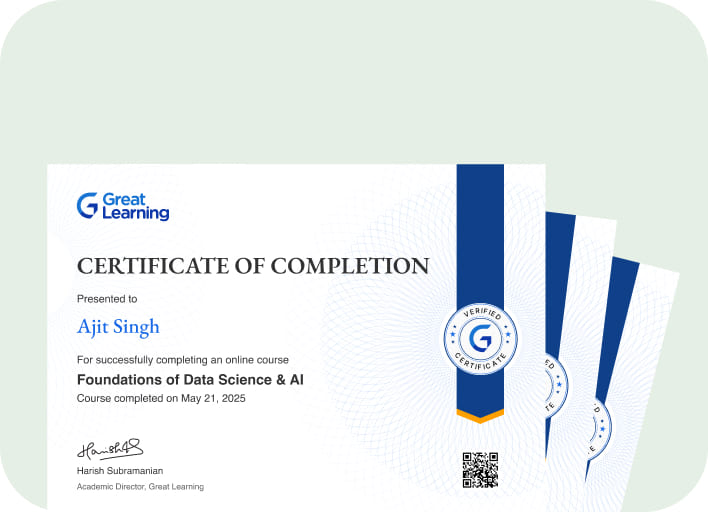
Stand out with an industry-recognized certificate

local_fire_department

10,000+ certificates claimed, get yours today!

blue-tick

Get noticed by top recruiters

blue-tick

Share on professional channels

blue-tick

Globally recognised

blue-tick

Land your dream job

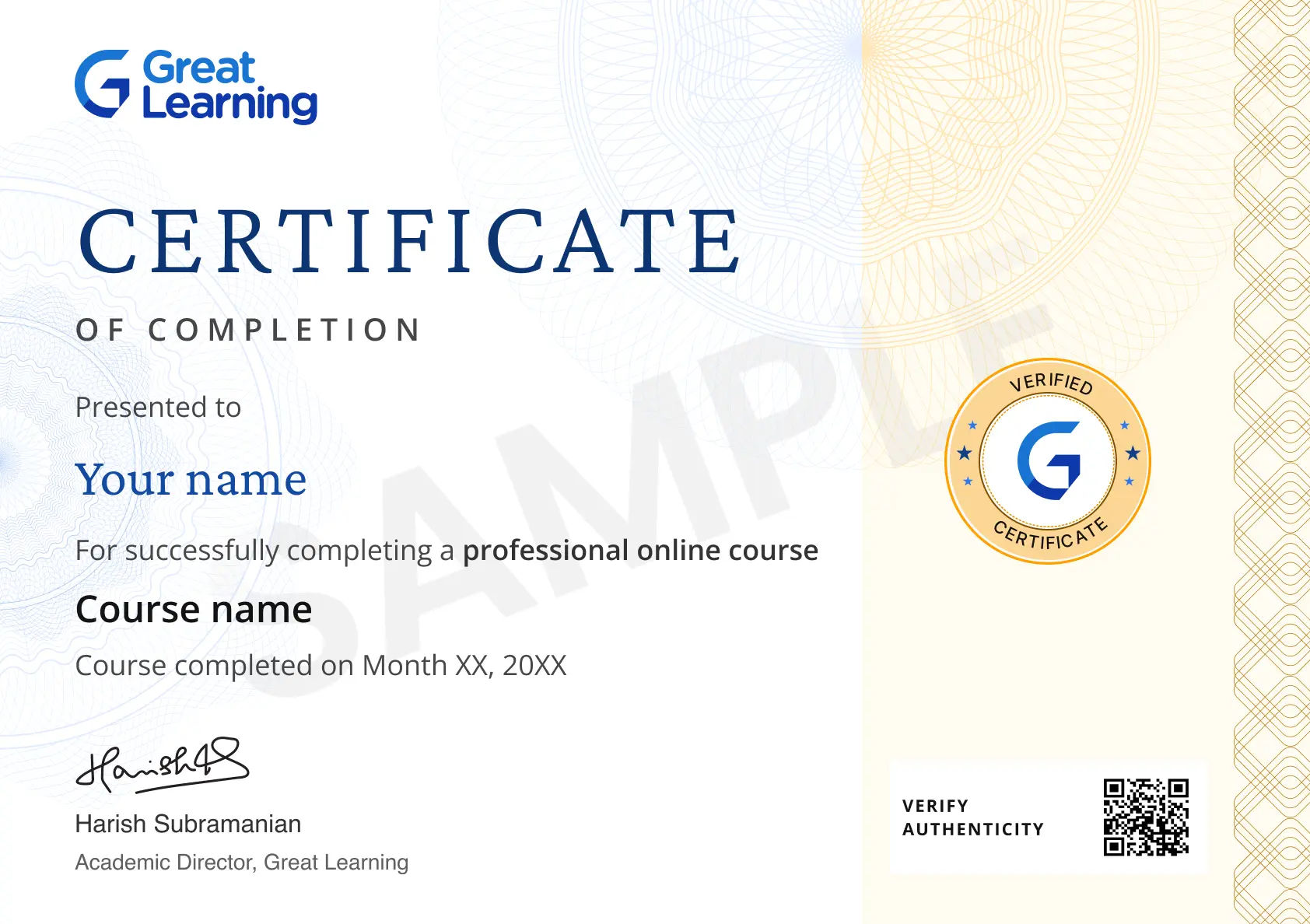
Certificate Image

Course outline

Introduction to Cloud Computing

This module starts with helping you understand what Cloud Computing is and go through various cloud models like public, private, and hybrid clouds.
 

Trends and Benefits of Cloud Computing

Explore the latest trends and advantages of cloud computing in this module.

Cloud Computing Services

Dive into the various cloud service offerings and their significance in the modern IT landscape.

Popular Service Model and future of Cloud Computing

Understand the current service models and what lies ahead in the future of cloud computing.

Get access to the complete curriculum once you enroll in the course

Cloud Computing Service Models

rating icon 4.49

1.5 Hours

Beginner

user icon

16.3K+ learners enrolled so far

blue-tick

Get free course content

blue-tick

Master in-demand skills & tools

blue-tick

Test your skills with quizzes

Trusted by 10 Million+ Learners globally

Learner reviews of the Free Courses

4.49
70%
20%
6%
1%
3%
Reviewer Profile

4.0

Country Flag India
“I learned about IaaS, PaaS, and SaaS models, gaining skills in deployment, data management, and cloud security, enhancing my understanding of cloud technology.”
What I like about cloud computing is its flexibility and scalability, allowing users to access resources on-demand. I enjoy hands-on experiences with various platforms, learning to deploy applications and manage data. The collaborative nature of cloud tools enhances teamwork, making projects more efficient. I’m also excited by the rapid innovation in cloud technologies, from machine learning to serverless architecture. Additionally, understanding security and compliance in the cloud is crucial, making this field both challenging and rewarding.
Reviewer Profile

5.0

Country Flag India
“Exploring Cloud Computing Models”
This course on cloud computing provided a comprehensive overview of various service models, including IaaS, PaaS, and SaaS. I enjoyed the engaging video lectures, which presented complex concepts clearly and were complemented by interactive quizzes and real-world case studies. The structured content helped reinforce my understanding of the benefits and challenges of cloud adoption. Overall, the course enriched my knowledge of cloud computing and its practical applications in today’s technology landscape. Thank you for the opportunity to provide feedback!
Reviewer Profile

5.0

Country Flag India
“i learnt about services provided by cloud computing, and it was really easy to follow”
The explanations of the different service models, were particularly well-structured. Each model was outlined with practical examples, allowing me to grasp how they function in real-world applications. The course also included visual aids and diagrams, which enhanced my understanding of how these services interact and support business needs. Overall, I would highly recommend this course to anyone interested in cloud computing. The easy-to-understand content, combined with practical examples and supportive materials, makes it an excellent resource for learners at any level.
Reviewer Profile

5.0

Country Flag United States
“Cloud Computing Service Models”
Excellent
Reviewer Profile

4.0

Country Flag United States
“Good to learn the basics and easy to follow”
This is a good course for the beginners with good curriculum.
Reviewer Profile

4.0

Country Flag India
“The course provided a thorough understanding of topic, enhancing my cloud computing skills significantly.”
I particularly enjoyed the clear explanations of different service models, including IaaS, PaaS, and SaaS, which helped me grasp their unique applications. The case studies provided practical examples that connected theory to real-world scenarios. The interactive quizzes were engaging and reinforced my learning. Additionally, the instructor's expertise made the content even more valuable. Overall, this course has significantly deepened my knowledge of cloud computing and prepared me for future challenges in the field
Reviewer Profile

5.0

Country Flag India
“information was in detail // easy to follow and its in depth”
this is a great initiative by Great learning for new learners and beginners
Reviewer Profile

5.0

Country Flag India
“Best course ever saw in most recent time”
good teaching nice visuals great content maximum efficiency
Reviewer Profile

5.0

Country Flag India
“the content was very very good and made me understand easily”
the content was very very good and made me understand easily
Reviewer Profile
Sain Suresh

5.0

“My Learning Experience from Cloud Computing Topics”
I learned that cloud service models—IaaS, PaaS, and SaaS—each cater to different user needs, with SaaS examples like Salesforce illustrating full management by providers. The pay-as-you-go model is crucial for cost efficiency. Users manage their data in SaaS while IaaS gives them control over infrastructure. After defining project requirements, setting up workflows and models is essential for success. The cloud market is valued at around $900 billion, reflecting rapid growth. For more insights, check out resources from IBM Cloud and Microsoft Azure.
Reviewer Profile

5.0

Country Flag India
“The course on Cloud Computing Service Models provided me with a comprehensive understanding of IaaS, PaaS, and SaaS. ”
I particularly appreciated the structured approach of the Cloud Computing Service Models course. The blend of theoretical knowledge with practical applications was invaluable, especially the hands-on labs that allowed me to work with actual cloud environments.
Reviewer Profile

4.0

Country Flag India
“This course reinforced understanding of cloud service models, emphasizing differences in management responsibilities between IaaS, PaaS, and SaaS..”
This corse provided a deeper understanding of cloud computing models such as SaaS, PaaS, and IaaS, emphasizing their key distinctions. It highlighted how responsibilities are divided between cloud providers and users in each model. The learning reinforced that SaaS handles everything except data management by users, while IaaS gives users control over infrastructure like servers. The clarity of how these models apply to real-world platforms such as Salesforce also helped solidify these concepts.
Reviewer Profile

4.0

Country Flag India
“This course reinforced understanding of cloud service models, emphasizing differences in management responsibilities between IaaS, PaaS, and SaaS, .”
learning experiences include understanding the different cloud service models such as SaaS, PaaS, and IaaS, and their respective management responsibilities. Concepts like "pay-as-you-go" in cloud computing and examples like Salesforce as a SaaS provider were also highlighted. Additionally, the user learned that data management is the user's responsibility in SaaS, while infrastructure is handled by the provider. These foundational concepts enhance the understanding of cloud architecture and services​
Reviewer Profile

4.0

Country Flag India
“Cloud Computing Service Models Using Iaas ,Paas,Saas”
good.. Infrastructure as a Service (IaaS) IaaS provides virtualized computing resources over the internet. Users can rent virtual machines, storage, and networks, enabling them to manage and control the infrastructure without the need to purchase physical hardware. This model is ideal for businesses that require flexibility and scalability, as it allows them to quickly scale resources up or down based on demand. Examples include Amazon Web Services (AWS), Microsoft Azure, and Google Cloud Platform process.
Reviewer Profile

5.0

Country Flag India
“Great Learning offers a highly engaging and well-structured platform for learners. The quality of courses, and real-world projects provide an immersive learning experience. ”
Great Learning stands out for its comprehensive course offerings across various domains, making it suitable for professionals at different career stages. The platform combines theoretical knowledge with practical applications through case studies and projects, ensuring learners gain real-world skills.
Reviewer Profile
Shahid ullah

5.0

“i am student of bs information technology and i happy to learn these courses i am thankful for Great Learning Academy who give me so many chances to grow in future goal and i have no word about that again thank you”
Cloud computing is a transformative technology that enables the delivery of computing services—such as servers, storage, databases, networking, software, analytics, and intelligence—over the internet, commonly referred to as "the cloud." It eliminates the need for businesses and individuals to invest in physical hardware and infrastructure, offering flexible, scalable, and cost-effective solutions. The primary models of cloud computing include Infrastructure as a Service (IaaS), where users rent IT infrastructure; Platform as a Service (PaaS), which provides a platform allowing customers to develop, run, and manage applications; and Software as a Service (SaaS), which delivers software applications over the internet, on a subscription basis. Cloud computing offers numerous benefits, such as cost savings, as businesses only pay for what they use, and scalability, allowing resources to be adjusted according to demand. It also enhances accessibility, enabling users to access their applications and data from any location with internet connectivity.
Reviewer Profile

4.0

Country Flag United States
“It is easy flow of learning when the concepts are clear and simple ”
Cloud Computing Service model concept are simple yet easy but need more videos regarding these models.
Reviewer Profile

4.0

Country Flag India
“Highlight of my learning of this course”
Adequately and interestingly explained ithe details of the topics.
Reviewer Profile

5.0

Country Flag India
“Courses Cloud Computing Service Models”
Cloud computing service models offer a range of services for managing infrastructure, platforms, and software, typically categorized into IaaS, PaaS, and SaaS, each providing different levels of control and management
Reviewer Profile

5.0

Country Flag India
“Unlocking New Skills through Hands-On Learning”
I enjoyed the practical approach that allowed me to apply theoretical knowledge. The engaging environment, combined with real-world projects, truly enhanced my understanding and problem-solving abilities.

Our course instructor

instructor img

Mr. Anirudh Rao

Cloud Computing Expert

learner icon
778.6K+ Learners
video icon
79 Courses
Anirudh has been working in the field of Data Science and has expertise over Python, Machine Learning and other concepts in the field of data analysis. He is also proficient in the concept of Deep Learning and its usage in a production environment. Expertise extends towards working on various projects in the domain of Artificial Intelligence and Neural Networks as well.

Frequently Asked Questions

Will I receive a certificate upon completing this free course?

Yes, upon successful completion of the course and payment of the certificate fee, you will receive a completion certificate that you can add to your resume.

Is this course free?

Yes, you may enroll in the course and access the course content for free. However, if you wish to obtain a certificate upon completion, a non-refundable fee is applicable.

What are the cloud service models?

Cloud service models enable ubiquitous and convenient access to the users with the help of a shared pool of resources. There are different types of cloud computing service models that fulfill a broad range of unique user requirements with minimal effort. These three models include Software-as-a-Service or SaaS, Infrastructure-a-sa-Service or IaaS, and Platforms-as-a-Service or PaaS. 


What are the 3 main service models of cloud computing?

The three cloud computing service models that fulfill various business requirements include :

  • SaaS : SaaS is an acronym for Software as a Service. This typically includes applications or software that are hosted by a software service provider and can be accessed over the internet using a web browser. Some popular examples include Salesforce, Google Apps, WebEx, ZenDesk, and Slack. Being managed from a central location, it is easily accessible to the users over the internet. This makes it an easy and affordable option for organizations without having to update it or keep it running.  

  • IaaS : IaaS is an acronym for Infrastructure as a service. It is also managed over the internet and offers an affordable solution for organizations to acquire computing capabilities. It also helps organizations avoid the complexity involved in the management of physical servers. Services within IaaS are scalable and flexible. Some popular examples include Microsoft Azure, Amazon Web Services (AWS), Cisco Metacloud, and Google Compute Engine (GCE).


  • PaaS : PaaS is an acronym for Platforms as a Service. It exists halfway between SaaS and IaaS that allows programmers to develop, test, and run various applications. By offering access to a cloud-based platform, PaaS lets users customize and manage various features of applications in an affordable manner. It has the ability to support various languages and is easily scalable. Some examples include Windows Azure,  Google App Engine, Magento Commerce Cloud, and AWS Elastic Beanstalk. 

What are the 4 types of cloud computing?

Most organizations have adopted cloud computing using cloud service models. The four main types of cloud computing include -

  • Public Cloud : In the public cloud, cloud services are offered and owned by IT infrastructure, which is open to use for the public. It typically involves cloud hosting, where the cloud service provider will offer infrastructure or services to the users. It is ideal for businesses that require application management which is, in turn, accessed by many users. It is a very economical option for small organizations.

  • Private Cloud: Also known as Internal Clouds, these cloud environments offer services to cater to a single end-user or group. The user gets direct control of the services in the private cloud with underlying IT infrastructure belonging to a particular organization. Private clouds include managed private clouds and dedicated clouds depending on the requirements. 

  • Hybrid Cloud: A hybrid cloud integrates both public and private clouds with resources offered by either internal or external providers. The characteristics of hybrid clouds may vary depending on the requirements of an organization. It typically consists of an IT environment created using LANs, WANs, and private networks.

  • Community Cloud or Multi-Cloud : In a community cloud, the cloud environment involves more than one cloud computing approach, which may be shared by different organizations such as banks and trading companies. It can be managed internally as well as externally. 

What are the different types of service models?

Different types of service models are enlisted below :

  • Infrastructure as a Service (IaaS)

  • Platform as a Service (PaaS)

  • Software as a Service (SaaS)

  • Storage as a Service (SaaS)

  • Communications as a Service (CaaS)

  • Network as a Service (NaaS)

  • Monitoring as a Service (MaaS)

Is IaaS a cloud?

Yes, IaaS or Infrastructure as a Service corresponds to a cloud-based computing infrastructure facility or service that can be accessed over the internet using a web browser. The service provider will host the infrastructure on behalf of its clients, such as physical or virtual servers.  


Is Google Docs related to cloud computing?

Yes, Google Docs is a type of cloud computing service or a form of Software as a Service (SaaS). 


What are the three advantages of cloud computing?

Cloud computing offers numerous advantages to organizations of all sizes - big or small. The three key advantages of cloud computing include :

  • Reduced costs of operations - Cloud computing reduces excess costs of IT infrastructure and operations for organizations. There are no costs involved for system upgrades, maintenance, energy consumption, and resources. Additionally, it offers no time delays. 

  • Efficiency -Cloud computing allows businesses to improve efficiency and communicate easily without relying on traditional methods. This makes it easier to communicate across different locations throughout the globe without any downtime. 

  • Scalability - It offers businesses the flexibility to scale up and down depending on the changing requirements. Using the cloud environment frees organizations of unwanted pressure to invest in the infrastructure or experience time delays in upgrading the systems.

What is a private cloud example?

Private clouds offer cloud computing services to an internal network of an organization. Some examples include Ubuntu, Microsoft, HP Data Centers, and Elastra-private cloud. 
Subscribe to Academy Pro+ & get exclusive features

$29/month

No credit card required

pro banner image

Learn from 40+ Pro courses

pro banner image

Access 500+ certificates for free

pro banner image

700+ Practice exercises & guided projects

pro banner image

Prep with AI mock interviews & resume builder

img icon FREE
Cloud Serverless Application
star   4.46 2.5K+ learners
2 hrs
img icon FREE
Cloud Foundations - Advanced
star   4.57 36K+ learners
2 hrs
img icon FREE
Best Cloud Certifications
star   4.43 12.2K+ learners
1 hr

Similar courses you might like

img icon FREE
Cloud Foundations
star   4.57 224.8K+ learners
2.5 hrs
img icon FREE
IaaS for Cloud Computing
star   4.48 7.3K+ learners
1.5 hrs
img icon FREE
AWS For Beginners
partner logo
star   4.53 193.5K+ learners
3 hrs
img icon FREE
Introduction to Machine Learning in AWS
partner logo
star   4.48 12.2K+ learners
1.5 hrs

Related Cloud Computing Courses

50% Average salary hike
Explore degree and certificate programs from world-class universities that take your career forward.
Personalized Recommendations
checkmark icon
Placement assistance
checkmark icon
Personalized mentorship
checkmark icon
Detailed curriculum
checkmark icon
Learn from world-class faculties
Enroll For Free