Free Montessori Teaching Course
Montessori Teaching Essentials
This free Montessori teaching course shows how a prepared space can support children's independent learning. Join the lessons to understand careful observation, purposeful materials, and guidance that fits a child's development.




About this course
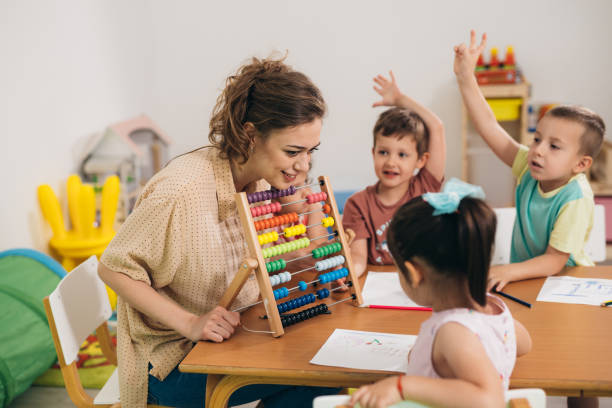
A free Montessori teaching course gives you a starting point for understanding why the classroom is arranged around children's activity and independence. You study the prepared environment before considering how an adult observes, demonstrates, and steps back. Practical life lessons connect this approach with familiar actions such as pouring and caring for shared materials.
The Montessori teaching course for beginners then examines how sensorial, language, and mathematics materials support a progression in learning. You consider why concrete objects come before abstract symbols and how observation informs a next lesson. These ideas can help you understand Montessori classrooms in the US while recognizing that school practices and staffing requirements vary. You gain introductory teaching concepts, not a professional Montessori credential or a substitute for supervised teacher preparation.
Course outline
Foundations of Montessori Philosophy and History
The current module will introduce you to Maria Montessori and her approach to teaching, the origin of her approach, principles, guide, sensitive periods, and the difference between Montessori and traditional schools.
Understanding Child Development and the Planes of Development
In this module, you will learn about the four planes of development until the age of 24, human tendencies, normalization, mixed-age groups, and age-appropriate expectations.
The Prepared Environment and Classroom Design
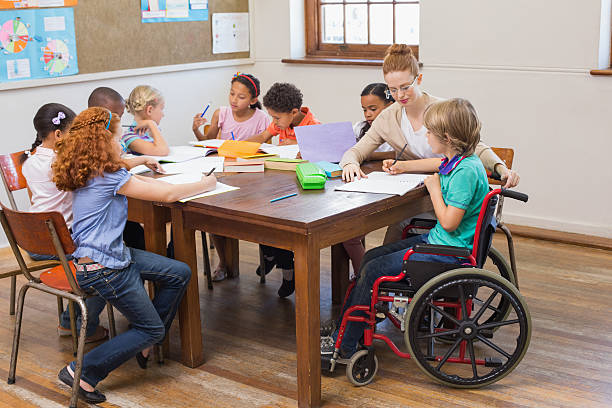
The current module will cover how to create an orderly environment with child-size furniture, shelves, work cycle, ground rules, and the outdoors.
Practical Life Exercises
In the current module, you will learn how to teach pouring, spooning, practical life skills, grace and courtesy, and how to modify the lesson for home learning.
Sensorial Materials and Curriculum
In this module, you will learn about sensory materials like the Pink Tower and sound cylinders which enhance sensory perceptions, isolation of quality, sequential and demonstration of lessons.
Language Curriculum in the Montessori Classroom
In the current module, you will learn how children use sandpaper letters, moveable alphabets, metal insets, reading, grammar symbols, and storytelling to develop language.
Mathematics Curriculum and Materials
This module will teach you how mathematics concepts transition from concrete to abstract using number rods, golden beads, and stamp games, as well as fractions, skip counting, and reducing math anxiety.
Observation, Assessment, and Classroom Management
This module will teach you how to monitor and document progress, create personalized learning plans, evaluate students without testing, guide their behavior positively, manage conflict, and communicate their progress to parents.
Get access to the complete curriculum once you enroll in the course




Frequently Asked Questions
Why is the prepared environment important in Montessori teaching?
Which practical life activities does the Montessori course introduce?
What will I learn about observing children?
How does the free Montessori teaching course introduce sensory materials?
Which language materials are included in the lessons?
How are early mathematics concepts taught in the course?
What does Montessori training explain about mixed-age groups?
Does the course discuss classroom guidance and conflict?
Can I relate these lessons to Montessori classrooms in the US?
How does the course distinguish Montessori and traditional teaching?


Recommended Free Education & Teaching Skills courses
-
FREE

-
FREE
2.5 hrs
-
FREE
-
FREE
2.5 hrs
-
FREE
2.5 hrs
 FREE