
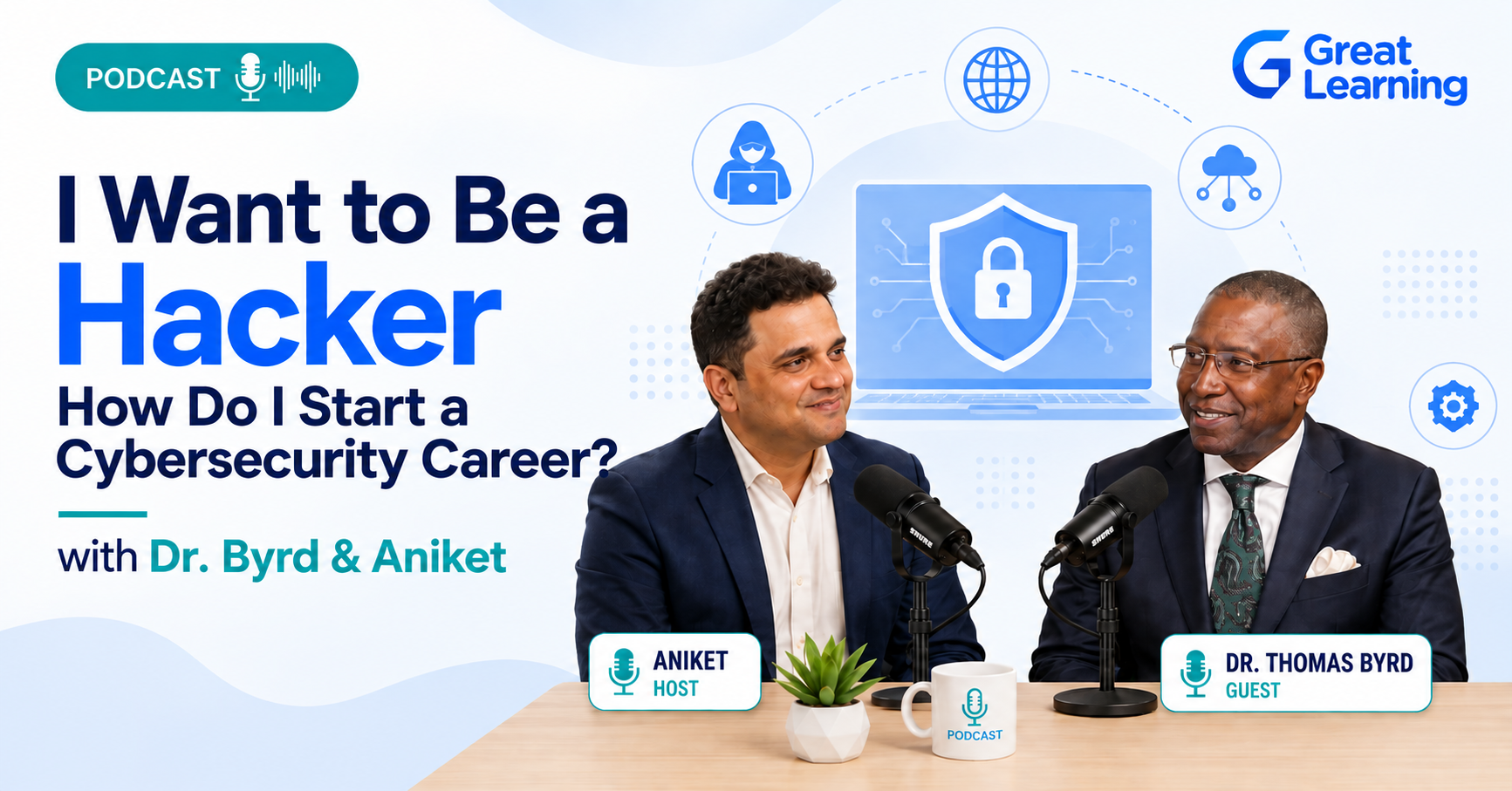
Welcome to an in-depth breakdown of Episode 2 of the Cybersecurity podcast series hosted by Aniket and Dr. Thomas Byrd (faculty member at Johns Hopkins University). In this episode, the hosts address the single most frequent question asked by students, career switchers, and curious minds alike: "How do I actually get started in Cybersecurity?"
Moving beyond the Hollywood stereotypes and viral internet hype around "hacking," Dr. Byrd and Aniket ground the conversation in actionable, real-world strategies. They unpack the true definition of Cybersecurity, clarify the strict legal and ethical boundaries of the field, and introduce three powerful, publicly available government and industry resources—NICCS (NICE Framework), USAJOBS, and CyberSeek—that anyone can use to map out an entry-level career path.
Key Takeaways
- Broad Scope of Cybersecurity: Cybersecurity goes far beyond servers and firewalls; it covers computer systems, networks, personal devices, data, drones, and the Internet of Things (IoT), protecting goods and services for customers, employees, and stakeholders.
- The Ethical Line is Non-Negotiable: Unauthorized hacking (including accessing someone's personal phone) is a federal crime in the US. Curiosity must be channeled legally through ethical offensive or defensive security roles.
- Entry-Level Roles Exist Everywhere: The National Initiative for Cybersecurity Careers and Studies (NICCS) framework demonstrates that entry-level opportunities exist across all domains, from technical forensics to legal policy and governance.
- Avoid Random Upskilling: Don't waste time taking random IT courses (such as a networking course if you want to work in cloud security). Use job portals like USAJOBS to reverse-engineer exact employer requirements before investing in training.
- Data-Driven Job Searching with CyberSeek: CyberSeek aggregates job market data across states and cities, showing exact skill and knowledge requirements (e.g., encryption, risk management, key escrow) for specific role categories.
- Your Network is Your Net Worth: Beyond online job applications, building connections through local workshops, community college IT departments, and free virtual NIST standards-building events is essential to landing your first role.
Who This Episode Is For
This guide and podcast breakdown is designed for:
- Absolute Beginners & Students: Anyone asking "How do I get started?" who wants a clear, step-by-step roadmap into Cybersecurity.
- Career Switchers & IT Professionals: Developers, systems administrators, or professionals from law and legal backgrounds looking to transition into security.
- Aspiring Ethical Hackers: Individuals curious about offensive and defensive security who want to channel their technical interests legally and ethically.
Key Discussion Points
1. Defining Cybersecurity & Clearing Up the "Hacker" Myth
Dr. Byrd begins by level-setting the definition of Cybersecurity for anyone entering the field. At its core, Cybersecurity is the profession and practice of protecting computer systems, networks, devices, people, data, physical infrastructure, and connected tech (including drones and IoT devices) from physical and digital attacks or unauthorized access.
"Your role, your mission in Cybersecurity, if you should accept it, is about protecting the goods and services for that organization... for their customers, their employees, their shareholders, their stakeholders."
— Dr. Thomas Byrd
Addressing the "Girlfriend's Phone" Question & Legal Boundaries
Aniket notes that on LinkedIn, one of the most frequent questions he receives from learners is: "I want to be a hacker... how do I hack into my girlfriend's phone?"
Dr. Byrd and Aniket emphasize in no uncertain terms that accessing any system or personal device without authorization is a federal crime in the United States that triggers severe statutes and law enforcement prosecution.
Instead, aspirants must understand the vital importance of ethics. For those passionate about hacking, the Cybersecurity industry offers legal, high-demand avenues:
- Offensive Roles (Red Teaming/Penetration Testing): Legally hacking into systems with authorization to uncover vulnerabilities and protect assets.
- Defensive Roles (Blue Teaming/Security Operations): Continuously monitoring, analyzing, and safeguarding systems against active threats.
2. Frameworks for Career Pathways: The NICCS / NICE Framework
To help beginners organize their efforts, Dr. Byrd introduces the government-sponsored National Initiative for Cybersecurity Careers and Studies (NICCS) website, which details the NICE Cybersecurity Workforce Framework.
The framework categorizes Cybersecurity roles into distinct functional work areas, showing that security is not a monolith:
- Oversight and Governance: Focuses on policy, legal frameworks, and program governance. This is an ideal entry pathway for individuals coming from legal, law, or compliance backgrounds.
- Protection and Defense: Encompasses technical, investigatory, and analytical work, including:
- Digital Forensics: Uncovering digital artifacts and investigating cyber crime scenes.
- Threat Analysis: Gleaning intelligence on threat actor networks.
- Vulnerability Analysis: Identifying weaknesses in system architecture.
- Crime Investigation: Aligns closely with law enforcement, military, and investigative backgrounds.
Dr. Byrd stresses that entry-level roles exist across all of these categories. Success comes down to "reading for knowledge" and pursuing what you are genuinely passionate about—rather than picking a direction because a friend said it was "cool" or due to parental pressure.
Interested in exploring how structured academic frameworks prepare you for these workforce roles? Enrolling in a comprehensive Cybersecurity Program provides foundational training aligned with national security standards.
JHU Cybersecurity Certificate Course
Build in-demand cybersecurity skills with JHU experts. Learn AI, cloud, and network security. Hands-on projects. Flexible online format.
The "Nice Road" Metaphor
In a memorable moment, Aniket shares that in his home city of Bangalore, India, there is an actual highway called the "Nice Road." He likens the NICE Framework to that very highway—a structured, smooth route guiding learners straight toward their Cybersecurity career destination.
3. Strategic Upskilling & Job Hunting: USAJOBS and CyberSeek
Reverse-Engineering Job Postings with USAJOBS
Rather than guessing what skills to learn, Dr. Byrd recommends visiting USAJOBS (the US federal government job portal). Whether you are transitioning from software development or starting fresh, USAJOBS allows you to search by keyword, location, agency, or occupation.
By reviewing real job postings, you can see exact employer requirements—such as whether a position calls for a Bachelor's degree, a specific certification, or particular technical competencies.
Aniket's Warning Against Random Learning:
Many beginners fall into the trap of taking random courses without a clear strategy. For example, enrolling in a CCNA networking course when their actual goal is cloud security. By checking USAJOBS first, learners can identify that cloud security roles require competencies like application development or data integrity—ensuring they invest in the right learning pathways without wasting time or money.
If you're looking to gain academic credentials that match these employer requirements, consider taking a dedicated Cybersecurity Course by top academic experts.
Cyber Security Course by UT Austin for Professionals
Master cybersecurity tools & techniques in UT Austin’s 20-week program. Designed for working pros with hands-on labs, expert guidance & real-world
Understanding Federal Background Checks
Dr. Byrd cautions that federal Cybersecurity roles often involve stringent background checks. Hiring agencies will evaluate financial management, credit history, drug use, and even conduct neighborhood interviews. Because this process is long and expensive, candidates should be prepared for an arduous verification timeline.
Mapping Local Demand with CyberSeek
Dr. Byrd also highlights CyberSeek, an interactive tool that aggregates job posting data across the United States.
- Heat Map Feature: Shows open job volume by state (e.g., over 42,000 open Cybersecurity positions in Texas).
- Role Breakdown: Clicking on a state or role category (such as System Security Management) displays the specific Knowledge needed (risk management, privacy laws, encryption) and practical Skills required (implementing key escrow systems, security design, technical auditing).
4. Networking and Community: "Your Network is Your Net Worth"
While applying through general online job boards (where thousands of applicants compete) can feel discouraging, Dr. Byrd stresses that building a direct professional network is the most effective way to land your first role.
- Local Community Workshops: Major conferences like Black Hat and DefCon in Las Vegas are famous, but they can be expensive for beginners. Local security workshops, meetups, and user groups offer affordable, accessible ways to meet like-minded peers.
- NIST Free Standards Workshops: The National Institute of Standards and Technology (NIST) regularly hosts free online and virtual workshops to build national Cybersecurity and AI standards. Attending these virtual events allows beginners to interact directly with professionals from government, academia, and industry.
- Grassroots Community Opportunities: Local community colleges, municipal government offices, and small business IT departments frequently need talent for access control, incident response, and digital forensics. Starting locally allows you to get "boots on the ground" experience.
Notable Quotes
"Cybersecurity is the profession and the practice of protecting systems—computer systems, networks, devices, people, data, drones, physical and digital attacks, and unauthorized access."
— Dr. Thomas Byrd
"There's nothing worse than going into a career because someone told you that it was cool or interesting and it's not truly your passion... You've got to find what most interests you."
— Dr. Thomas Byrd
"Don't do things at random. Identify your direction, find the resources that will get you there, and then invest in the right resources."
— Aniket
"Your network is your net worth."
— Dr. Thomas Byrd
Conclusion
Launching a career in Cybersecuritycybersecurity doesn't require secret tricks or illegal shortcut attempts—it requires structured curiosity, strategic skill alignment, and active networking. By leveraging government tools like the NICE Framework, studying job requirements on USAJOBS, tracking regional market trends on CyberSeek, and actively building community through free workshops like NIST, you can chart a clear highway toward your first security role.
As Dr. Byrd and Aniket remind us: find your niche, align your learning with factual job requirements, and keep building your network!
Frequently Asked Questions (FAQ)
Is hacking into someone's phone or social media account ever legal?
No. Unlawful access to any computer, phone, or network without explicit permission is a federal crime in the United States and international jurisdictions. In Cybersecurity, hacking skills must only be practiced ethically and legally under authorized offensive security roles (such as penetration testing or red teaming).
Can someone with a non-technical background (like law or legal studies) get into Cybersecurity?
Yes. As shown in the NICE Framework (NICCS), categories like Oversight and Governance focus heavily on legal policy, privacy regulations, and compliance frameworks. Individuals with law enforcement or legal backgrounds transition very successfully into these roles.
How can I find entry-level Cybersecurity jobs in my specific city or state?
You can use free public tools like CyberSeek.org to view a heat map of job openings across states and cities. Additionally, USAJOBS.gov allows you to search federal listings by city, agency, and occupation to view exact job requirements.
Are IT courses like CCNA worth it?
Taking courses at random without checking job requirements often leads to wasted time and money. For instance, if you want to enter cloud security, a networking certificate like CCNA might not cover the application development or data integrity skills that employers actually want. Always check job postings first to align your learning path with real job demands.
What should I expect regarding federal Cybersecurity background checks?
Federal positions require extensive background investigations. Hiring agencies look into financial management, credit reports, past drug use, and conduct interviews with neighbors and references. It is a thorough, lengthy, and host-managed process.