
As the demand for artificial intelligence grows, professionals need the right skills to design, adapt, and deploy reliable Generative AI applications.
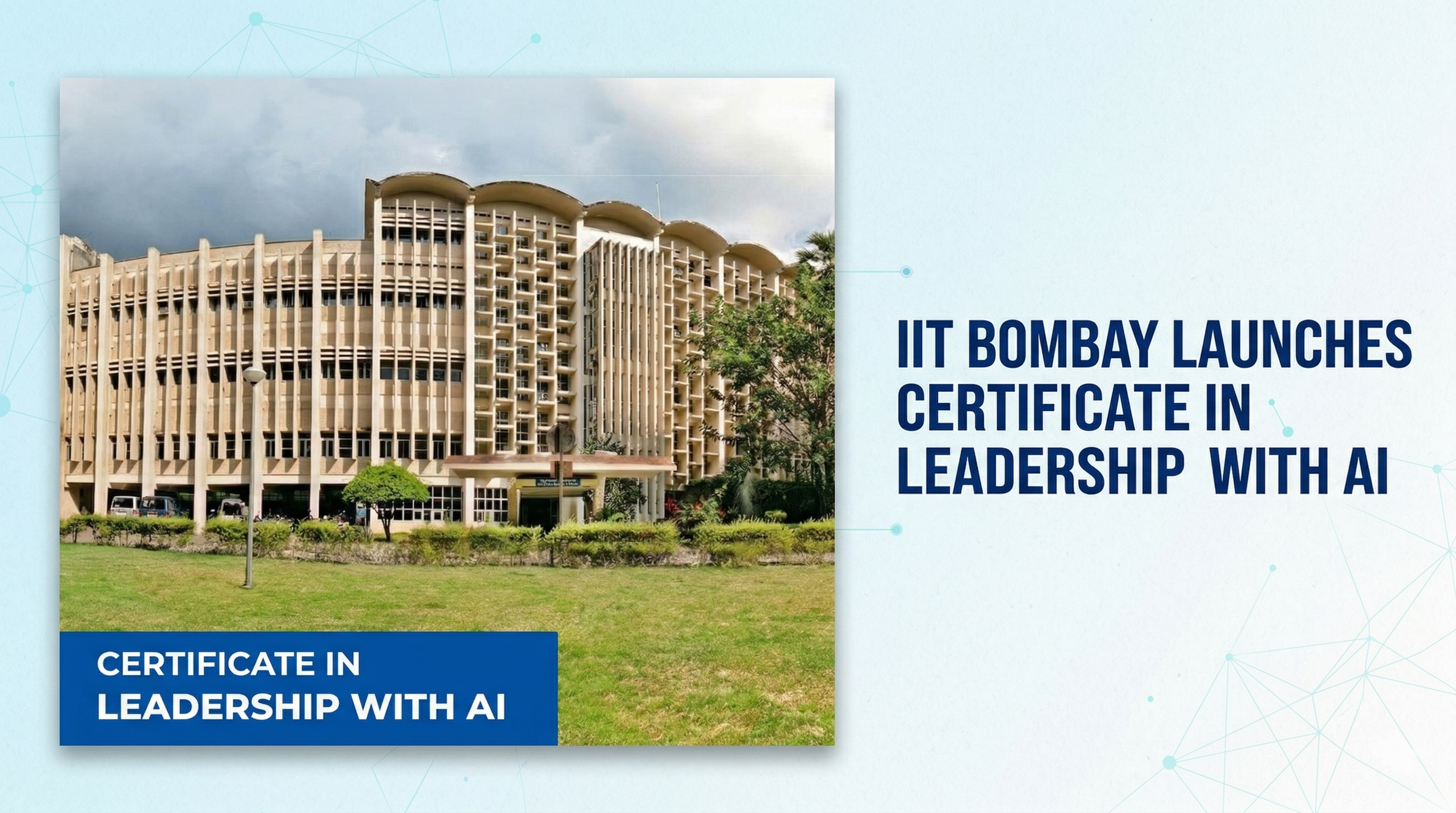
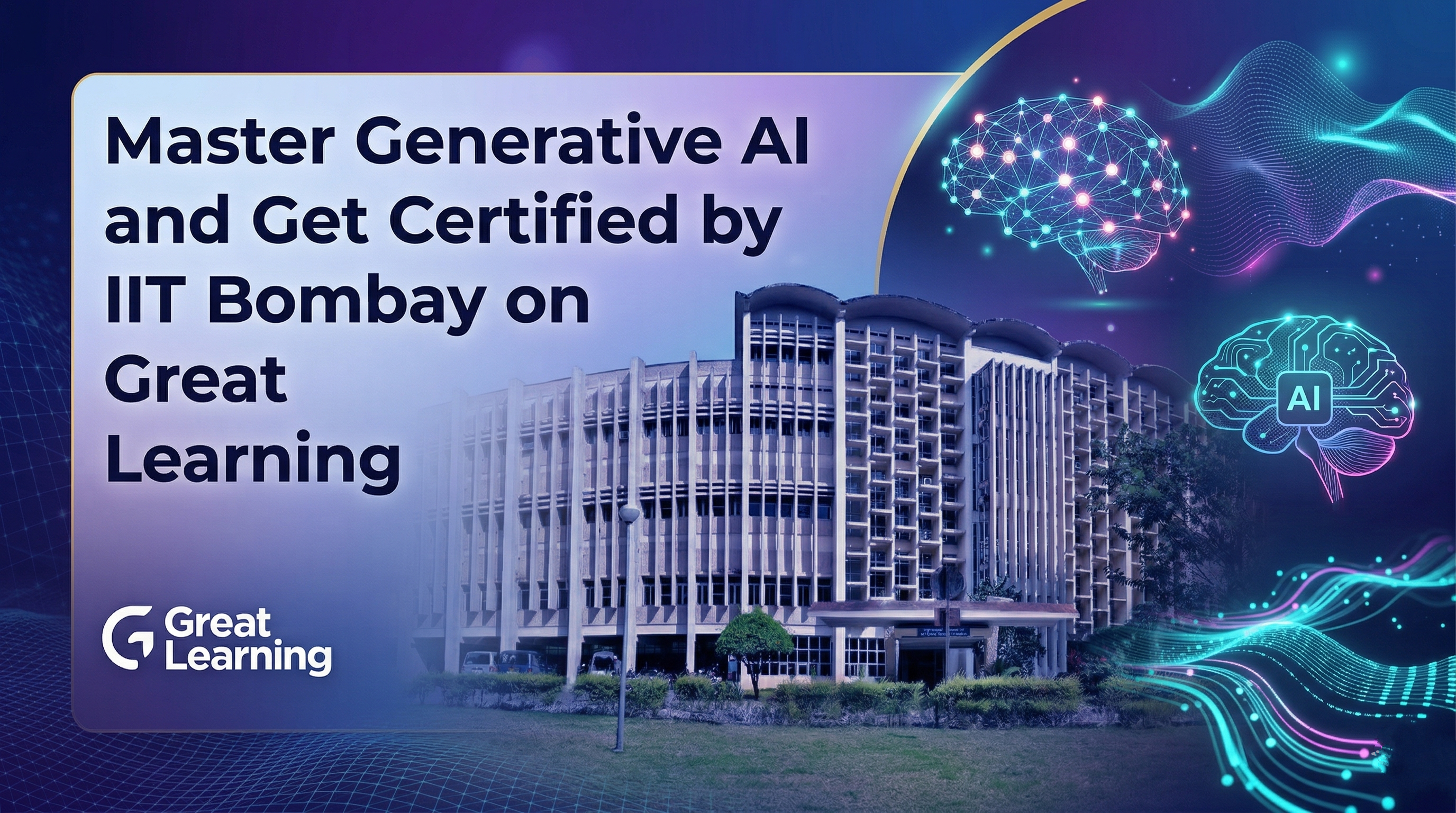
To meet this need, the Technocraft Centre for Applied Artificial Intelligence (TCA2I) at IIT Bombay offers the Certificate in Generative AI.
This program provides a highly practical, LLM-first approach to help learners build and operate dependable Generative AI features grounded with tools like RAG and AI agents.
IIT Bombay Certificate in Generative AI
Learn Generative AI from IIT Bombay. Build hands-on skills in LangChain, LLMOps, and Agentic AI. Apply now!
About the IIT Bombay Generative AI Program
The Certificate in Generative AI is a five-month, online, hands-on program tailored for professionals and STEM graduates.
Designed and delivered by expert faculty from the Indian Institute of Technology, Bombay, the curriculum emphasizes learning industry-relevant applications of Generative AI.
Learners start with AI essentials and Large Language Models (LLMs), progress to writing effective prompts, building "copilot" tools, and ultimately learn how to launch and secure multi-step AI workflows.
Program Highlights
To ensure a comprehensive and flexible learning experience, the program features several key highlights:
- Flexible Online Format: The curriculum is an online program specifically designed for working professionals.
- Expert Instruction: The course is designed and delivered directly by IIT Bombay faculty.
- Live Weekly Sessions: Learners participate in weekly live sessions dedicated to active learning and query resolution.
- Hands-on Learning: The program drives practical skills using industry-relevant tools like Python, PyTorch, TensorFlow, LangChain, and Hugging Face.
- Comprehensive Support: Participants benefit from peer-to-peer networking opportunities and personalized assistance from a dedicated Program Manager.
- Prestigious Credentials: Upon successful completion, learners earn a Certificate of Completion from IIT Bombay's Educational Outreach.
What Makes This Program Unique?
1. Prestigious Academic Standing
IIT Bombay is a premier institution, holding the 3rd spot in the NIRF India Overall Rankings 2025 and the 1st spot in the NIRF India Engineering Rankings 2025. Globally, it ranks 2nd in India according to the QS World University Rankings 2025.
2. Specialized Focus on LLMOps and Security
Unlike introductory courses, this curriculum features a dedicated module on deploying, securing, and managing LLM applications, covering crucial operational skills like CI/CD for LLM apps, performance monitoring, and mitigating vulnerabilities.
3. Peer-to-Peer Networking Opportunities
The online curriculum is designed to foster a collaborative environment, offering peer-to-peer learning and networking opportunities for enrolled working professionals.
4. Diverse, Real-World Project Portfolio:
Learners build a highly versatile portfolio by tackling sample projects across various business domains, such as developing a Brand Marketing Content Generation Assistant, an E-commerce Customer Support Agent, and tools for Financial Analysis and Summary Report Generation.
5. Actionable Pedagogy
The curriculum bridges the gap between theory and industry application through hands-on projects, ensuring learners build clear standards for AI security, privacy, and evaluation.
Who Should Enroll?
This specialized course requires applicants to hold a Bachelor's degree in any discipline from a recognized university with a minimum aggregate of 50%. It is specifically tailored for:
- Software and Technology Professionals: Those wanting to add Generative AI features to products and unlock new career opportunities.
- Data Scientists and Data Analysts: Professionals looking to move beyond prediction into text, image, and code generation.
- Technology Consultants and Technical Managers: Leaders who need to evaluate AI options, manage risks, and present ROI cases to stakeholders.
- Product Managers and Product Owners: Individuals aiming to embed Generative AI into product features to boost user value.
- Business Analysts and Consultants: Professionals wanting to use AI to surface deeper insights and streamline decision-making.
What You Will Learn?
The curriculum is structured into six comprehensive modules, enriched with sample projects:
Module 1: Foundations of Generative AI
Understand core machine learning concepts, Python setups, and how modern models encode meaning numerically using embeddings.
Module 2: Natural Language Processing with Generative AI
Explore attention mechanisms and transformers, applying these mechanics to practical prompt engineering, text generation, and classification tasks.
Module 3: Multimodal AI
Learn about diffusion-based foundation models and how text pairs with images and audio to build and evaluate simple multimodal applications.
Module 4: Designing LLM Workflows and Applications
Focus on production-ready workflows using Retrieval-Augmented Generation (RAG) to ground models in enterprise data, alongside selective fine-tuning strategies.
Module 5: Designing and Building AI Agents
Translate single prompts into multi-step systems by building single-agent flows with memory and tool integration, eventually moving to multi-agent collaboration.
Module 6: Deploying, Securing, and Managing LLM Applications
Learn CI/CD for LLM apps, live monitoring (LLMOps) for latency and drift, and how to implement data governance and operational controls.
Sample Projects
Learners apply their skills through real-world tasks like building an E-commerce Customer Support Agent, creating a Financial Analysis and Summary Report Generation tool, or developing a Medical Assistant for First Aid using a Fine-tuned LLM.
Key Learning Outcomes
Upon completing this program, participants will be fully equipped to:
- Design reliable LLM workflows.
- Adapt foundation models to enterprise data using Retrieval-Augmented Generation (RAG).
- Build agentic applications that plan tasks, call APIs, manage memory, and coordinate multi-step workflows.
- Deploy and operate Generative AI systems utilizing robust LLMOps practices.
- Implement governance and security protocols by embedding necessary privacy controls.
Media Coverage



Next Step
The selection process involves three steps: candidates must first submit a simple online application form. Next, they will go through a mandatory screening call with the registration office. Finally, selected candidates will receive an offer letter and must pay the registration fee to confirm their seat.