
What drives a global leader to see Artificial Intelligence not as a technology but as a way of thinking? For Ram Srinivasan, the answer lies in a lifelong pursuit of understanding how humans and machines learn from one another. From leading global AI adoption to writing Amazon best-selling books, Ram has continuously explored how ideas can evolve into impact. Each step in his career, from enterprise AI strategy to fiction writing, has been an act of imagination grounded in insight. His story is not just about technology; it is about the transformation of systems, of thinking, and of self.
Reimagining Learning Through AI
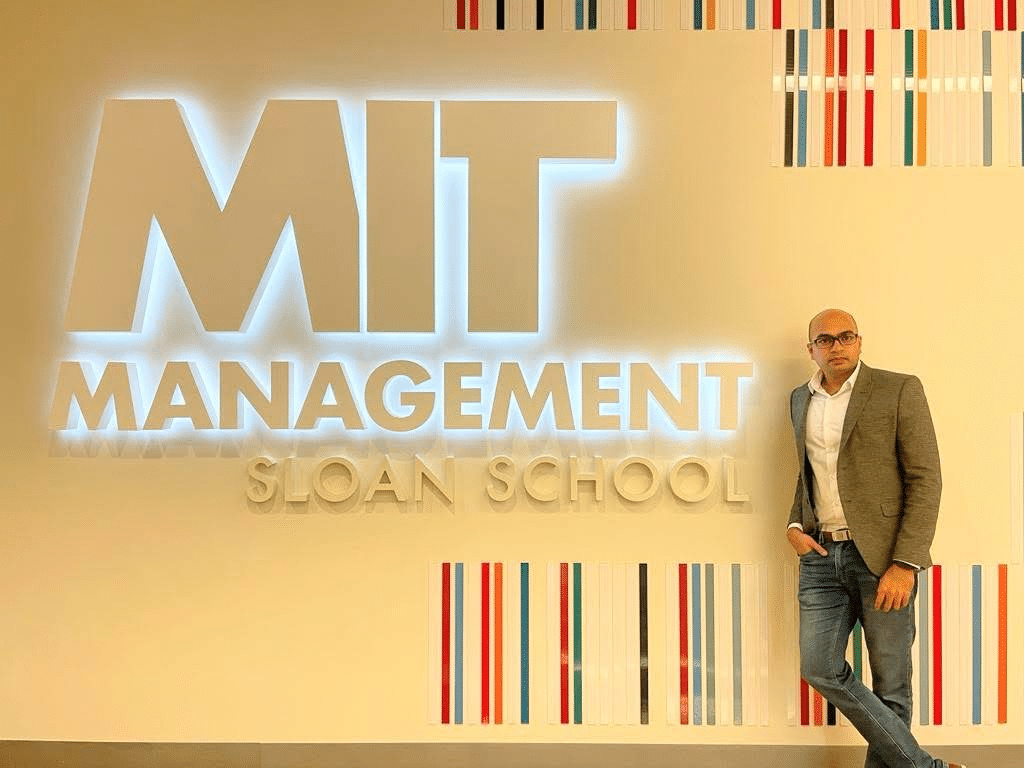
Ram’s learning journey with MIT began long before AI became a mainstream topic. “I’ve been engaged with MIT since 2016,” he says. “I also completed the ACE Advanced Management Program in Management, Innovation, and Technology in 2020. The coursework was technical, hands-on, and deeply relevant.”
When he enrolled in the No Code AI and Machine Learning: Building Data Science Solutions Program by MIT Professional Education, it was not for another credential. It was to refine his edge. “I could see what was coming: an era where you can build apps on demand with low to no code. But to really harness it, you need to understand how the code works, how the models think, and why they behave the way they do. Knowledge still drives clarity.” Ram believes that learning about AI is no longer optional. “We are the last generation of leaders to work with a human-only workforce. The next wave will lead with AI, not around it,” he adds.
Seeing the Future Before It Arrived
Ram’s professional world is deeply intertwined with technology. At JLL, a Fortune 200 company managing over five billion square feet of real estate, he leads global AI adoption initiatives and has witnessed firsthand how AI reshapes industries. “We’ve invested substantially for over a decade in technology and technology platforms,” he explains.
He has long recognized that AI is not just a tool but a design principle. At JLL, this approach has led to innovations like Falcon and JLL GPT. These platforms embed intelligence into everything from data center site selection to decarbonization modeling and intelligent building design. “We are already applying agentic AI, systems that not only respond to prompts but act with intent,” he adds. “The enterprise becomes adaptive, not just automated.”
Writing to Humanize Technology
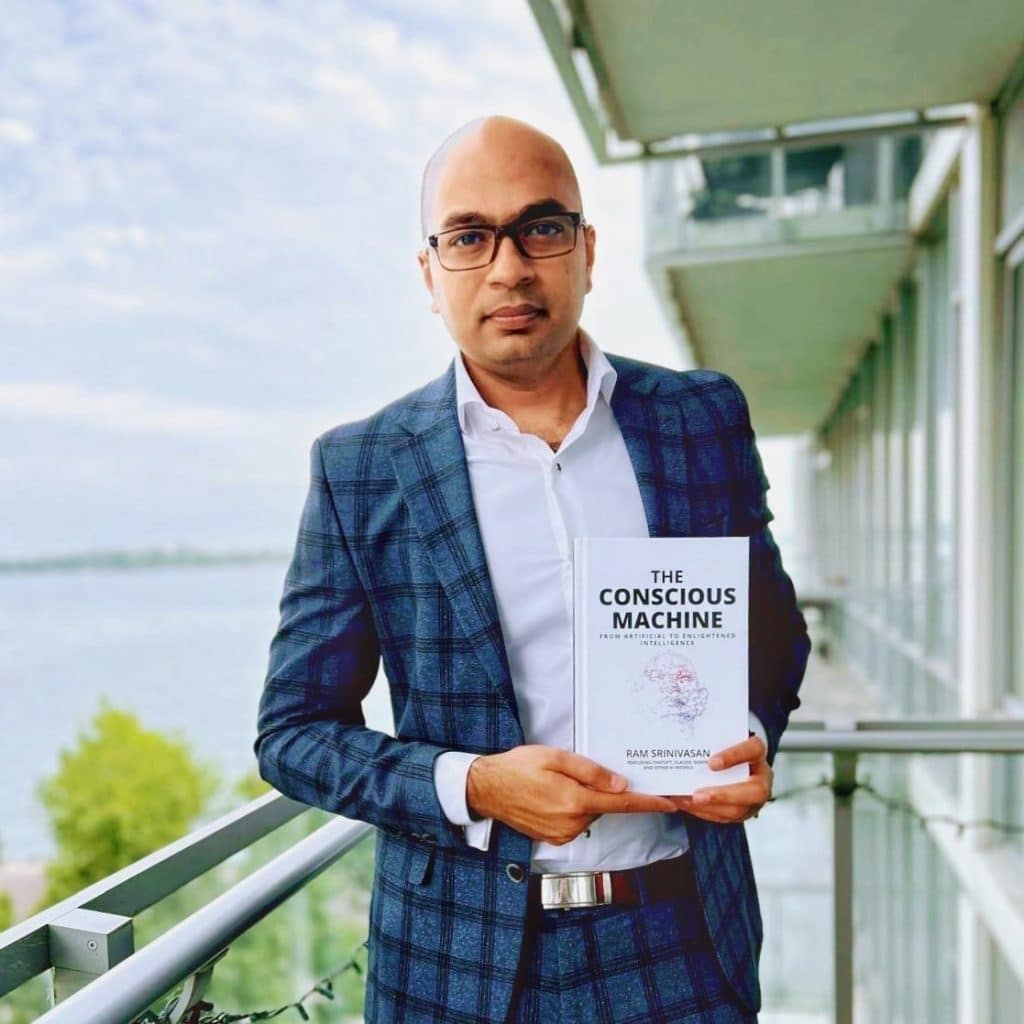
Ram’s vantage point on AI gave him a unique perspective on how AI can transform not only business models but also human understanding. His first book, The Conscious Machine, explored his desire to humanize AI and explore what happens when technology begins to mirror human consciousness.. The societal, ethical, and moral dimensions of AI. “It focused on the future of work and the implications for us as individuals as intelligence progresses,” he shares. The book became an Amazon bestseller and was featured by Great Learning.
This led to his second book, LANK-8, where he took a bold step into fiction. “I wanted readers to imagine AI, to experience its implications through story,” he explains. The novel draws from real-world cybersecurity case studies, fictionalized to explore risk, resilience, and ethics, while weaving in ancient wisdom from the Ramayan. “For time immemorial, stories have been used to convey fundamental truths,” he says. “Those lessons are more relevant today than ever before.”
Writing fiction was a new and unfamiliar experience. “It felt like switching from data visualization to dreaming,” Ram reflects. But that discomfort was instructive. It reminded him that logic and creativity are both forms of structured curiosity. “Stories can do what facts cannot. Data informs, but narrative transforms,” he says.
Connecting Disciplines, Creating Impact

Through his books, professional work, and continuous learning, Ram champions the idea of crossing boundaries. “Don’t wait for permission to explore intersections,” he advises. “The future will belong to those who combine disciplines and connect dots others do not even see.”
His own life mirrors that belief. Having moved across continents, from India to Canada and later to the United States, he understands that transformation rarely feels comfortable. “Growth rarely feels like confidence; it feels like risk,” he says. “But that is the signal. Transformation happens when you move forward despite uncertainty, when you balance the possible with the practical.” Today, as a thought leader in enterprise AI and an author exploring the human side of intelligence, Ram continues to embody what lifelong learning looks like in action.
Today, Ram’s voice in the AI space stands out not just for its technical depth but for its human depth. His work reminds us that while AI shapes the future, it also challenges us to revisit who we are. “For me, AI is not just about machines becoming smarter. It is about humans becoming more conscious,” he says.