
- Why People Are Asking “Will AI Replace Jobs?”
- The Truth Behind Are Jobs Really Being Replaced?
- Real Example for Thought Leaders: Wall Street Shifts
- Three Types of Jobs Most Exposed Right Now
- Why Many Jobs Are Not Being Fully Replaced
- Where Jobs Are Being Created
- How to Stay Irreplaceable
- Great Learning: A Strategic Learning Path Forward
- Lead AI Implementation With MIT Pedigree
- Turn Data Into Strategic Advantage With MIT IDSS
- Lead AI Strategy With Johns Hopkins Credibility
- Build Deep Technical Authority With IIT Bombay
- Start Smart With Foundational AI Courses
- Final Takeaways
Why People Are Asking “Will AI Replace Jobs?”
In the last few months, we have seen some of the most tangible signals yet that AI is reshaping workplace and employment structures in real time. One of the biggest developments came when Block (parent company of Square and Cash App) explicitly cited AI productivity gains as a cause of deep workforce cuts. Leadership cut roughly 40% of its staff and attributed the layoffs to AI tools, which it said made teams more effective.
That statement was remarkable because it moved AI from “future fear” to a real business justification in the public eye.
Across the financial sector, major banks are publicly acknowledging that AI will disrupt hiring trends, slow traditional growth in the workforce, and shift roles rather than simply add headcount. Leaders are now openly talking about redeploying staff, emphasizing AI efficiency, not just growth.
Amid these shifts, top Federal Reserve figures are warning that AI’s impacts could affect unemployment patterns beyond isolated tech layoffs. AI-driven efficiency might actually reduce job growth faster than new AI-augmented work gets created, triggering short-term unemployment rises.
This is new territory. Until recently, much of the discussion about AI and jobs was theoretical, focused on ponderings about the future 5 or 10 years down the road. Now the evidence is emerging that AI is already reshaping real workforce decisions today.
The Truth Behind Are Jobs Really Being Replaced?
The moment a major CEO links layoffs to AI, the internet understandably panics. But experts stress that the reality is far more nuanced.
Some layoffs that reference AI are actually cost-cutting or reorganization decisions where AI becomes a convenient shorthand for broader strategic shifts. A recent Harvard Business Review analysis shows that many layoffs attributed to AI so far were not directly caused by AI performance but were part of wider optimization strategies.
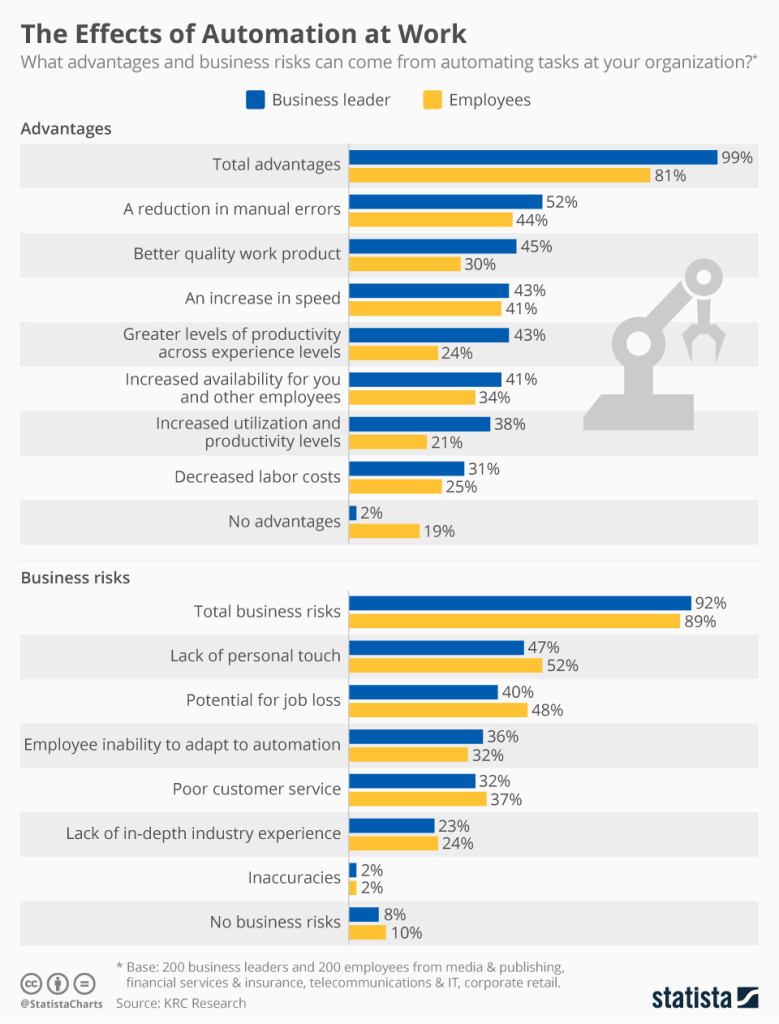
At the same time, major surveys show that most roles today are being augmented, not eliminated outright. In many companies, AI hasn’t replaced entire jobs but has transformed tasks within jobs. Some functions are becoming more efficient while others are changing faster than new roles have emerged to replace them.
That matters. If AI replaced whole occupations, we would be seeing dramatic employment drops across entire industries. But what is emerging instead is task transformation: the work people do gets reshaped, not simply removed.
Real Example for Thought Leaders: Wall Street Shifts
Across the financial sector, executives are now publicly acknowledging that AI will alter hiring and workforce composition.
At one end, some banks are slowing hiring overall. At the same time, they are investing in AI skill growth and redeploying teams into higher-value tasks.
This is a real shift from the past decade, where banks competitively built large teams for data processing and routine tasks. With AI, those tasks can be completed faster or even in real time, changing the strategic balance of labor versus automation.
For industries where compliance, customer support, or data analysis once required large teams of people working manual processes, AI changes the economics of employment. Leaders need teams that understand AI, not just teams that follow old routines.
Three Types of Jobs Most Exposed Right Now
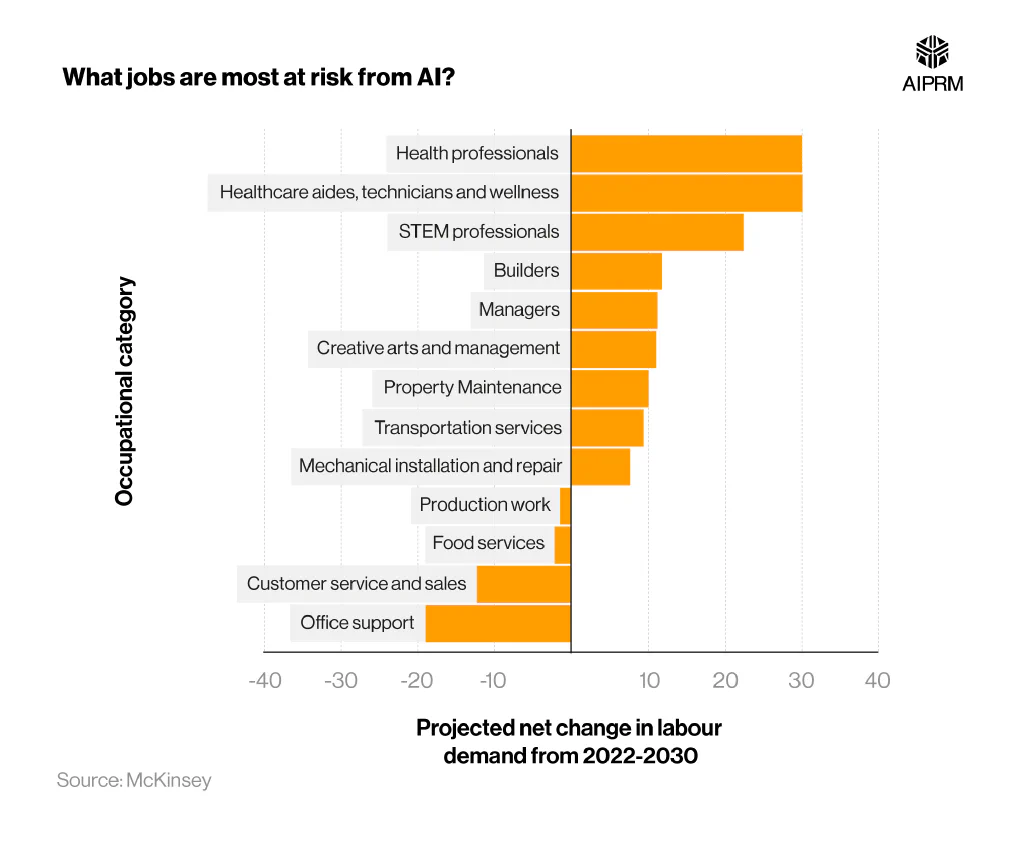
Recent workforce data from major U.S. firms shows uneven exposure to AI across occupations. The difference does not depend on the industry title alone. It depends on how much of the work is structured, repeatable, and rule-driven.
Routine Cognitive and Data Processing Roles
These roles operate on defined logic. A task enters a system. A human reviews, validates, categorizes, or transfers information. The output follows a standard template. The variation across cases is limited.
Bookkeeping, payroll processing, insurance claims review, invoice reconciliation, compliance checklist verification, and basic reporting fall into this pattern. The value comes from accuracy and speed, not interpretation.
Modern AI systems excel in structured environments. They process thousands of records in seconds. They flag anomalies faster than manual review teams. They generate summaries without fatigue. When a role depends on repeating known logic across large datasets, AI performs at scale.
What makes these roles exposed is not that people lack skill. It is that the task architecture fits AI strengths. Pattern recognition, classification, and template generation are core capabilities of large models.
In many organizations, these roles are not disappearing overnight. They are shrinking in volume per employee. One analyst supported by AI handles the workload that once required three or four. That compression changes hiring needs.
The deeper issue for workers in these roles is upward mobility. If the entry layer contracts, the pipeline into higher strategic roles narrows. That creates long-term career risk unless workers reposition early.
Entry-Level Technical Jobs Without AI Skills
There was a time when writing basic code guaranteed entry into technology careers. Today, AI coding assistants draft boilerplate functions, generate test cases, refactor legacy scripts, and even suggest architecture patterns.
For experienced engineers, this is productivity leverage. For entry-level programmers whose value lies in producing straightforward code, the dynamic shifts.
Companies now expect junior developers to review AI output, debug generated logic, understand system integration, and think about performance and security. The bar moves upward.
If a role consists mainly of translating requirements into predictable code structures, AI tools absorb that function quickly. The economic pressure follows. Firms hire fewer entry coders and demand higher competence per hire.
The opportunity still exists, but the skill mix changes. Developers must understand model behavior, prompt design, system orchestration, and data pipeline logic. Coding alone is no longer sufficient for differentiation.
This is why entry level roles without AI fluency are exposed. The work is not vanishing. The expectations are rising faster than many early career professionals anticipate.
Mid-Career White Collar Roles Focused on Information Synthesis
This category often surprises people. These roles are not repetitive in the traditional sense. They involve reading documents, analyzing data, summarizing trends, and presenting insights to decision makers.
Think about market research analysts, policy analysts, internal strategy associates, compliance reviewers, and business intelligence coordinators.
The core value of these roles lies in collecting scattered information and organizing it into coherent narratives. Generative AI models are increasingly capable of performing that first pass synthesis.
They scan reports, extract themes, compare datasets, and draft structured summaries in minutes. A task that once required days of human aggregation compresses significantly.
What remains uniquely human is interpretation under ambiguity, ethical judgment, and context-based prioritization. The mechanical part of synthesis shrinks.
For mid career professionals, this creates pressure. Their work must evolve from producing summaries to challenging assumptions, validating model output, and guiding decisions under uncertainty.
The risk is not immediate unemployment. The risk is role dilution. If output quality becomes indistinguishable between human only and AI assisted processes, compensation and headcount adjust accordingly.
These three clusters reflect economic signals already visible in corporate restructuring patterns. They are grounded in how firms allocate budgets and measure productivity. AI is creating new jobs while simultaneously redefining existing roles, shifting demand toward skills that combine technical expertise, problem-solving ability, and AI fluency.
Why Many Jobs Are Not Being Fully Replaced
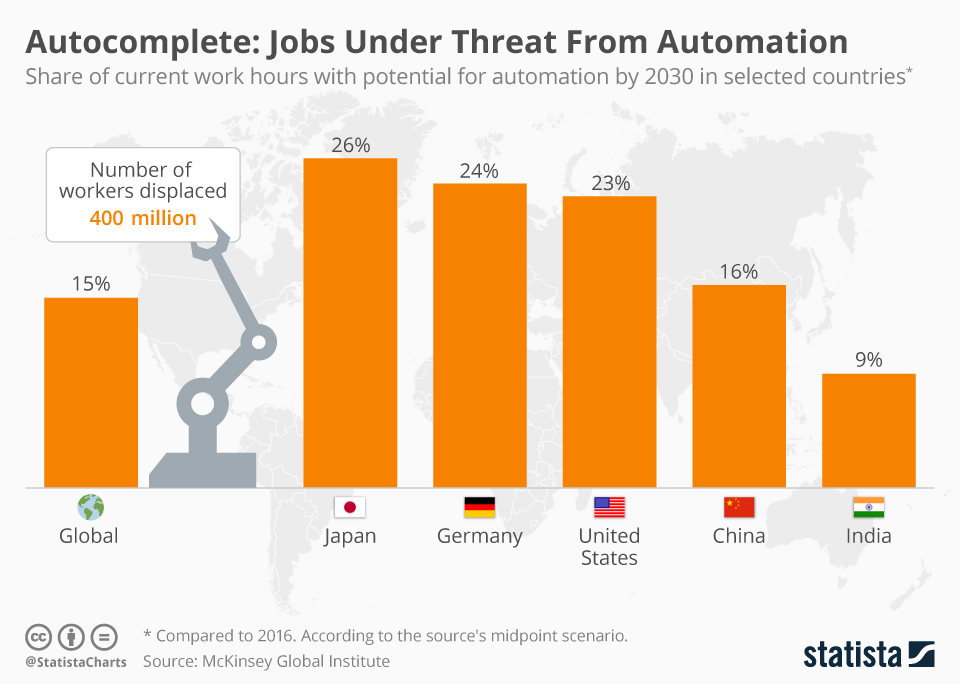
Despite visible disruption, full occupation level replacement remains limited for structural reasons.
First, AI complements human judgment more often than it substitutes it. Real-world decision-making involves incomplete information, shifting incentives, and ethical tradeoffs. AI generates options. Humans decide under accountability.
A financial analyst does not only summarize earnings. They assess geopolitical context, leadership credibility, and regulatory risk. A healthcare administrator does not only review records. They weigh patient impact, compliance standards, and operational constraints.
AI contributes to speed and pattern detection. Humans provide contextual authority.
Second, skill demand is evolving rather than disappearing. When routine tasks compress, new tasks emerge around system oversight, validation, integration, and strategy alignment.
Companies now require professionals who understand how AI systems behave, where they fail, and how to monitor output quality. That creates demand for hybrid skill sets. Business fluency plus technical awareness becomes a competitive advantage.
Third, the distinction between automation and augmentation shapes outcomes. Automation removes a task entirely. Augmentation enhances a worker’s capacity.
Most enterprise AI deployments today focus on augmentation. Firms invest in AI to increase output per employee, not to eliminate entire departments immediately. Economic caution, regulatory scrutiny, and operational risk slow full automation.
For professionals, this distinction matters. If your role becomes augmented, you gain leverage by mastering the tool. If you resist, you lose ground to peers who adopt.
Career resilience now depends less on job title and more on adaptability within that title.
Where Jobs Are Being Created
The conversation about AI often centers on contraction. Fewer analysts. Fewer entry-level coders. Leaner operations teams.
What receives less attention is the expansion happening quietly around AI deployment itself. When companies introduce AI into production environments, they create new layers of work that did not previously exist.
AI Integration Specialists
Most executives learn quickly that installing an AI tool is easy. Embedding it into daily operations is not.
An AI model must connect to clean data sources. Those data sources often sit in legacy systems built years apart. Formats conflict. Governance rules differ. Access controls vary. Integration specialists step in at this point.
They assess the existing architecture. They determine where data flows break down. They redesign pipelines so models receive reliable inputs. They build monitoring systems to track output accuracy over time.
They also manage change inside teams. A model might generate reports automatically, but employees need to trust and interpret those outputs. Integration specialists coordinate between engineering, operations, compliance, and leadership.
Their value lies in translation. They speak both technical and business language. They understand model limitations and operational constraints. Without them, AI remains a pilot project that never scales.
This is why demand for these roles is increasing. Companies realize AI value does not come from experimentation. It comes from structured implementation.
AI Safety and Ethics Analysts
As AI systems move from internal tools to customer-facing and decision-making roles, scrutiny intensifies.
Financial institutions must ensure models do not introduce bias in lending decisions. Healthcare systems must validate that diagnostic support tools align with regulatory standards. Government agencies must document how automated decisions affect citizens.
AI safety and ethics analysts operate at this intersection of technology and accountability.
They audit training data. They test outputs across demographic segments. They examine explainability mechanisms. They prepare documentation for regulators and internal risk committees.
Their work also involves scenario analysis. What happens if the model fails? What is the fallback process? Who holds responsibility for incorrect outputs?
These professionals combine legal awareness, statistical literacy, and organizational insight. Their presence signals maturity in AI adoption.
As regulatory frameworks evolve in the United States, demand for oversight expertise continues to grow. Companies that scale AI without governance expose themselves to financial and reputational risk. Firms that invest in dedicated oversight build long term trust.
Human AI Collaborative Designers
Technology often fails not because the algorithm is weak but because the workflow design is flawed.
Human AI collaborative designers focus on how decisions flow between systems and people.
They determine which decisions remain fully human-controlled. They identify tasks suitable for full automation. More often, they design shared control models where AI proposes options and humans validate.
They map user interfaces. They define escalation paths when model confidence drops. They create feedback loops so human corrections retrain systems over time.
This role blends user experience design, behavioral psychology, and process engineering.
In a customer service environment, for example, collaborative designers may build systems where AI drafts responses while human agents refine tone and context. In supply chain management, AI may forecast demand while managers adjust based on local knowledge.
The design of this interaction determines whether AI increases productivity or creates friction.
Trust plays a central role. Employees adopt systems when they understand how decisions are made and when they retain agency in critical moments.
These designers shape that balance.
The presence of these roles across major job boards signals a broader truth. AI does not eliminate work in a vacuum. It creates new coordination challenges. It shifts value toward integration, oversight, and orchestration.
The labor market does not simply shrink. It reallocates.
Professionals who move toward these expanding functions position themselves closer to strategic control points within organizations.
How to Stay Irreplaceable
Remaining relevant in this environment requires deliberate movement rather than passive adaptation.
Develop Deep AI Tool Fluency
Understanding AI tools is no longer optional in knowledge-driven roles.
Tool fluency extends beyond basic usage. It includes earning various AI powered skills such as designing effective prompts, evaluating output reliability, and identifying model blind spots.
Professionals who can refine AI outputs into decision-ready material become force multipliers inside their teams.
Consider two analysts. One manually compiles reports. The other uses AI to draft initial summaries, then spends time validating assumptions and improving strategic framing. The second analyst delivers higher-quality insights in less time.
Over months, this productivity gap compounds.
Employers observe these differences quickly. AI fluency shifts performance benchmarks upward.
Build Strength in Human Dominant Domains
AI systems excel at pattern recognition and structured logic. They struggle with ambiguity rooted in human dynamics.
Complex negotiation involves reading unspoken signals, managing emotional context, and balancing long-term relationships. Cultural sensitivity requires lived experience and contextual awareness. Ethical reasoning demands value judgments that extend beyond probability calculations.
Professionals who deepen expertise in these areas create defensible value.
This does not mean avoiding technical skills. It means combining technical literacy with human judgment.
For example, a product manager who understands model limitations and can lead cross-functional teams through difficult trade-offs becomes far harder to replace than a coordinator who only tracks tasks.
The edge lies in synthesis between systems and people.
Commit to Continuous Learning
The half-life of technical skills continues to shorten in AI-influenced sectors.
Frameworks evolve. Regulatory standards shift. Tool capabilities expand rapidly.
Employers increasingly interpret ongoing education as a signal of adaptability. Certifications, structured programs, and applied capstone projects demonstrate commitment to evolution.
Learning must be practical. Exposure to real datasets, deployment scenarios, and governance challenges builds credibility.
Professionals who update skills annually maintain alignment with market shifts. Those who rely solely on past credentials risk obsolescence.
Resilience now depends less on tenure and more on momentum.
Career durability comes from moving toward growth clusters, strengthening human-centric capabilities, and maintaining active engagement with emerging tools.
AI does not reward static expertise. It rewards those who integrate, interpret, and guide intelligent systems within complex environments.
Great Learning: A Strategic Learning Path Forward
Great Learning positions itself as a workforce transformation partner aligned with these structural shifts, helping you to understand what to Learn vs what’s hype as AI becomes mainstream.
Our programs move beyond theoretical coding. We focus on applied artificial intelligence, machine learning deployment, data strategy, and AI product thinking. This alignment matters because companies now hire for integration capability, not isolated technical ability.
As AI transforms workplaces globally, professionals must adapt by building AI skills that enable them to design, guide, supervise, and integrate AI systems rather than compete against them. Great Learning partners with some of the most respected universities in the United States and the world, offering programs that help you stay indispensable in a future shaped by AI and data-driven decision making.
These credentials are not just certificates. They signal practical capability supported by academic excellence and industry relevance.
Here are recommended programs that align closely with the roles and competencies employers now prioritise:
Lead AI Implementation With MIT Pedigree
Applied AI and Data Science Program
Offered by MIT Professional Education in collaboration with Great Learning
If your goal is to move from theory to production-grade AI deployment, this program delivers rigorous technical training backed by MIT faculty. The curriculum covers supervised and unsupervised learning, neural networks, generative AI applications, model evaluation, and deployment frameworks used in enterprise environments.
You gain hands-on experience with real datasets, real use cases, and implementation scenarios that mirror what AI integration specialists handle inside organizations.
Best suited for:
Engineers, data analysts, software developers, and technical professionals who want to lead AI implementation rather than support it.
Explore program details and apply:
MIT Professional Education's Data Science Course
Gain the expertise top companies seek and open doors to Data Science jobs.
Turn Data Into Strategic Advantage With MIT IDSS
AI and Data Science: Leveraging Responsible AI
Offered by MIT Institute for Data, Systems, and Society in collaboration with Great Learning
This program blends advanced analytics with responsible AI design. You learn how to convert complex data into decision frameworks while understanding governance, bias mitigation, and ethical deployment. The focus goes beyond algorithms. It emphasizes real-world impact.
Graduates develop the ability to guide AI initiatives across business units, ensuring technical systems align with organizational strategy.
Best suited for:
Mid-career professionals, consultants, managers, and analytics leaders preparing to oversee AI initiatives and cross-functional deployments.
Explore program details and apply:
MIT Data Science and Machine Learning Course
Unlock the power of data. Build hands-on data science and machine learning skills to drive innovation in your career.
Lead AI Strategy With Johns Hopkins Credibility
AI Business Strategy Certificate
Offered by Johns Hopkins University Whiting School of Engineering in collaboration with Great Learning
AI adoption creates governance challenges as much as technical ones. This certificate focuses on AI strategy, responsible innovation, ethical risk, and system oversight. You gain frameworks for evaluating AI ROI, managing bias, and aligning model output with enterprise goals.
This is not a coding program. It is a leadership track for decision makers shaping how AI transforms their organizations.
Best suited for:
Executives, senior managers, innovation leaders, compliance heads, and professionals responsible for AI governance.
Explore program details and apply:
JHU Certificate Program in AI Business Strategy
Master the AI landscape and drive business value. Learn key frameworks to devise and manage large-scale AI projects in your organization.
Build Deep Technical Authority With IIT Bombay
e-Postgraduate Diploma in Artificial Intelligence and Data Science
Offered by IIT Bombay in collaboration with Great Learning
This 18-month structured diploma builds strong foundations in machine learning, deep learning, advanced analytics, and AI system architecture. It combines academic rigor with applied project work.
For professionals seeking long-term career durability in AI-heavy industries, this diploma signals depth and discipline.
Best suited for:
Data professionals, engineers, technical managers, and career switchers aiming for machine learning engineer or data scientist roles.
Explore program details and apply:
IIT Bombay ePGD in AI & Data Science
Master AI and data analytics with IIT Bombay's e-Postgraduate Diploma. Build hands-on skills to advance your career.
Start Smart With Foundational AI Courses
Free AI and Data Science Starter Courses
Offered by Great Learning Academy
If you are beginning your AI journey, start with structured foundational learning. These short courses introduce machine learning basics, generative AI concepts, Python tools, and core analytics principles.
They provide certification and help you assess readiness for advanced programs.
Best suited for:
Professionals in exposed roles who want to quickly build AI literacy before committing to longer programs.
Start free here:
https://www.mygreatlearning.com/ai/free-courses
Final Takeaways
AI is not a mythical force that will erase all jobs overnight. What we are seeing now is a transformation in work, with real economic, social, and labor implications:
- Some jobs are shrinking or shifting rapidly.
- Entire fields such as entry data work and routine tech tasks are being restructured.
- New opportunities are emerging for workers with AI-complementary skills.
- Companies that rebound fastest combine human expertise with AI productivity.
This shift is already here. Workers who adapt early and acquire strategic skills will not be replaced; they will thrive.
AI will change jobs. The question now isn’t whether it will replace them, but which professionals will shape how work gets done.