Free Image Segmentation Course
Image Segmentation Techniques
Learn image segmentation with edge detection, thresholding, and region-based methods. Join our free Image Segmentation course to gain practical skills fo r extracting structures and applying them in computer vision.
Instructor:
Dr. Vibhav Singh




About this course
This free image Segmentation training course covers the fundamental techniques used in computer vision to divide images into meaningful regions. You will learn how gradient operators such as Sobel, Prewitt, and Roberts detect edges, along with core edge detection and thresholding methods for separating objects from the background. The course also introduces segmentation algorithms, including clustering, edge-based, and region-based approaches, with a focus on region growing, splitting, and merging techniques. By the end, you will have the skills to apply image segmentation methods to real-world images and build a foundation for advanced computer vision tasks.
Course outline
Introduction to Image Segmentation
In this module, you’ll explore the fundamentals of image segmentation, its purpose in computer vision, and how it helps in dividing an image into meaningful regions.
Gradient Operators
In this module, you’ll learn how gradient-based operators like Sobel, Prewitt, and Roberts are used to detect edges by measuring changes in pixel intensity.
Basics of Edge Detection
In this module, you’ll examine core edge detection techniques for identifying object boundaries within images.
Basics of Thresholding
In this module, you’ll understand how thresholding separates objects from the background using pixel intensity values.
Segmentation Algorithms
In this module, you’ll discover various segmentation approaches, including clustering, edge-based, and region-based techniques.
Region Based Segmentation
In this module, you’ll learn how region growing, splitting, and merging methods are applied to segment connected areas in images.
Get access to the complete curriculum once you enroll in the course




What our learners enjoyed the most
Skill & tools
67% of learners found all the desired skills & tools
Easy to Follow
67% of learners found the course easy to follow
Quizzes & assignments
67% of learners found the assignments helpful
Our course instructor

Dr. Vibhav Singh
Assistant Professor
Artificial Intelligence Expert


Frequently Asked Questions
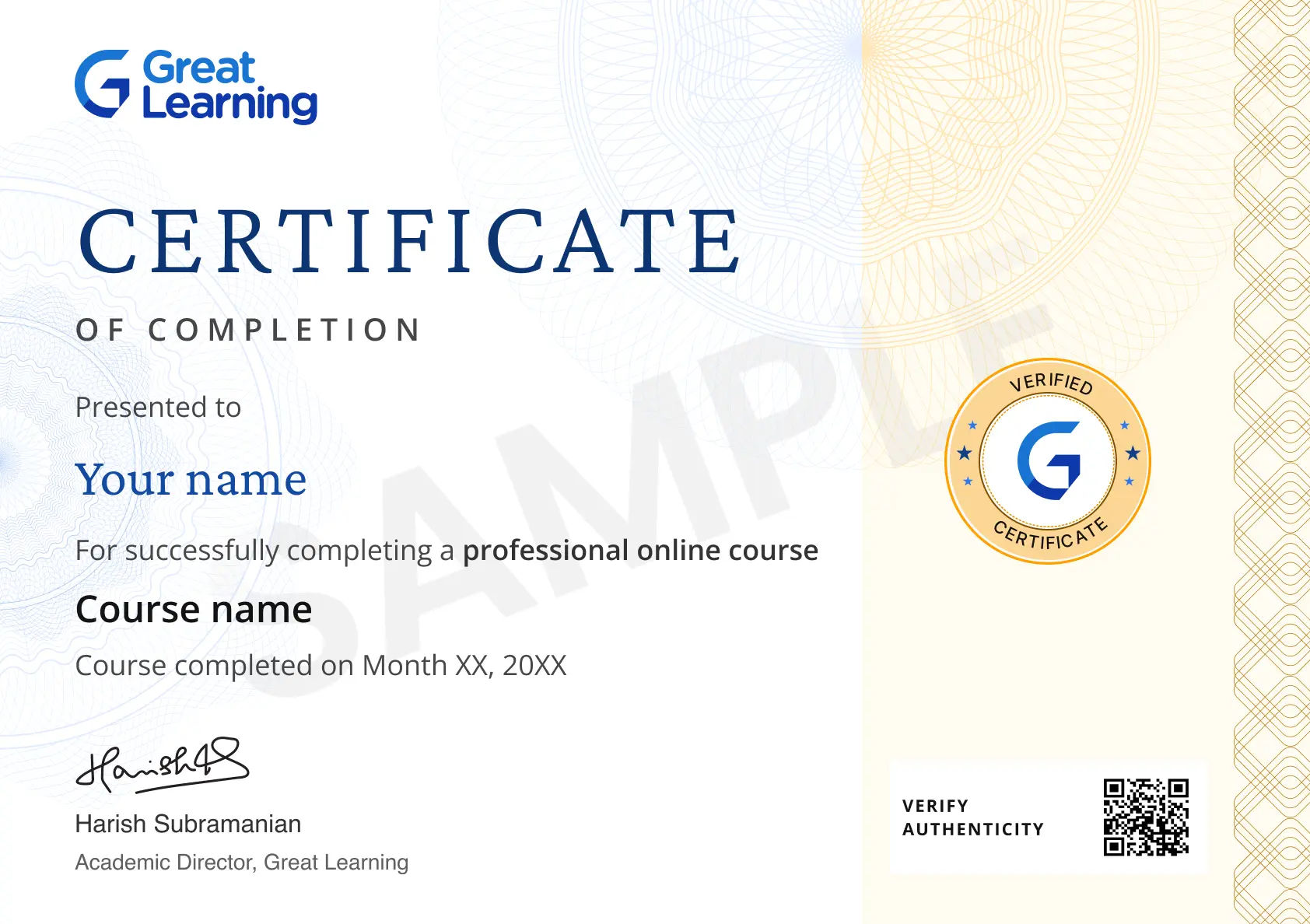
Will I receive a certificate upon completing this free course?
Is this course free?
Who should take this image segmentation free course?
This course is ideal for beginners, students, and professionals interested in computer vision, image processing, or AI who want to understand and apply image segmentation techniques.
What will I learn in this free image Segmentation course?
You’ll learn image segmentation for free, starting with the basics, gradient edge detection, and thresholding. The course also covers segmentation algorithms and region-based methods like growing, splitting, and merging.
Do I need prior experience before starting this free image Segmentation training course?
No advanced experience is required. Basic knowledge of images, pixels, and digital image processing concepts can be helpful, but is not mandatory.
What is the purpose of learning image segmentation?
Image segmentation is a core step in computer vision that enables object detection, medical imaging, autonomous driving, and many AI applications. Learning gives you practical, in-demand skills.
What modules are included in the course?
The course includes:
- Introduction to Image Segmentation
- Gradient Operators
- Basics of Edge Detection
- Basics of Thresholding
- Segmentation Algorithms
- Region-Based Segmentation
What skills will I gain after completing the free online image Segmentation course?
You’ll gain skills in image preprocessing, edge detection with Sobel/Prewitt/Roberts operators, thresholding, segmentation algorithms, and applying region-based methods to real-world images.
How does this course apply in real-world scenarios?
Once you complete the course, you will be in a position to implement segmentation methods for tasks such as object recognition, medical imaging, and other computer vision tasks.

Recommended Free AI courses
 FREE
FREE


.jpg "Course thumbnail image")


Related Artificial Intelligence Courses

-

6 Weeks · Online · Weekend
Money Back GuaranteeKnow More
-
Johns Hopkins University
Certificate Program in AI Business Strategy10 weeks · Online
Know More
-
Walsh College
MS in Artificial Intelligence & Machine Learning2 Years · Online
Know More