Free Inverters and Electric Drive Course
Introduction to Inverters and Electric Drive
 4.28
Beginner level
2.25 learning hrs
4.28
Beginner level
2.25 learning hrs
For learners exploring Inverters and Electric Drive, this free course brings system components, control logic, and application basics into one path, making the basics easier to understand and use.
Instructor:
Imran Mohammed




About this course
A beginner-focused free inverters and electric drive course can reduce confusion by connecting ideas with situations learners actually recognize. The course introduces core concepts, system behavior, use cases, and risks in a way that shows how the pieces work together. Instead of treating inverters and electric drive as a list of terms, it explains what to look for, how to reason through common tasks, and why the subject appears in real projects, teams, or business decisions.
The course is a good fit if you want to understand how the technology works, where it is used, and what to check before applying it. You can use it to prepare for assignments, interviews, workplace conversations, or a first hands-on project depending on your goal. After finishing, you should be able to explain the core idea of inverters and electric drive, recognize when it is relevant, and choose a sensible next step such as practice exercises, deeper tools, related frameworks, or a more advanced course.
Course outline
Introduction to Inverters
In this module, you will learn the fundamental principles of inverters, including their role in converting DC power to AC power.
Single Phase Half Bridge Inverter
In this module, you will have a comprehensive understanding of Single Phase Half Bridge Inverters, their operation, control strategies, and practical applications.
Single Phase Full Bridge Inverter
In this module, you will learn the principles of Single Phase Full Bridge Inverters, their circuit topology, and how they convert DC power to AC power.
Three Phase Inverter
In this module, you will have an understanding on the fundamentals of Three Phase Inverters and their significance in power conversion.
Electric Drive Unit Part 1
In this module, you will learn about Electric Drive Units and their crucial role in modern electric vehicles (EVs). You will also
explore the different electric motors used in Electric Drive Units.
Electric Drive Unit Part 2
In this module, you will have a solid foundation in Electric Drive Units, covering electric motors, power electronics, energy management, and their role in shaping the future of electric transportation.
EV Motor and Controller
In this module, you will learn and explore the fundamentals of EV propulsion and the role played by electric motors and controllers in modern electric vehicles.
Get access to the complete curriculum once you enroll in the course
 4.28
4.28














Our course instructor

Imran Mohammed
Assistant Professor at MJ College of Engineering & Technology with over 12+ years of teaching experience
IT & Software Expert


Frequently Asked Questions
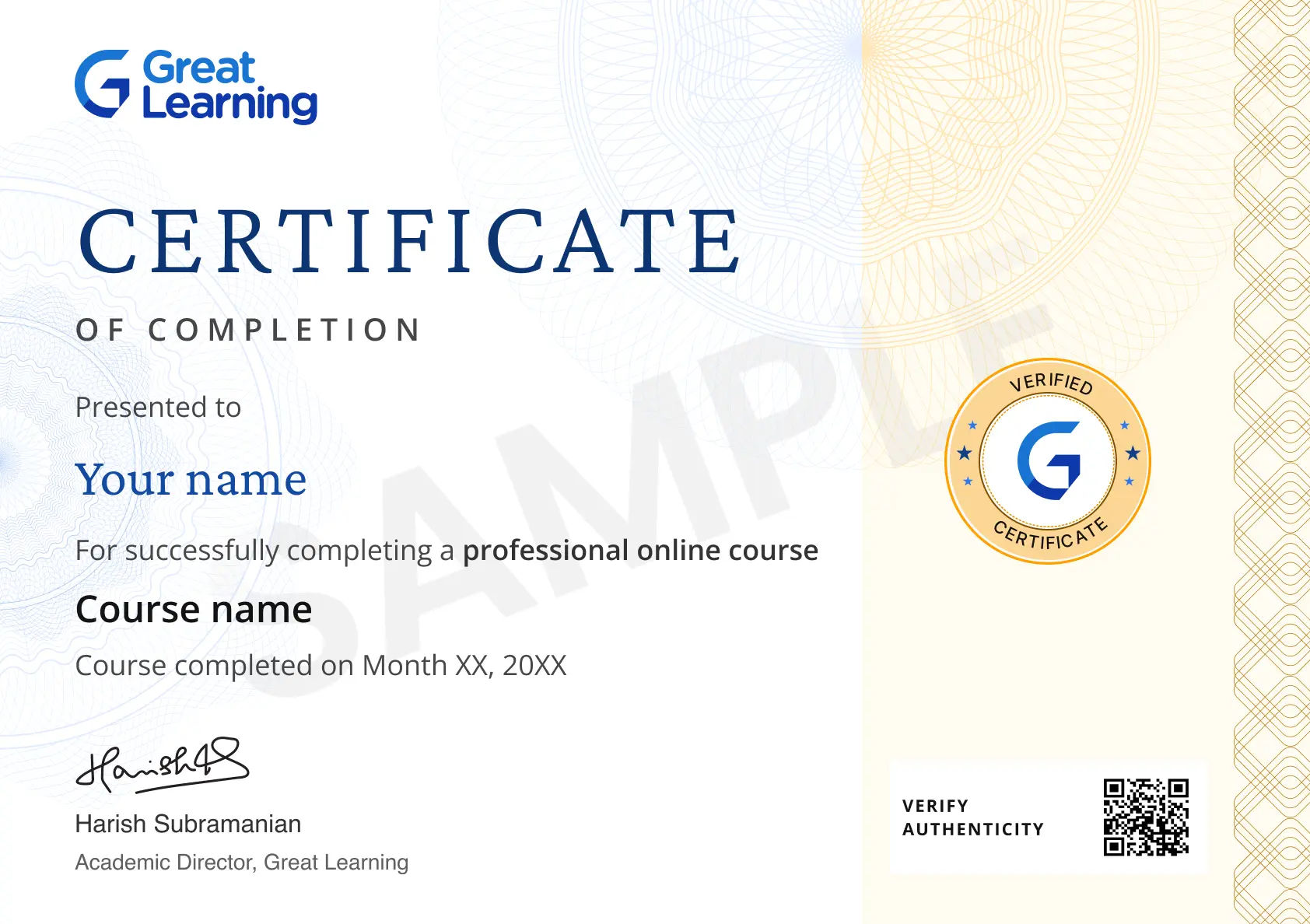
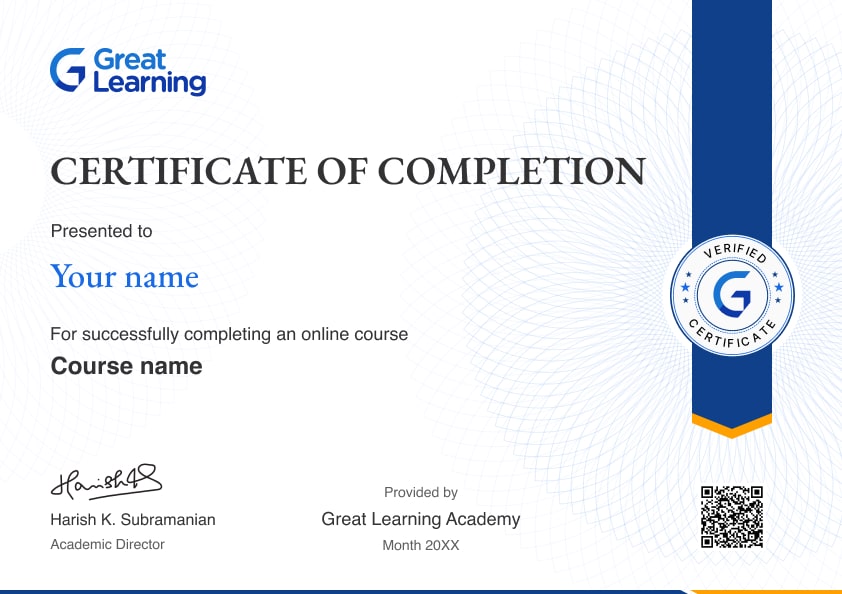
Will I receive a certificate upon completing this free course?
Is this course free?
What prerequisites are required to enrol in this Free Introduction to Inverters and Electric Drive course?
You do not need any prior knowledge to enrol in this Introduction to Inverters and Electric Drive course.
Does Inverters and Electric Drive require prior experience?
How long does it take to complete this Free Introduction to Inverters and Electric Drive course?
It is a 1.0 hour long course, but it is self-paced. Once you enrol, you can take your own time to complete the course.
How can Inverters and Electric Drive improve interview preparation?
Will I have lifetime access to the free course?
Yes, once you enrol in the course, you will have lifetime access to any of the Great Learning Academy’s free courses. You can log in and learn whenever you want to.
Inverters and Electric Drive: what should I practice first?
Will I get a certificate after completing this Free Introduction to Inverters and Electric Drive course?
Yes, you will get a certificate of completion after completing all the modules and cracking the assessment.
Is Inverters and Electric Drive better for beginners or experienced learners?
How much does this Introduction to Inverters and Electric Drive course cost?
It is an entirely free course from Great Learning Academy.
What comes after learning Inverters and Electric Drive online?
Is there any limit on how many times I can take this free course?
No. There is no limit. Once you enrol in the Free Introduction to Inverters and Electric Drive course, you have lifetime access to it. So, you can log in anytime and learn it for free online.
How does Inverters and Electric Drive connect with real work?
Who is eligible to take this Free Introduction to Inverters and Electric Drive course?
You do not need any prerequisites to take the course, so enroll today and learn it for free online.
Inverters and Electric Drive: what comparisons make the subject clearer?
In Inverters and Electric Drive, what should beginners understand first?
Recommended Free Software courses
 FREE
FREE



Similar courses you might like


Related IT & Software Courses

-

McCombs School of Business at The University of Texas at Austin
Post Graduate Program in Cyber Security20 weeks · Online
Know More

Relevant Career Paths >
Other IT & Software tutorials for you
Introduction to Inverters and Electric Drive
Inverters and electric drives are integral components in the field of power electronics, playing a key role in the control and utilization of electrical energy. These technologies are crucial for applications such as electric vehicles, industrial machines, and renewable energy systems. Let's delve into an introduction to inverters and electric drives to understand their significance in modern electrical systems.
Inverters:
An inverter is a device that converts direct current (DC) into alternating current (AC). It is a fundamental component in various applications where AC power is required but the power source, such as batteries or solar panels, produces DC power. Inverters are vital for enabling the integration of renewable energy sources into the electrical grid and for powering AC devices from DC sources.
1. Basic Operation:
Inverters use electronic components, typically semiconductor devices like transistors or thyristors, to rapidly switch the DC input on and off. This switching action generates an AC output waveform, which can be controlled to match the desired frequency, voltage, and waveform characteristics. Pulse Width Modulation (PWM) is a common technique used to achieve precise control over the output.
2. Types of Inverters:
- Voltage Source Inverters (VSI): These inverters maintain a constant DC voltage input and vary the output voltage by adjusting the pulse width of the switching signals.
- Current Source Inverters (CSI): In contrast, CSI maintains a constant DC current input, adjusting the output voltage by modulating the pulse width.
3. Applications:
- Renewable Energy: Inverters are used in solar power systems and wind turbines to convert the DC output from solar panels or wind generators into AC power suitable for the electrical grid.
- Uninterruptible Power Supplies (UPS): Inverters are crucial components in UPS systems, providing seamless transition from grid power to battery power during power outages.
- Electric Vehicles: Inverters are employed in electric vehicles to convert the DC power from batteries into AC power to drive electric motors.
Electric Drives:
Electric drives, also known as motor drives or variable frequency drives (VFD), involve the use of power electronic devices to control the speed, torque, and direction of electric motors. This technology is prevalent in industrial automation, transportation, and numerous other applications where precise control over motor performance is essential.
1. Components of Electric Drives:
- Inverter: The inverter is a key component that controls the frequency and voltage supplied to the electric motor.
- Controller: A control system manages the operation of the inverter, receiving input signals and feedback from sensors to adjust the motor's performance.
- Motor: The electric motor is the output device that converts electrical energy into mechanical motion. Different types of motors, such as induction motors and permanent magnet motors, are used in electric drives.
2. Advantages of Electric Drives:
- Energy Efficiency: Electric drives allow for precise control over motor speed and torque, optimizing energy consumption and improving overall system efficiency.
- Variable Speed Operation: Electric drives enable variable speed operation, providing flexibility in various applications, from industrial machinery to HVAC systems.
- Regenerative Braking: Some electric drives allow for regenerative braking, where the kinetic energy of the moving load is converted back into electrical energy, improving overall energy efficiency.
3. Applications:
- Industrial Automation: Electric drives are extensively used in manufacturing processes, conveyor systems, and robotics to control the speed and position of machinery.
- Electric Vehicles: In electric vehicles, electric drives regulate the speed and torque of traction motors, contributing to the efficiency and performance of the vehicle.
- HVAC Systems: Heating, ventilation, and air conditioning systems utilize electric drives to control the speed of fans and pumps, optimizing energy consumption.
In conclusion, inverters and electric drives are critical components in power electronics, playing pivotal roles in converting and controlling electrical energy. Inverters facilitate the integration of renewable energy sources into the grid, while electric drives provide precise control over motor performance in various applications. As technology advances, these components continue to evolve, contributing to increased energy efficiency, reduced environmental impact, and advancements in electric transportation and industrial automation.