

Marketing teams struggle to balance quality with output as demand for SEO optimized, multi-format content rises. Traditional “write, edit, repurpose” workflows cannot keep up with shrinking attention spans and fierce competition. This is where the AI agents offer a transformative solution to the marketers.
In this blog, we explore the use cases for why marketing professionals should study AI agents, from generating SEO articles to repurposing content to boost efficiency, consistency, and engagement across channels.
What Are AI Agents for Marketing?
AI agents for marketing are intelligent software systems designed to handle entire workflows rather than single tasks.
Unlike traditional AI assistants that respond only when prompted, these agents work proactively. They make decisions, adapt to context, and follow the goals you set for them.
Essentially, they manage repetitive and time-consuming processes such as:
- SEO content generation and on-page optimization
- Multi-format content repurposing across channels
- Competitor monitoring and keyword intelligence
- Automated internal linking and metadata enhancement
This allows marketing teams to focus on strategy, creativity, and high-impact initiatives.
Free AI Agents Course: Learn to Build and Use AI Agents
Learn how to build, train, and deploy AI agents for free! Explore hands-on techniques and tools to create intelligent, autonomous systems.
Traditional Automation vs. AI Agents
| Aspect | Traditional Marketing Automation | AI Marketing Agents |
| Workflow Logic | Rigid. Follows linear "If-Then" scripts (e.g., "If blog is published, share link to Twitter"). | Goal-Driven. Follows objectives (e.g., "Read this blog, research trending hashtags, and write a unique Twitter thread"). |
| Content Repurposing | Template-Based. Often involves copying and pasting snippets into preset formats. The tone remains the same across all channels. | Context-Aware. Intelligently rewrites content to fit the platform. It can transform a formal whitepaper into a casual LinkedIn post or a punchy newsletter. |
| SEO Capabilities | Static. Relies on keywords manually entered by humans. It cannot adjust its strategy if search trends change. | Dynamic. Can autonomously research current keywords, analyze competitor articles, and optimize content density in real-time. |
| Scalability | Linear. Producing 10x more content usually requires 10x more human effort to manage the workflows. | Exponential. A single agent can generate, format, and optimize dozens of content variations simultaneously without fatigue. |
| Adaptability | Low. If a content strategy changes, you must manually rewrite every automation rule and template. | High. Agents adapt immediately to new instructions. You can simply ask the agent to "change the tone to professional" for all future outputs. |
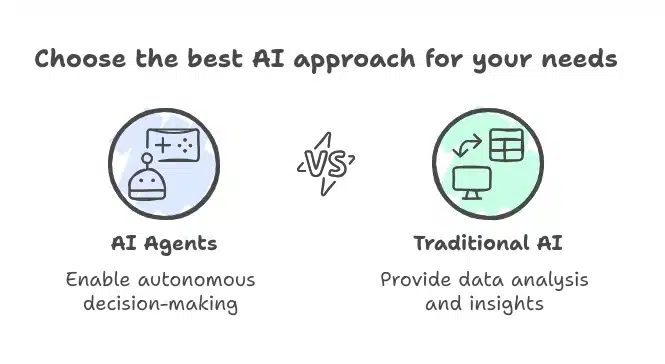
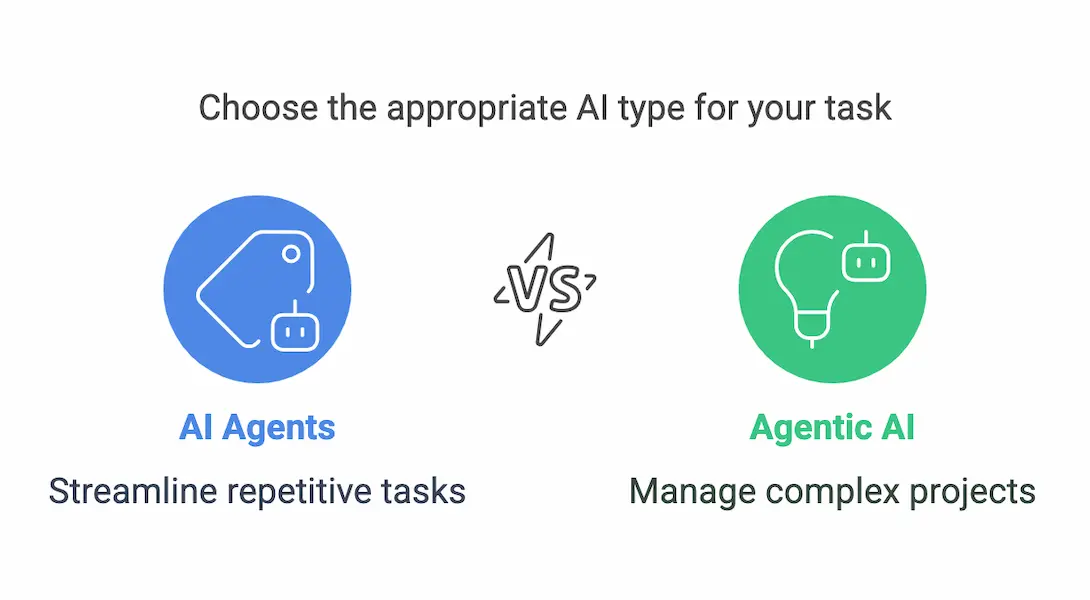
Read AI Agents vs. Traditional AI: Key Differences and Use Cases to have a deeper understanding of how agentic models enable smarter, more adaptive automation than traditional AI.
How AI Agents Help Marketers Automate SEO Writing and Content Repurposing
1. Automated Competitor Analysis and Opportunity Mapping
One of the most time-consuming aspects of SEO is manually reviewing competitor content to find gaps. AI agents turn this into a continuous, passive background process. An AI agent can:
- Monitor A Specific List Of Competitor Domains 24/7
- Analyzing Newly Published Articles To Identify Target Keywords And The Sub-Topics They Missed
Here is how it can assist you:
- Identifies "Low-Hanging Fruit": The agent flags high-volume keywords where competitors have published thin or low-quality content, signaling an easy opportunity for you to outrank them.
- Maps Content Velocity: It tracks how frequently competitors publish, helping you adjust your editorial calendar to maintain a competitive share of voice.
- Detects Structure Patterns: The agent analyzes the heading structures (H2s and H3s) of top-ranking pages to suggest an optimal outline for your writers.
By using AI agents, marketers can move beyond traditional, reactive competitor audits and leverage continuous, automated insight engines.
To use these agents effectively, professionals need to know how to guide and program their behavior, and programs like the Certificate Program in Generative AI & Agents Fundamentals by JHU provide a no-code, end-to-end framework for building autonomous agents.
Certificate Program in Generative AI & Agents Fundamentals
A program focused on the foundational concepts of Generative AI and AI agents. It covers topics like NLP, Prompt Engineering, and Responsible AI, with practical applications for various industries.
Through this program, participants gain expertise in prompt engineering, reasoning, and practical business applications, empowering them to deploy agents that track market trends, analyze data, and deliver actionable strategies.
2. Managing Multi-Format Content Repurposing
Most traditional tools can rewrite text, but actual efficiency comes from enabling AI agents to manage the complete lifecycle of a content asset.
With a well-designed agentic system, a single whitepaper can be transformed into multiple formats, such as:
- A Blog Post
- Linkedin Carousel
- Email Newsletter
- Short-Form Script While Maintaining Message Consistency
Here is how it streamlines multi-format repurposing:
- Platform-Specific Context & Formatting: The agent automatically tailors content to platform norms, creating hooks and carousels for LinkedIn, bullet-led brevity for newsletters, and narrative flow for blogs.
- Tone and Audience Personalization: Content is automatically adjusted for different personas (e.g., technical deep-dives for developers vs. high-level summaries for executives) while retaining the core message.
- Revision Cycles Across All Formats: When the source document is updated, the agent automatically regenerates or adjusts every repurposed asset, eliminating the need for manual edits across channels.
- Performance-Driven Refinements: Agents analyze engagement data to adjust future repurposed versions for better reach and impact.
3. Dynamic Internal Linking and Site Architecture
Internal linking is critical for SEO, yet it is often done haphazardly as writers focus only on their current draft.
An AI agent takes a holistic view of your entire website’s database, analyzing semantic relationships between thousands of pages to suggest and insert internal links that help users navigate logically.
Key benefits include:
- Automated Link Suggestions: Recommends links based on profound content relevance and user intent rather than just keyword matching.
- Improved Crawlability: Enhances the site structure so search engines can discover and index pages more effectively.
- Orphan Page Recovery: Identifies and connects underperforming pages that lack internal connections.
- Optimized Hierarchy & Anchors: Distributes link equity to important pages and suggests context-aware anchor text to improve both usability and rankings.
This approach ensures that your website structure evolves dynamically, supporting both SEO goals and a superior user experience.
4. Intent-Based Metadata and Schema Generation
AI agents ensure that every piece of content is technically optimized for search intent and machine readability before it goes live. As you finish drafting, the agent analyzes the text against credibility standards and enhances the technical layer by:
- Generating JSON-LD Schema: Automatically creates markup (like FAQ, How-To, or Article schema) so search engines can display rich snippets.
- Crafting Meta Tags: Writes distinct meta titles and descriptions that include primary keywords while remaining within pixel width limits for mobile and desktop.
- Optimizing Visual Assets: Suggests alt text for images that describes the visual content while naturally incorporating semantic keywords.
- Refining URL Structures: Analyzes the URL slug to ensure it is short, readable, and free of unnecessary stop words.
By automating these technical tasks, AI agents reduce errors and save time, allowing writers to focus on creativity while the AI handles the precision work behind the scenes.
5. Contextual CTA and Conversion Optimization
An AI agent bridges the gap between "getting traffic" and "making money" by dynamically managing Call-to-Action (CTA) placements. Rather than treating blog posts as static text, this agent transforms them into conversion funnels by:
- Analyzing User Behavior: Tracks scroll depth and time-on-page to determine the perfect moment to insert a slide-in or pop-up offer.
- Matching Topics to Offers: Links specific paragraph topics to the most relevant lead magnet (e.g., showing a "Python Course" CTA only when the user reads about "Python syntax").
- Real-Time A/B Testing: Test different button text and offer phrasings to identify variations that generate the highest click-through rates.
- Inventory Management: Automatically swaps out CTAs for expired webinars or out-of-stock products with active alternatives to prevent dead ends.
While AI agents can autonomously make decisions (such as choosing which CTA to show), implementing those changes on a live website requires collaboration with developers/IT team for technical integration.
This approach ensures that your high-traffic SEO content not only reaches the right audience but also drives measurable conversions.
However, achieving this level of advancement requires strong technical capability, which is precisely what the UT Austin Postgraduate Program in AI Agents for Business Applications delivers.
PG Program in AI Agents for Business Applications
This program focuses on applying Agentic AI to solve business problems, improve operational efficiency, and drive innovation. Learn to build AI agents using Generative AI, Large Language Models, and other advanced tools.
Through hands-on training with more than twenty industry tools, including Python, LangChain, and Agentic AI, you learn to build intelligent agents that move far beyond basic content generation.
The program helps you integrate reasoning, memory, and tool usage to develop autonomous systems that execute complex tasks with accuracy and consistency.
Considerations Before Implementing AI Agents in Marketing
1. Data Security and Privacy
Before deploying agents that process customer information or proprietary assets, organizations must establish strong data protection measures. This includes safeguarding systems against risks such as:
- Prompt Injection
- Data Leakage
- Data Poisoning To Maintain The Integrity And Confidentiality Of Marketing Operations
2. Accuracy and Hallucination Management
AI models can generate confident but incorrect outputs. Marketers need mechanisms for:
- Grounding
- Validation
- Authoritative Checks
This ensures that published content is factually accurate and aligns with brand credibility.
3. Ethical Usage and Bias Mitigation
AI agents may unintentionally reinforce stereotypes or produce biased messaging. Teams must incorporate:
- Regulatory Compliance
- Fairness Safeguards
- Active Bias Mitigation Practices To Maintain Ethical And Inclusive Communication
4. Oversight and Quality Control
Even autonomous agents require clear guidelines, review loops, and periodic audits. Human supervision ensures that:
- Automated Content Maintains Tone Consistency
- Adheres To Brand Standards
- Avoids Errors That Could Scale Across Channels
5. Tool Compatibility and Integration Readiness
Before implementing agentic workflows, organizations must assess whether their CMS, CRM, analytics stack, and publishing platforms support seamless integration. Compatibility gaps can restrict automation potential and reduce efficiency gains.
Conclusion
Learning and adopting AI agents transforms content marketing from a manual task into a strategic advantage. By automating SEO optimization and content repurposing, marketers can focus more on high-level strategizing and creative direction, driving better engagement, efficiency, and measurable business outcomes.
Master the art of content marketing with our course. Boost your brand’s visibility and engage your audience effectively through proven strategies and expert insights.