
In a world where data defines direction and algorithms influence action, some professionals rediscover their purpose by returning to the fundamentals. For Sanket Takalkar, this moment came after 16 years in the banking and BFSR sector. His years of experience had taught him that success often lay at the intersection of human intuition and structured insight. Yet, as technology advanced, he realized that intuition alone was no longer enough. The time had come to relearn and understand how Artificial Intelligence and Machine Learning could transform not just industries but also the intent behind every decision.
Building Systems That Think and Care
Sanket’s professional journey had long revolved around designing digital solutions in banking. Over time, he began noticing a pattern: key business decisions, even in data-rich environments, were often guided more by instinct than by evidence. This awareness planted the seed for deeper exploration. “I wanted to bridge the gap between business judgment and data-driven insight,” he shared. “To do that, I needed to strengthen my foundations and truly understand how these technologies think.”
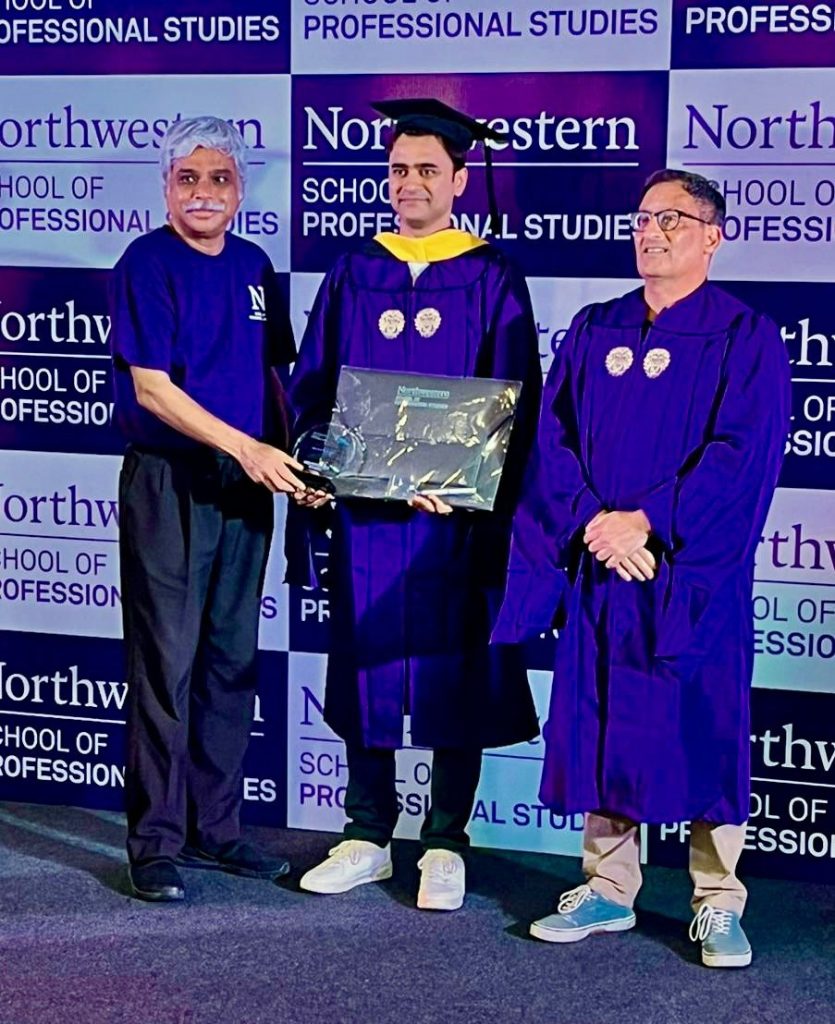
This pursuit led him to enroll in the Master of Science in Data Science Programme by Northwestern School of Professional Studies, a learning experience that, in his words, “transformed how I view technology and its role in responsible decision-making.” The program’s structure appealed to his analytical mindset. It began with a foundational course that revisited the core principles of statistics and mathematics. These modules helped him reconnect with the building blocks of logic and clarity that once drew him to the field of problem-solving.
Crafting Innovation with Integrity
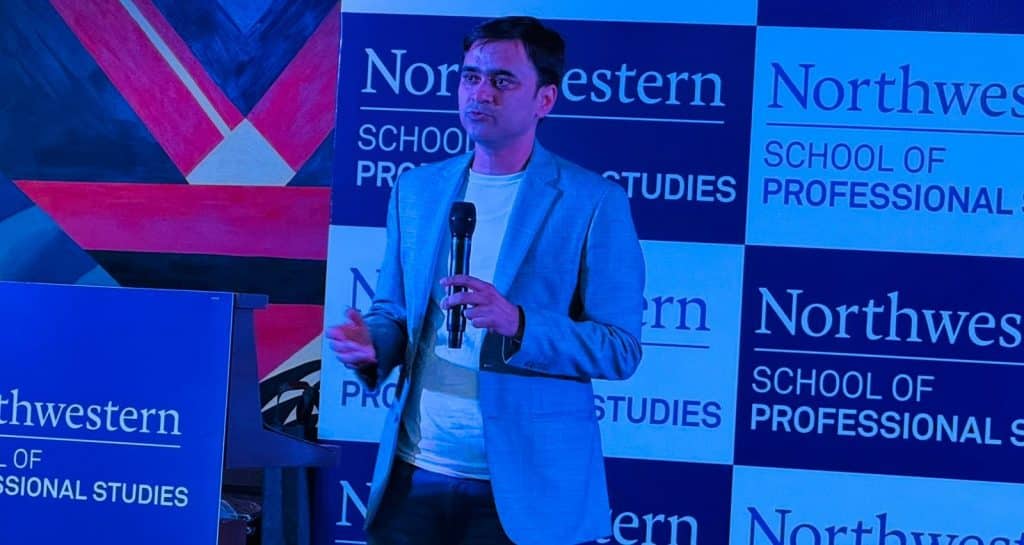
Once his foundations were solid, Sanket moved on to practical, tool-based subjects like Machine Learning and programming in Python. These modules helped him connect theory to application. “Understanding the fundamentals is important, but learning how to use those principles to solve real problems is what truly shapes a data professional,” he said.
The program’s Capstone Projects became key milestones in his journey. For Sanket, they were an opportunity to experience how industries integrate AI to drive innovation, efficiency, and growth. Working on these projects allowed him to visualize the lifecycle of an AI solution, from identifying the problem and processing data to designing models that could impact business outcomes.
As someone who had spent years in the financial domain, he recognized how AI was being used to automate credit decisions, forecast risks, and detect anomalies. Through case studies and frameworks, he learned how biases could arise from incomplete or skewed data and how even accurate algorithms could unintentionally disadvantage certain customer groups. He also realized that technology is only as responsible as the person using it. “AI can be powerful, but it needs to be applied with intent and care. That’s where understanding its ethics becomes essential,” he shared.
This sense of responsibility now influences every professional decision he makes. Whether designing internal bureau platforms or evaluating AI-based transformation projects, Sanket approaches each task through two lenses: value creation and value alignment. He believes that innovation must be balanced with integrity, and that every data-driven system should serve people, not the other way around.
The Journey From Knowing to Understanding

Today, Sanket’s perspective on AI extends beyond tools and technologies. It reflects a broader philosophy, one that values curiosity, responsibility, and humility in the face of rapid innovation. The program not only deepened his technical understanding but also refined his leadership approach, encouraging open discussions within his teams about bias, fairness, and long-term societal impact.
While advising aspiring data professionals, he says, “Be curious and grounded. Don’t rush to use complex models before you understand the data, the problem, and the human context behind it. Learn the math, respect the ethics, and remember that AI’s purpose is not just prediction, it’s progress.”