
Free Six Sigma Course
Introduction to Six Sigma
 4.59
Beginner level
1.5 learning hrs
4.59
Beginner level
1.5 learning hrs
Six Sigma free online training gives you a steady path across core concepts, examples, and practice tasks, making the topic easier to review, apply, and revisit.






About this course
This free six sigma course is built for beginners and self-paced learners who want the topic explained with context and usable examples. The course introduces core concepts, beginner examples, practical use, and next steps in a way that shows how the pieces work together. Instead of treating six sigma as a list of terms, it explains what to look for, how to reason through common tasks, and why the subject appears in real projects, teams, or business decisions.
The course is a good fit if you want to understand the foundations and use them in practical learning tasks. You can use it to prepare for assignments, interviews, workplace conversations, or a first hands-on project depending on your goal. After finishing, you should be able to explain the core idea of six sigma, recognize when it is relevant, and choose a sensible next step such as practice exercises, deeper tools, related frameworks, or a more advanced course.
Course outline
Historical Background of Six Sigma
Explore the origins and evolution of Six Sigma methodologies, tracing its development and key milestones in quality management.
Basics of Six Sigma
Grasp the fundamental principles of Six Sigma, focusing on process improvement, variability reduction, and the DMAIC methodology.
Key Concepts and Tools of Six Sigma
Gain proficiency in essential Six Sigma concepts and tools, including statistical analysis, process mapping, and quality control techniques.
Implementing Six Sigma
Learn practical strategies and techniques for successfully implementing Six Sigma methodologies in real-world scenarios, driving organizational efficiency and performance improvement.
Get access to the complete curriculum once you enroll in the course
 4.59
4.59
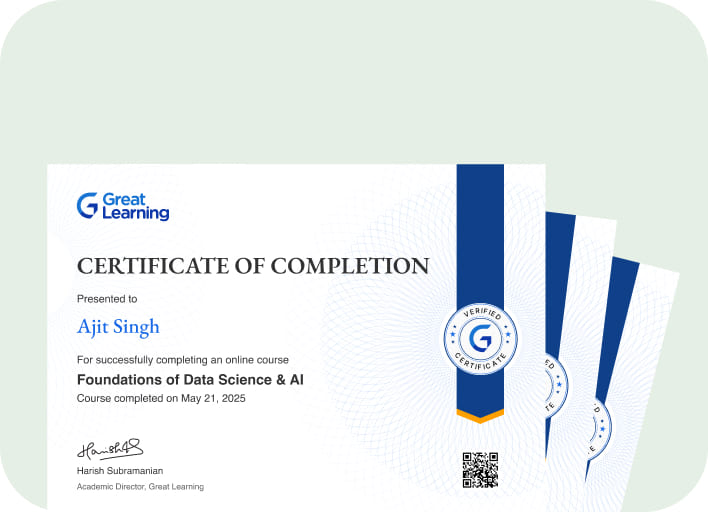
Showcase your complete skill set with a career certificate
Build skills with guided learning and prove your readiness for your future job role.



.jpg "Asana Project Management")
.png "Project Management with Agile, AI, and Microsoft Tools")














Frequently Asked Questions
Will I receive a certificate upon completing this free course?
Is this course free?
What are the prerequisites required to enrol in this Free Introduction to Six Sigma course?
You do not need any prior knowledge to enrol in this Introduction to Six Sigma course.
What examples make Six Sigma easier to learn online?
How long does it take to complete this Free Introduction to Six Sigma course?
It is a 1.0 hour long course, but it is self-paced. Once you enrol, you can take your own time to complete the course.
How should I revise Six Sigma after finishing the course?
Will I have lifetime access to the free course?
Yes, once you enrol in the course, you will have lifetime access to any of the Great Learning Academy’s free courses. You can log in and learn whenever you want to.
What learner problem does Six Sigma solve?
Will I get a certificate after completing this Free Introduction to Six Sigma course?
Yes, you will get a certificate of completion after completing all the modules and cracking the assessment.
Does Six Sigma require prior experience?
How much does this Introduction to Six Sigma course cost?
It is an entirely free course from Great Learning Academy.
How can Six Sigma improve interview preparation?
Is there any limit on how many times I can take this free course?
No. There is no limit. Once you enrol in the Free Introduction to Six Sigma course, you have lifetime access to it. So, you can log in anytime and learn it for free online.
Six Sigma: what should I practice first?
Who is eligible to take this Free Introduction to Six Sigma course?
You do not need any prerequisites to learn the course, so enrol today and learn it for free online.
Is Six Sigma better for beginners or experienced learners?
What comes after learning Six Sigma online?
Recommended Free Management courses
-
FREE

-
FREE
-
FREE
-
FREE
2.5 hrs
-
FREE
-
FREE
-
FREE
-
FREE
 FREE
FREE


.jpg "Course thumbnail image")





Similar courses you might like
-
FREE
-
FREE
-
FREE
-
FREE


Related Management Courses

-
Sponsored
Great Lakes Institute of Management
Post Graduate Diploma in Management (Online)2 years · Online
Online MBA EquivalentKnow More
-
Walsh College
Doctor of Business Administration in General Management3 Years · Online
Top 10 best online DBA DegreeKnow More
-
Great Lakes Executive Learning
Executive PG Program in Management12 months · Online
Certificate from Great LakesKnow More






Relevant Career Paths >



Introduction to Six Sigma
In the realm of business optimization and process improvement, Six Sigma stands as a beacon of efficiency and quality. This comprehensive guide aims to demystify the essence of Six Sigma, exploring its methodologies, benefits, and applications, establishing it as a cornerstone for organizations aspiring to achieve operational excellence.
Understanding the Core of Six Sigma
Defining Six Sigma
At its core, Six Sigma is a disciplined, data-driven methodology aimed at eliminating defects and variations in processes to achieve near-perfect performance. Originating from manufacturing, Six Sigma has transcended industries, becoming a widely adopted framework for process improvement in sectors ranging from healthcare to finance.
DMAIC Methodology
The bedrock of Six Sigma lies in its DMAIC methodology: Define, Measure, Analyze, Improve, and Control. This structured approach provides organizations with a roadmap to identify and rectify operational inefficiencies systematically.
Unveiling the Benefits of Six Sigma
Enhanced Efficiency
Six Sigma's focus on reducing defects and variations directly translates into enhanced operational efficiency. By streamlining processes, organizations can optimize resource utilization and minimize wastages, ultimately leading to cost savings and improved productivity.
Customer Satisfaction
Quality is synonymous with customer satisfaction, and Six Sigma relentlessly pursues quality improvement. Through the rigorous application of statistical methods and process analysis, organizations can deliver products and services that meet or exceed customer expectations.
Data-Driven Decision Making
In the era of big data, Six Sigma stands out for its emphasis on data-driven decision making. The methodology encourages organizations to base their decisions on empirical evidence, fostering a culture of continuous improvement and informed problem-solving.
Applying Six Sigma Across Industries
Manufacturing Excellence
Six Sigma's roots lie in manufacturing, where it initially gained prominence. The methodology's success in reducing defects and improving efficiency has made it a staple in manufacturing processes, ensuring high-quality output and satisfied customers.
Healthcare Optimization
In the healthcare sector, where precision and accuracy are paramount, Six Sigma finds extensive application. From streamlining patient care processes to minimizing errors in medical procedures, Six Sigma contributes significantly to enhancing the quality of healthcare services.
Financial Precision
Financial institutions leverage Six Sigma to streamline complex processes, mitigate risks, and enhance the accuracy of financial transactions. The methodology's focus on minimizing errors is particularly critical in a sector where precision is non-negotiable.
Overcoming Challenges in Six Sigma Implementation
Cultural Resistance
Implementing Six Sigma may face resistance from organizational culture. It's crucial to address this by fostering a culture of continuous improvement and emphasizing the long-term benefits of Six Sigma methodologies.
Resource Allocation
Proper resource allocation is vital for successful Six Sigma implementation. Organizations must invest in training and resources to empower their teams with the skills and tools necessary for effective process improvement.
Embracing the Future with Six Sigma
In conclusion, Six Sigma isn't just a methodology; it's a philosophy that champions excellence and continual improvement. As industries evolve and the demand for efficiency intensifies, organizations that embrace Six Sigma position themselves for sustained success. From manufacturing to healthcare and finance, the universal applicability of Six Sigma makes it a linchpin in the pursuit of operational perfection.