Artificial intelligence adoption is accelerating across financial services, but turning experimentation into organisational change remains a challenge. According to the Cambridge Centre for Alternative Finance's 2026 Global AI in Financial Services Report, 81% of surveyed financial services firms are adopting AI, yet only 14% consider it transformational to their organisational strategy and competitive advantage. For technology leaders, the challenge is moving beyond adoption to integrating AI into business operations responsibly.
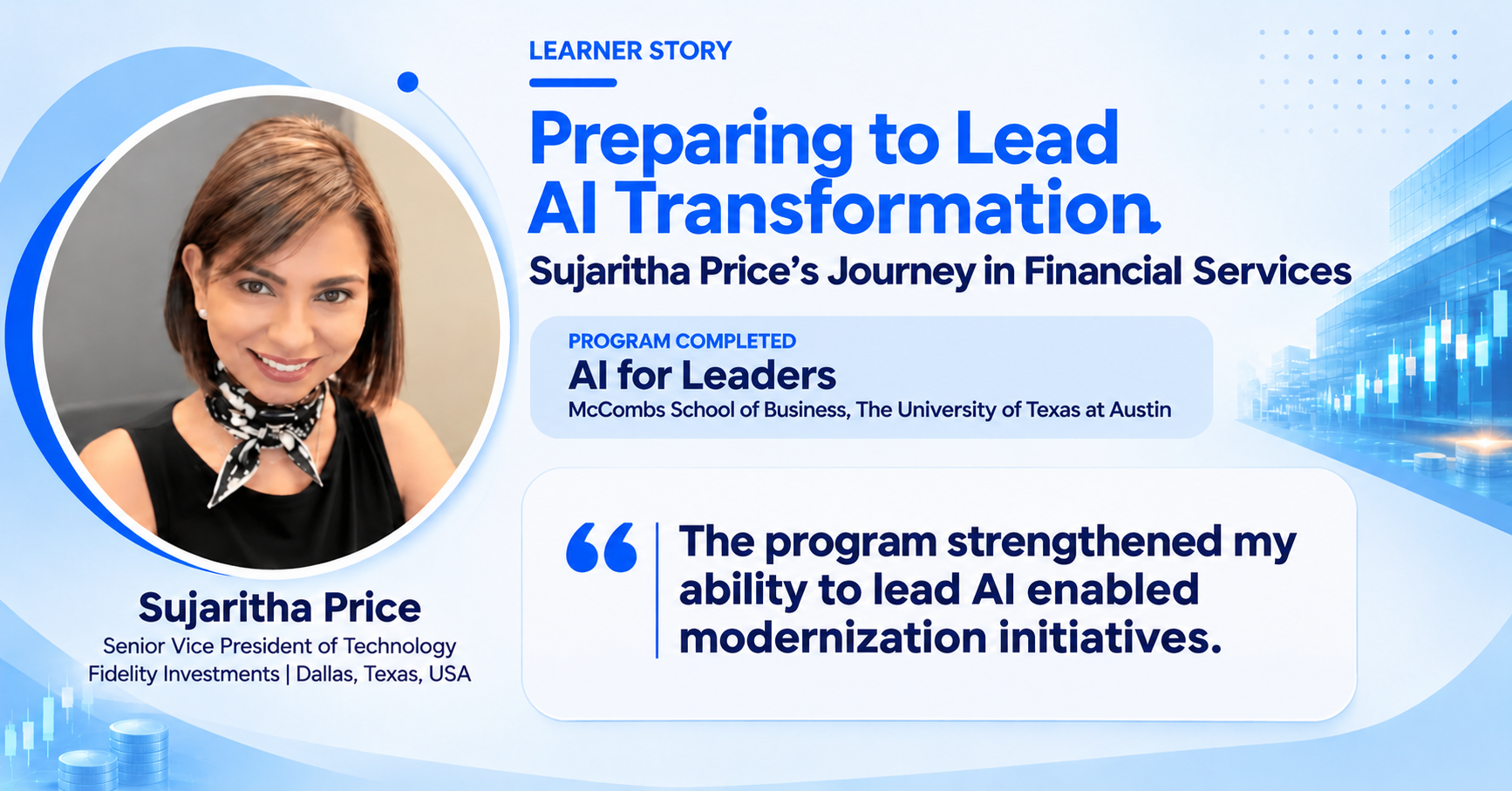
Sujaritha Price, Senior Vice President of Technology at Fidelity Investments, is preparing for this shift. With over 20 years of experience leading engineering organisations and modernising financial technology platforms, she completed the AI for Leaders program from the McCombs School of Business at The University of Texas at Austin. The program is now offered under its updated name, the Post Graduate Program in AI and Agentic AI for Leaders.
Post Graduate Program in Artificial Intelligence for Leaders
Unlock strategic AI insights with the AI for Leaders course, designed to equip business leaders with practical skills to drive innovation.
Why did Sujaritha Price pursue AI leadership?
Sujaritha's responsibilities include modernising mission-critical financial platforms that process tens of millions of daily transactions. As AI began reshaping how organisations operate, she recognised the importance of understanding its potential from a leadership perspective.
"AI is reshaping how organizations operate, and I wanted to deepen my fluency—not to become a data scientist, but to lead AI enabled transformation with clarity and confidence," she explains.
Her objective was to connect AI concepts with business strategy, workflow automation, and organisational governance rather than focus solely on technical skills.
How did Sujaritha develop the skills to lead AI transformation?
The program's leadership-oriented approach aligned with her learning objectives. Its current 10-week online format combines recorded lectures by Texas McCombs faculty, live mentorship sessions with global industry experts, and a no-code approach to understanding AI applications.
During her learning journey, Sujaritha particularly valued the practical exposure to tools such as KNIME and n8n. She experimented with analytics, automation, and agent-based workflows while developing her understanding of AI fundamentals, the AI/ML lifecycle, MLOps, and model governance.
"The no code tools like KNIME and n8n were surprisingly valuable for experimenting with analytics, automation, and agent based workflows," she says.
Why are data readiness and responsible AI essential for financial services?
The current curriculum extends these themes to Agentic AI, data readiness, responsible AI, and intelligent automation. It explores how organisations can redesign business processes for AI-driven workflows while maintaining human oversight and accountability.
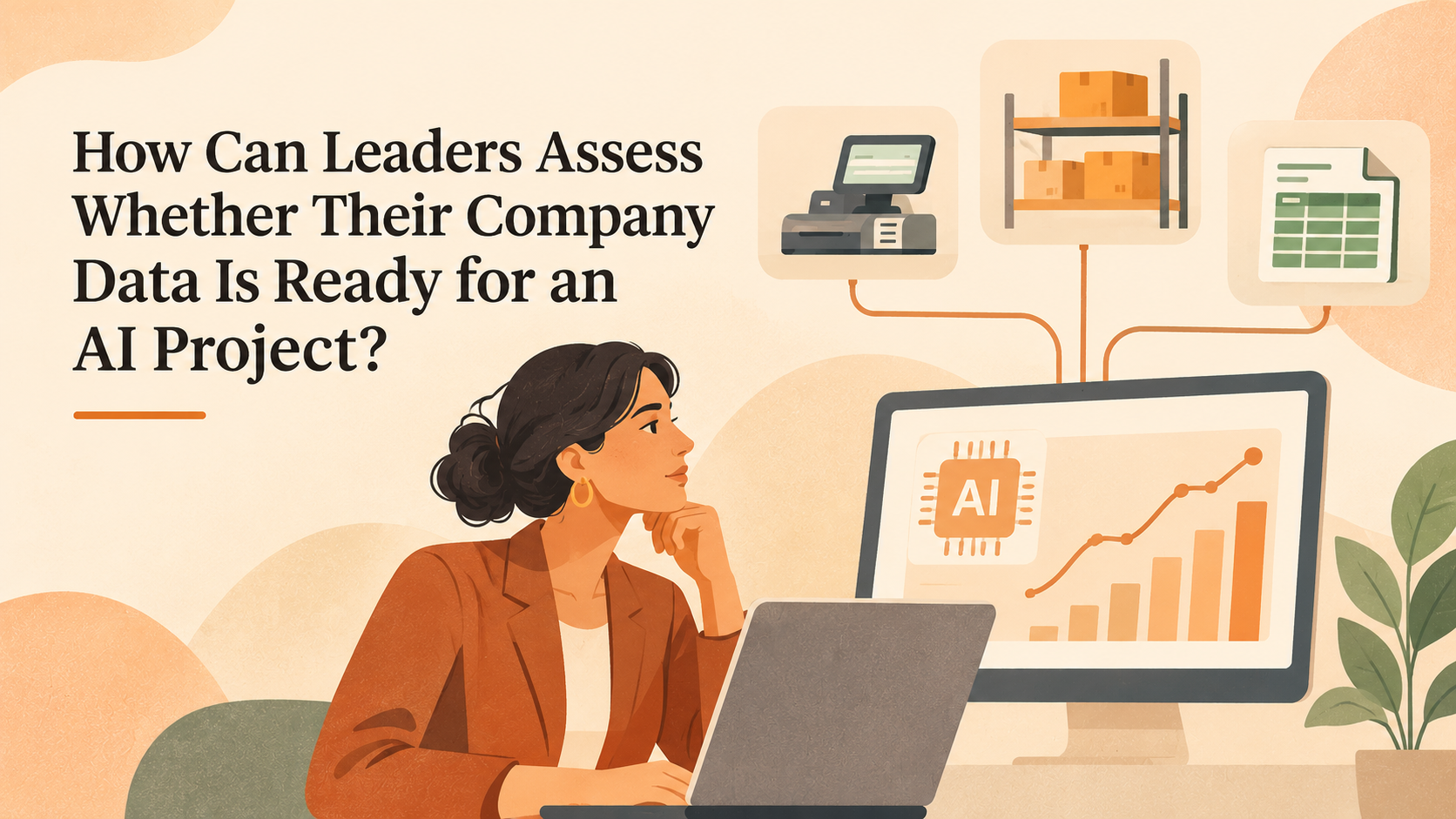
For financial institutions, adopting these capabilities requires more than identifying promising use cases. Leaders must also evaluate data quality, ownership, accessibility, privacy, and infrastructure before deploying AI. This makes assessing data readiness for AI projects an important part of planning responsible implementations.
The program also addresses AI investment decisions and scaling initiatives from pilot to production, culminating in an executive AI Strategy Capstone.
How can technology leaders turn AI strategy into business impact?
For Sujaritha, the learning experience strengthened her ability to evaluate AI opportunities and guide organisational decisions.
"The program strengthened my ability to lead AI enabled modernization initiatives and to guide senior stakeholders through the opportunities and risks of AI adoption," she says.
Her experience reflects a broader shift in financial services leadership. As predictive AI, Generative AI, and Agentic AI reshape business operations, technology leaders will need the judgment to evaluate opportunities, govern risks, and translate AI strategies into responsible organisational change.