IIT Bombay ePGD in Computer Science and AI for Tech Professionals
e-Postgraduate Diploma (ePGD) in Computer Science and Artificial Intelligence (CS & AI)
 Application closes on
10th Nov 2026

 Speak with our expert
080 4680 1947




Learn more about the course
Get details on syllabus, projects, tools, and more

e-Postgraduate Diploma (ePGD) in Computer Science and Artificial Intelligence (CS & AI)
Application closes 10th Nov 2026
ePGD Outcomes
Build, secure and scale enterprise AI systems
Master agentic AI, RL, NLP, and Generative AI, backed by security and data systems.
-
Architect and build agentic AI systems that automate complex workflows for business use cases.
-
Make informed AI architecture decisions grounded in a deep understanding modern AI and ML models
-
Leverage NLP and Generative AI to build solutions that turn unstructured text into business value.
-
Secure applications, networks and data against evolving threats as AI expands the attack surface.
-
Engineer scalable, reliable data systems that serve as the foundation for enterprise AI.
-
Strengthen computational problem-solving and build secure, decentralised applications on blockchain platforms.
Earn an e-Postgraduate Diploma from IIT Bombay
-

#2 in India
QS World University Rankings, 2026
-
#2
NIRF India Rankings 2025: Innovation
-
#28 Globally
QS Rankings in Engineering & Technology, 2025
-
#3
NIRF India Rankings 2025



ePGD Highlights
Why Choose ePGD in Computer Science and AI?
-
Learn from the Best: World-Class IIT Bombay CSE Faculty
Learn from distinguished CSE faculty, including ACM/IEEE Fellows and award winners, in weekly live sessions for direct interaction and query resolution.
-
Shape your ePGD Learning Journey
Choose courses across the AI & ML and Computer Science baskets to make your diploma AI-heavy or technically deep, depending on what your role needs.
-
Gain Cutting-Edge Depth in AI and Computer Science
Earn 36 credits across six courses, from agentic AI and reinforcement learning to security and data systems, at IIT Bombay’s on-campus standards
-
Access IIT Bombay’s Lateral Hiring Group
Get access to IIT Bombay’s Lateral Hiring Group to explore new career opportunities as you move into more advanced AI and technology roles.
-
Flexible Hybrid Learning Built for Working Professionals
Balance a demanding career and advanced study with synchronous and asynchronous sessions, designed for geographically dispersed learners.
-
Earn the Prestigious IIT Bombay Alumni Status
Elevate your career with official IIT Bombay Alumni status on graduation, connecting you to a global network of engineers and researchers.
-
In-Person Campus Immersion at IIT Bombay
Visit the campus to meet CSE faculty face-to-face, network with your professional peer group, and experience IIT Bombay’s vibrant academic culture.
-
On-Campus Graduation Ceremony at IIT Bombay
Celebrate your achievement with classmates and distinguished faculty at an in-person graduation ceremony hosted on the IIT Bombay campus.


Skills you will learn
LLM Frameworks
Autonomous AI Agents
Generative AI & LLMs
Reinforcement Learning
Deep Learning
Computer Vision
RAG
AI architecture
NLP
Cryptographic and network defence principles
LLM Frameworks
Autonomous AI Agents
Generative AI & LLMs
Reinforcement Learning
Deep Learning
Computer Vision
RAG
AI architecture
NLP
Cryptographic and network defence principles
view more
- Overview
- Learning Path
- Curriculum
- Tools
- Faculty
- Reviews
- Fees
- FAQ
This ePGD is ideal for
Tech professionals who build and run software and AI systems.
-
Software Development Professionals
For developers shipping enterprise apps who want modern AI and secure design skills to lead AI-native products that withstand evolving threats.
-
AI and Data Professionals
For ML and analytics practitioners who want generative AI, agents and RL to architect intelligent solutions to complex business problems.
-
IT and Technology Professionals
For professionals managing infrastructure or networks who want AI, security and data skills to build secure AI infrastructure or move into AI roles.
-
STEM Graduates
For working technical professionals with a STEM degree who want advanced AI and computing skills to move into AI-focused engineering roles.
About Department of CSE, IIT Bombay
-
Leading CSE Dept in India
Home to 47 faculty members and top achievers of the First 50 ranks (JEE Advanced) and First 100 ranks (GATE CS)
-
Accolades for Faculty
Faculty honoured with accolades such as the Padma Shri, Fellow of the ACM and IEEE, Bhatnagar Award, Infosys Prize and many others
-
Cutting-edge Research
100+ publications annually in top-tier conferences and journals, and sponsored research projects worth Rs. 50 crores
-
Distinguished Alumni
Winners of the President of India Gold Medal and Distinguished eAlumni Awards, leading researchers, entrepreneurs and influential policymakers




Comprehensive curriculum
This ePGD in Computer Science & Artificial Intelligence includes a rigorous six-course curriculum worth 36 IIT Bombay credits. The courses will be organised into the two baskets mentioned below. To complete this ePGD, learners have to complete a minimum of two courses from each of the two baskets, with a total of six courses across both baskets.
Artificial Intelligence & Machine Learning
Foundational Mathematics for Data Science
Reinforcement Learning
Foundations of Computer Vision
Generative AI: From Foundations to Autonomous Agents
Natural Language Processing and Generative AI
Computer Science
The Program Developer's Toolbox
Algorithms and Complexity
Web and Software Security
Cryptography and Network Security
Database and Big Data System Internals
Introduction to Blockchains
Disclaimer: This is the comprehensive list of approved courses and may not be offered simultaneously. The listed courses are subject to revision, and changes are at the discretion of IIT Bombay. The timing and term in which each course is offered will be entirely at the discretion of IIT Bombay.
Languages and Platforms Covered
The courses cover a variety of languages and platforms, such as
-
Claude
-
LangChain
-
LangGraph
-
Python
-
JavaScript
-
Git
-
Docker
-
Wireshark





Note: The tools listed above are indicative and subject to updates as technology evolves.
Learn from IIT Bombay faculty
Learn from leading IIT Bombay faculty who blends rigorous AI and strategy research with practical delivery.
-
Prof. Abhiram Ranade
Department of Computer Science and Engineering, IIT Bombay
Yale Ph.D. and IIT Bombay CSE faculty
Research Interest: Algorithms and combinatorial optimisation
Know More -
Prof. Amitabha Sanyal
Department of Computer Science and Engineering, IIT Bombay
Ph.D from IIT Kanpur
Research: Functional programming, compilers and programming languages
Know More -
Prof. Kameswari Chebrolu
Department of Computer Science and Engineering, IIT Bombay
Ph.D. from UC San Diego; CSE faculty at IIT Bombay
Research Interest: Web technologies, AI & cloud
Know More -
Prof. Vinay J. Ribeiro
Department of Computer Science and Engineering, IIT Bombay
Rice University Ph.D.; IIT Bombay CSE faculty
Research Interest: Blockchain, intrusion detection, IoT
Know More -
Prof. Sharat Chandran
Department of Computer Science and Engineering, IIT Bombay
Ph.D. from University of Maryland
Research Interest: Computer vision, affective computing and AI
Know More -
PROF. SHIVARAM KALYANAKRISHNAN
Department of Computer Science and Engineering, IIT Bombay
Ph.D. from UT Austin
Research: Reinforcement learning and intelligent, learning agents
Know More -
Dr. Arpit Agarwal
Assistant Professor, IIT Bombay
Ph.D. from the University of Pennsylvania; PostDoc researcher at Meta.
Research in human–AI interaction, RL, and responsible AI design.
Know More -
Prof. Harshad Khadilkar
Ph.D. | Massachusetts Institute of Technology
Bachelor's in Aerospace Engineering from IIT Bombay and a PhD from MIT
His research covers meta-RL sequential decision-making
Know More -
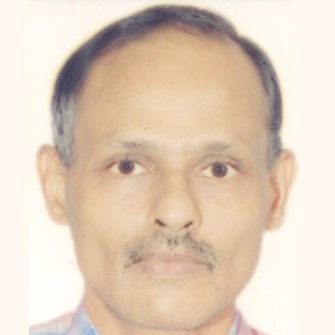
Prof. S. Sudarshan
Department of Computer Science and Engineering, IIT Bombay
Ph.D. from University of Wisconsin-Madison
Research: Query processing and optimisation; testing database queries
Know More








 LinkedIn Profile
 University Link
Hear from our learners
Hear what our learners have to say about their experience of the program support, faculty & mentors
-
Watch story
"This program has contributed greatly to my professional growth."
Praneeth Thogarchetti
Site Reliability Engineer , AST SpaceMobile
-
Watch story
"This program helped me gain deeper technical knowledge and upskill."
Shourya Bhosle
Software Engineer , Avalara
ePGD Fees
Benefits of learning with us
-
Earn up to 36 Credits from IIT Bombay, which can be saved in the Academic Bank of Credits (ABC)
-
In-person graduation at IIT Bombay campus and IIT Bombay Alumni status
-
Designed and delivered by IIT Bombay faculty
-
Personalised assistance with a dedicated Programme Manager


Selection Process
Registrations close once the required number of participants enroll. Apply early to secure your spot.
-
Application
Interested candidates can apply for the e-Postgraduate Diploma by filling out a simple online application form.
-
Online Test & Screening Call
Applicants must take an online test to assess their foundational knowledge and suitability for the ePGD. After passing the online test, applicants will go through a mandatory screening call with the Registration Oce.
-
Offer of Registration
The selected candidates will receive an offer letter to join the ePGD. They will need to pay the registration fee to secure their seat and complete the registration.


Eligibility Criteria
- (B.E. / B.Tech / BS (4 years) / M.Sc.) or higher degree in Computer Science/Engineering, Information Technology, Artificial Intelligence, Data Sciences, Mathematics and Computing or equivalent (*) disciplines.
- OR (BS (4 years) / B.E. / B.Tech) or higher degree in any engineering discipline AND any one of the following: • Qualifying GATE score in Computer Science or Data Science • Two years relevant work experience in Computer Science, Artificial Intelligence, or Data Sciences • A minor in Computer Science, Information Technology, AI and ML, Data Science or equivalent (*) in programmes which offer such minors
- OR MCA (with undergraduate degree BCA or B.Sc. with Mathematics as a subject)
FAQ
Is this ePGD suitable for working professionals?
Yes. The ePGD is designed for working professionals, software developers, IT professionals,
data scientists, and fresh graduates. The flexible online delivery combines live sessions with
asynchronous learning to support continued employment while studying.
What makes the IIT Bombay ePGD in Computer Science and AI different from short AI courses or bootcamps?
Unlike short AI courses or bootcamps, this ePGD focuses on postgraduate-level technical
depth rather than introductory or tool-based learning. The curriculum mirrors the academic rigor
of IIT Bombay's on-campus standards and emphasizes advanced programming, computing
systems, mathematics, Machine Learning, and hands-on learning through a structured
12-month curriculum.
What is the duration of this ePGD in Computer Science and AI?
The duration of e-Postgraduate Diploma in Computer Science and AI is 12 months, comprising
six courses and 36 IIT Bombay credits.
Will I receive an IIT Bombay credential after completing the ePGD?
Yes. Upon successfully completing all academic requirements and 36 credits, learners receive
an e-Postgraduate Diploma from IIT Bombay. They also become eligible for IIT Bombay
Alumni status and can attend the in-person graduation ceremony on the IIT Bombay campus.
Faculty, Curriculum & Projects
Who teaches the IIT Bombay ePGD in Computer Science and Artificial Intelligence?
The ePGD is designed and delivered by faculty from the Department of Computer Science and
Engineering (CSE), IIT Bombay. The faculty includes experts in Artificial Intelligence, Machine
Learning, reinforcement learning, computer vision, databases, cybersecurity, programming
languages, and distributed systems.
Does the ePGD include Generative AI and AI agents?
Yes. The curriculum includes dedicated courses on Generative AI: From Foundations to
Autonomous Agents and Natural Language Processing and Generative AI, covering Large
Language Models (LLMs), Retrieval-Augmented Generation (RAG), AI agents, tool calling,
orchestration, and evaluation.
Which programming languages and AI tools are covered?
Depending on the courses selected, learners work with technologies such as Python, FastAPI,
LangChain, LangGraph, Docker, JavaScript, Rust, NumPy, SciPy, Big Data platforms,
Ethereum, OWASP, OpenSSL, WireShark, and Model Context Protocol (MCP).
Does the ePGD include hands-on projects?
Yes. The curriculum includes hands-on assignments, practical implementations, and course
projects. For example, The Program Developer's Toolbox requires learners to complete a
course project demonstrating the concepts covered.
How is the curriculum structured?
The ePGD requires learners to complete 36 IIT Bombay credits by successfully finishing six
courses. Candidates must complete at least two courses from both the Artificial Intelligence and
Machine Learning basket and the Computer Science basket.
Who is eligible for the IIT Bombay ePGD in Computer Science and Artificial Intelligence?
The ePGD is open to candidates with a B.E./B.Tech, BS (4 years), or M.Sc. in Computer
Science, Information Technology, Artificial Intelligence, Data Science, Mathematics &
Computing, or equivalent disciplines. MCA graduates with a BCA or B.Sc. with Mathematics
are also eligible.
Is a GATE score required for the IIT Bombay ePGD?
No. A GATE score is not mandatory for registration. Eligible candidates can apply without
GATE if they satisfy the prescribed academic or work experience requirements.
Can candidates from other engineering disciplines apply for the IIT Bombay ePGD?
Yes. Candidates with a B.E./B.Tech or BS (4 years) in any engineering discipline can apply if
they have any one of the following:
● A qualifying GATE score in Computer Science or Data Science
● Two years of relevant work experience in Computer Science, AI, or Data Science
● A minor in Computer Science, IT, AI/ML, Data Science, or an equivalent discipline
The final decision on the equivalency of qualifications rests with the IIT Bombay CSE
Department.
What is the registration process for the IIT Bombay ePGD?
The registration process includes three stages: submitting an online application, completing an
online test and screening call, and receiving an offer of registration upon selection.
What is the fee for the IIT Bombay e-Postgraduate Diploma?
The total fee for the ePGD is ₹6,00,000 + GST. The fee is paid in stages, including a registration
fee followed by course-wise payments.
Do I receive academic credits after completing the ePGD?
Yes. Learners earn 36 IIT Bombay academic credits, which can be saved in the Academic
Bank of Credits (ABC) after successful completion of the ePGD.
How will this ePGD help me prepare for AI and Machine Learning roles?
This ePGD helps you build a strong foundation in Artificial Intelligence and Machine Learning
through postgraduate-level coursework in foundational mathematics, computer vision,
reinforcement learning, Generative AI, natural language processing, and autonomous AI agents.
You also strengthen your expertise in advanced programming and computing systems,
preparing you for AI-focused technical roles.
Can this ePGD help experienced IT professionals without a postgraduate degree?
Yes. This ePGD is designed for IT professionals and experienced technology professionals who
want to formalize their expertise with an IIT Bombay postgraduate qualification. It enables
learners to deepen their understanding of advanced programming, computing systems, AI, and
Machine Learning through a rigorous, concept-based curriculum.
How can I benefit from campus immersion and networking opportunities?
The ePGD combines online learning with campus immersion, allowing you to meet IIT Bombay
CSE faculty, experience the IIT Bombay campus during visits, attend an in-person graduation
ceremony, earn IIT Bombay Alumni status, participate in peer-to-peer learning, and access the
IIT Bombay Lateral Hiring Group for professional networking.
How can IIT Bombay Alumni status support my professional growth?
Upon successfully completing the ePGD, you'll receive IIT Bombay Alumni status, allowing
you to become part of the IIT Bombay alumni community. In addition to expanding your
professional network through peer learning, you'll also gain access to IIT Bombay's Lateral
Hiring Group, helping you connect with career opportunities and fellow professionals while
strengthening your industry presence.
 Application Closes
10th Nov 2026

-
McCombs School of Business at The University of Texas at Austin
Post Graduate Program in Cyber Security
20 weeks · Online
-
McCombs School of Business at The University of Texas at Austin
Professional Certificate in Generative AI and Agents for Software Development
14 weeks · Mentored
-
Johns Hopkins University
Certificate Program in AI and Agentic AI Engineering
22 Weeks · Mentored
-
Johns Hopkins University
Certificate Program in AI Business Strategy
10 weeks · Online
-
MIT Professional Education
No Code and Agentic AI
14 Weeks · Online · Weekend
Learn from MIT Faculty -
McCombs School of Business at The University of Texas at Austin
PG Program in Artificial Intelligence and Machine Learning: Business Applications
23 Weeks · Online · Weekend






Similar free courses for you
-

 Beginner
 1.5 Hrs
Spring Boot for Web Applications
-

 Beginner
 2.5 Hrs
Python Fundamentals for Beginners
-

 Beginner
 1.0 Hrs
Introduction to Postman API
-

 Beginner
 1.0 Hrs
Programming Essentials
-

 Beginner
 1.5 Hrs
C for Beginners
-

 Beginner
 1.5 Hrs
Data Structures in C
-

 Beginner
 1.5 Hrs
Introduction to TypeScript
-

 Intermediate
 4.5 Hrs
Advanced JavaScript Development
-

 Beginner
 4.5 Hrs
Excel for Beginners
-

 Beginner
 2.0 Hrs
Introduction to ASP.Net Core







Explore latest trends & topics
-
Top AIML Tools, Softwares and Programming Languages of 2019
2020-09-17 07:21:12 UTC
-
Career prospects for a DevOps Engineer | Role of DevOps Engineer?
2020-09-17 07:19:47 UTC
-
Top 12 Highest Paying Jobs in India in 2020 | Highest Salary Jobs in India
2020-09-17 07:19:26 UTC
-
How to Code a Beginners Guide | Learn Programming for Freshers
2020-09-17 07:18:59 UTC
-
Exception Handling in JAVA with Examples | A Beginners Guide
2020-09-17 07:17:32 UTC





Hey there! Welcome back.


Forgot your password? No problem.

You are already registered. Please login instead.
Login
Forgot Password?
Enter your registered email and we'll send you a link to change your password.