

Free Microsoft Dynamics 365 Course
Basics of Microsoft Dynamics 365
 4.55
Beginner level
1.5 learning hrs
4.55
Beginner level
1.5 learning hrs
Learn Microsoft Dynamics 365 online for free when business data feels scattered, so CRM, ERP, Common Data Service, data management, unified records, and application workflows become easier to understand at work today in teams.



About this course
Business teams often struggle when customer, operations, and finance data live in separate systems. This free Microsoft Dynamics 365 course introduces Dynamics 365 through CRM, ERP, Common Data Service, data management, unified data, operational efficiency, tailored solutions, and adaptive business workflows so beginners can understand how the platform supports connected work.
The course is useful for learners searching for Microsoft Dynamics 365 training, a Dynamics 365 course, or free Microsoft Dynamics 365 learning. It helps you understand where CRM and ERP fit, why data consistency matters, and how applications can support sales, service, finance, and operations decisions. Continue with Dynamics 365 modules, Power Platform, Dataverse, reporting, implementation basics, and role-based user training after this foundation.
Course outline
Common Data Service
In this module, you will learn the Microsoft Dynamics through the Common Data Service. Learn to harness unified data management for enhanced efficiency and collaboration across diverse business processes.
Data Management in Dynamics
In this module, you will learn the data management within Microsoft Dynamics. Acquire skills to organize, integrate, and optimize data for seamless business operations and informed decision-making.
Dynamics 365 Applications
In this module, you will learn the proficiency in leveraging these applications to address specific business needs, ensuring a tailored and effective approach to enterprise solutions.
Services offered by Microsoft Dynamics
In this module, you will learn the customer relationship management to enterprise resource planning, discover how these services empower organizations with integrated and adaptive business solutions.
Get access to the complete curriculum once you enroll in the course
 4.55
4.55






Frequently Asked Questions
Will I receive a certificate upon completing this free course?
Is this course free?
What prerequisites are required to enrol in this Free Microsoft Dynamics 365 course?
You do not need any prior knowledge to enrol in this Microsoft Dynamics 365 course.
What will I learn in this Microsoft Dynamics 365 course?
How long does it take to complete this Free Microsoft Dynamics 365 course?
It is a 1.0 hour long course, but it is self-paced. Once you enrol, you can take your own time to complete the course.
Is this free Microsoft Dynamics 365 course for beginners?
Will I have lifetime access to the free course?
Yes, once you enrol in the course, you will have lifetime access to any of the Great Learning Academy’s free courses. You can log in and learn whenever you want to.
Does this Dynamics 365 training cover CRM and ERP?
Will I get a certificate after completing this Free Microsoft Dynamics 365 course?
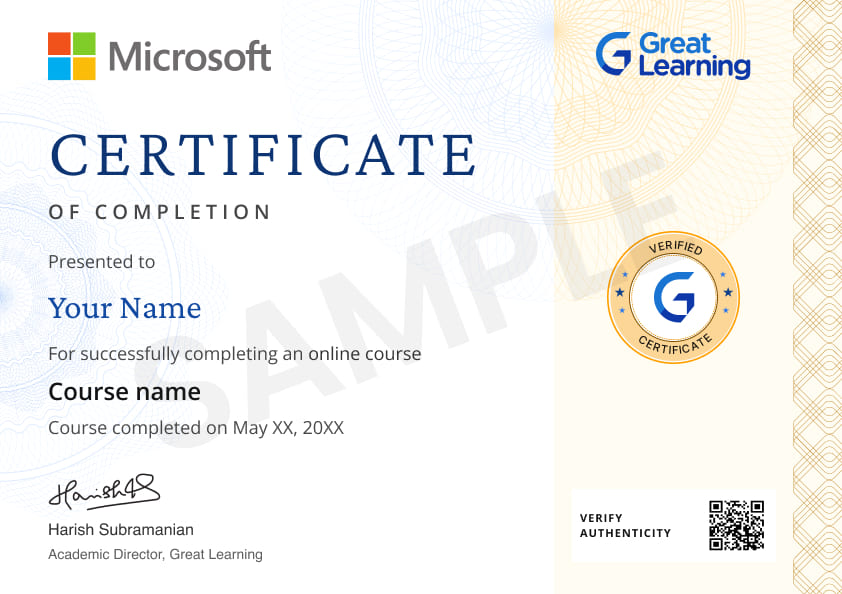
Yes, you will get a certificate of completion after completing all the modules and cracking the assessment.
Will I learn Common Data Service concepts?
How much does this Microsoft Dynamics 365 course cost?
It is an entirely free course from Great Learning Academy.
Can this course help Dynamics 365 end users?
Is there any limit on how many times I can take this free course?
No. There is no limit. Once you enrol in the Free Microsoft Dynamics 365 course, you have lifetime access to it. So, you can log in anytime and learn it for free online.
Does the course include data management in Dynamics?
Who is eligible to take this Free Microsoft Dynamics 365 course?
You do not need any prerequisites to take the course, so enroll today and learn it for free online.
Who should learn Microsoft Dynamics 365 online?
What should I learn after Dynamics 365 basics?
Recommended Free Software courses
 FREE
FREE




Similar courses you might like


.jpg "Course thumbnail image")

Relevant Career Paths >



Basics of Microsoft Dynamics 365
Microsoft Dynamics 365 is a comprehensive suite of cloud-based business applications developed by Microsoft. It integrates Customer Relationship Management (CRM) and Enterprise Resource Planning (ERP) capabilities, providing organizations with a unified platform to streamline processes, enhance customer engagement, and drive business growth. Understanding the basics of Microsoft Dynamics 365 is crucial for businesses seeking a versatile solution to manage various aspects of their operations.
1. Unified Platform:
Microsoft Dynamics 365 brings together CRM and ERP functionalities into a single, integrated platform. This unified approach enables seamless collaboration between different business functions, breaking down silos and fostering a holistic view of business operations. The interconnected nature of Dynamics 365 allows data to flow seamlessly across sales, marketing, customer service, finance, and other departments.
2. Modular Structure:
Dynamics 365 is modular, allowing organizations to choose and deploy specific applications based on their business needs. The core modules include Sales, Marketing, Customer Service, Finance, Supply Chain Management, and more. Each module is designed to address specific business processes, and organizations can add or remove modules as their requirements evolve.
3. Customer Relationship Management (CRM):
Dynamics 365 CRM modules focus on improving customer interactions and relationships. The Sales module helps manage leads, opportunities, and sales processes, while the Marketing module enables organizations to plan and execute marketing campaigns. The Customer Service module enhances customer support by providing tools for case management and service automation.
4. Enterprise Resource Planning (ERP):
The ERP modules within Dynamics 365 cater to various business functions, including Finance, Supply Chain Management, Human Resources, and more. The Finance module helps manage financial operations, including budgeting, accounting, and reporting. The Supply Chain Management module optimizes supply chain processes, from procurement to inventory management.
5. Cloud-Based Accessibility:
Microsoft Dynamics 365 is a cloud-based solution, providing users with the flexibility to access data and applications from anywhere with an internet connection. This cloud-centric approach ensures that businesses can stay agile, scale easily, and benefit from regular updates and improvements delivered by Microsoft.
6. Integration with Office 365:
Dynamics 365 seamlessly integrates with Microsoft's Office 365 suite, enhancing productivity and collaboration. Users can leverage familiar tools such as Outlook, Excel, and SharePoint within the Dynamics 365 environment. This integration streamlines workflows and facilitates the sharing of information across the organization.
7. Artificial Intelligence (AI) and Analytics:
Dynamics 365 incorporates AI capabilities to provide predictive insights, automate routine tasks, and improve decision-making. AI-driven analytics help organizations derive actionable insights from their data, enabling them to make informed strategic decisions.
8. Customization and Extensibility:
Organizations can customize Dynamics 365 to align with their unique business processes. The platform offers tools for creating custom entities, workflows, and business rules. Additionally, developers can extend the functionality using the Power Platform, which includes Power BI for analytics, Power Apps for app development, and Power Automate for workflow automation.
9. Regular Updates and Support:
Microsoft regularly updates Dynamics 365, introducing new features, enhancements, and security updates. This ensures that organizations using the platform benefit from the latest technologies and improvements. Microsoft also provides robust support and a community for users to share knowledge and best practices.
In conclusion, Microsoft Dynamics 365 is a versatile and integrated business application platform that empowers organizations to streamline processes, enhance customer engagement, and drive business success. Its modular structure, cloud-based accessibility, integration with Office 365, and AI capabilities make it a compelling choice for businesses of various sizes and industries seeking a comprehensive solution for their CRM and ERP needs.