
- Can Non-Tech Graduates Build a Career in Data Science?
- What Skills Should Non-Tech Graduates Learn?
- Which Data Science Learning Path Is Fastest?
- How Long Does It Take to Become Job-Ready?
- Which Data Science Roles Can Non-Tech Graduates Explore?
- How Can You Build a Data Science Portfolio?
- FAQs About Data Science for Non-Tech Graduates
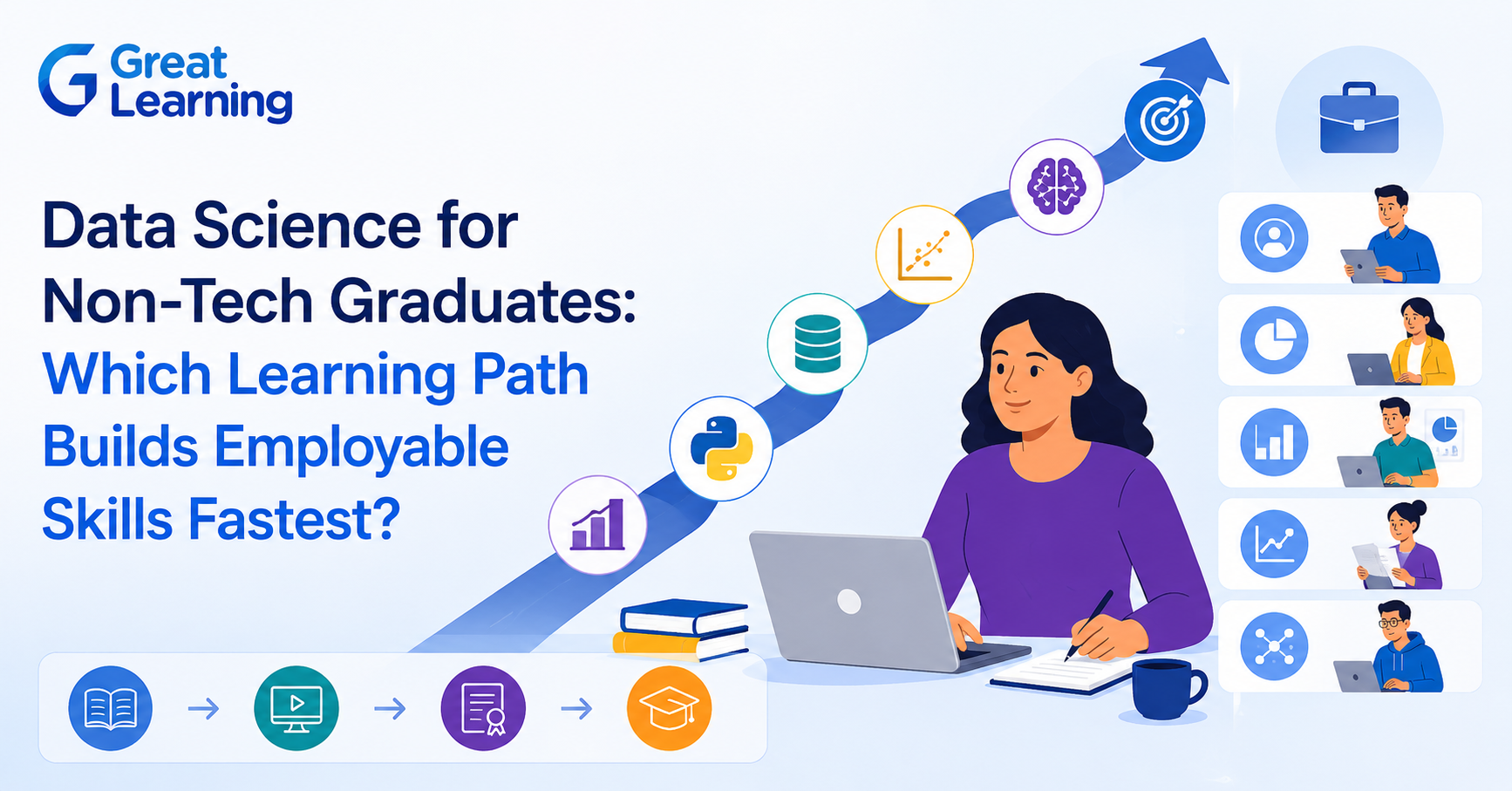
Data science is no longer limited to Computer Science graduates. The World Economic Forum’s Future of Jobs Report 2025 identifies AI and big data as the fastest-growing skills through 2030, while analytical thinking also ranks among the skills employers increasingly value. For non-tech graduates, this creates an opportunity, but choosing the right learning path matters. The fastest route to employability is not necessarily the shortest course. It is one that combines technical foundations, practical projects, and skills relevant to real business problems.
Can Non-Tech Graduates Build a Career in Data Science?
Yes. A computer science degree is not the only route into data-focused careers. Graduates from commerce, management, economics, mathematics, and other disciplines can develop Data Science skills by building proficiency in statistics, Python, SQL, Data Visualization, and Machine Learning.
Your existing domain knowledge can also be useful. For example, a commerce graduate may apply data skills to financial analysis, while a marketing graduate could work with customer or campaign data.
However, learning individual tools is not enough. Employers increasingly value the ability to interpret data, solve problems, and communicate insights.
What Skills Should Non-Tech Graduates Learn?
A practical Data Science learning path should cover:
- Statistics: To understand patterns, probability, and uncertainty
- Python: To clean, analyze, and model data
- SQL: To retrieve and work with data from databases
- Data visualization: To communicate findings clearly
- Machine learning: To build and evaluate predictive models
- Generative AI: To improve analytical workflows and productivity
- Business problem-solving: To translate analysis into actionable recommendations
Projects are equally important because they let learners show how they apply these skills to real-world problems.
Which Data Science Learning Path Is Fastest?
There are several ways to learn Data Science, and each suits a different learner.
- Self-learning offers flexibility and low cost, but learners need to identify what to study, create their own practice opportunities, and maintain consistency. It can therefore take longer to build a coherent skill set.
- Short-term courses can be useful for learning individual skills such as Python, SQL, or visualization quickly. However, they may not provide the breadth or project experience required for a career transition.
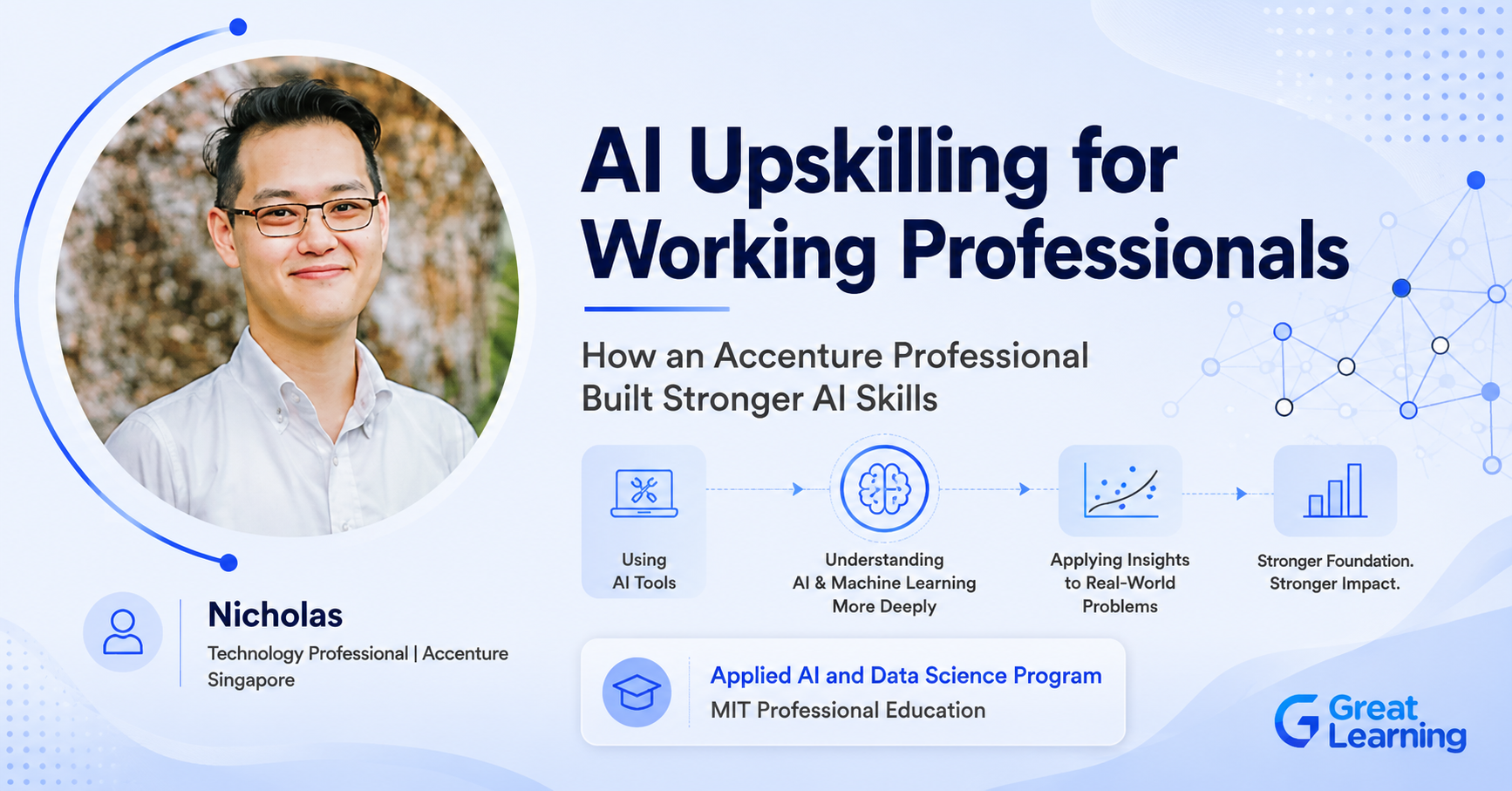
- Structured certificate programs offer a middle ground. They bring together a defined curriculum, mentorship, assessments, and projects, helping learners develop skills in a logical sequence. For example, MIT Professional Education’s Applied AI and Data Science Program, delivered in collaboration with Great Learning, covers Python, statistics, Machine Learning, deep learning, and applied Data Science, along with hands-on projects and a capstone.
For learners seeking deeper expertise, the MIT IDSS’ AI and Data Science Program covers Data Science, Machine Learning, Generative AI, Agentic AI, and responsible AI, with hands-on projects and case studies.
- Postgraduate programs are better suited to learners looking for a more comprehensive qualification. The Deakin University Master of Data Science, for instance, provides a formal master's pathway with project-based learning and an industry-oriented curriculum.
For graduates interested in combining Data Science with business applications, the PG Program in Data Science with Generative AI covers Data Science, Generative AI, business analytics, and hands-on projects.
Learners seeking an intensive postgraduate pathway can also consider the IIT Bombay e-Postgraduate Diploma in Artificial Intelligence and Data Science, which covers programming, statistics, Machine Learning, deep learning, Generative AI, and AI-ML in practice.
MIT Professional Education's Data Science Course
Gain the expertise top companies seek and open doors to Data Science jobs.
How Long Does It Take to Become Job-Ready?
There is no fixed timeline. A learner may spend the first few months developing Python, statistics, SQL, and Data visualization skills, followed by Machine Learning and portfolio projects.
The important distinction is between completing a course and becoming job-ready. Employability depends on whether you can apply what you learn, explain your approach, solve unfamiliar problems, and demonstrate your work through projects.
Which Data Science Roles Can Non-Tech Graduates Explore?
Non-tech graduates do not necessarily need to target a Data Scientist role immediately. Depending on their skills and experience, they can explore roles such as:
- Data Analyst
- Business Analyst
- BI Analyst
- Reporting Analyst
- Marketing or Financial Analyst
- Junior Data Scientist
The World Economic Forum expects demand for roles including Data Analysts and Scientists and Business Intelligence Analysts to grow significantly as organizations adopt frontier technologies.
How Can You Build a Data Science Portfolio?
Start with projects connected to real business problems. Examples include customer churn analysis, sales forecasting, marketing campaign analysis, financial data analysis, or retail demand prediction.
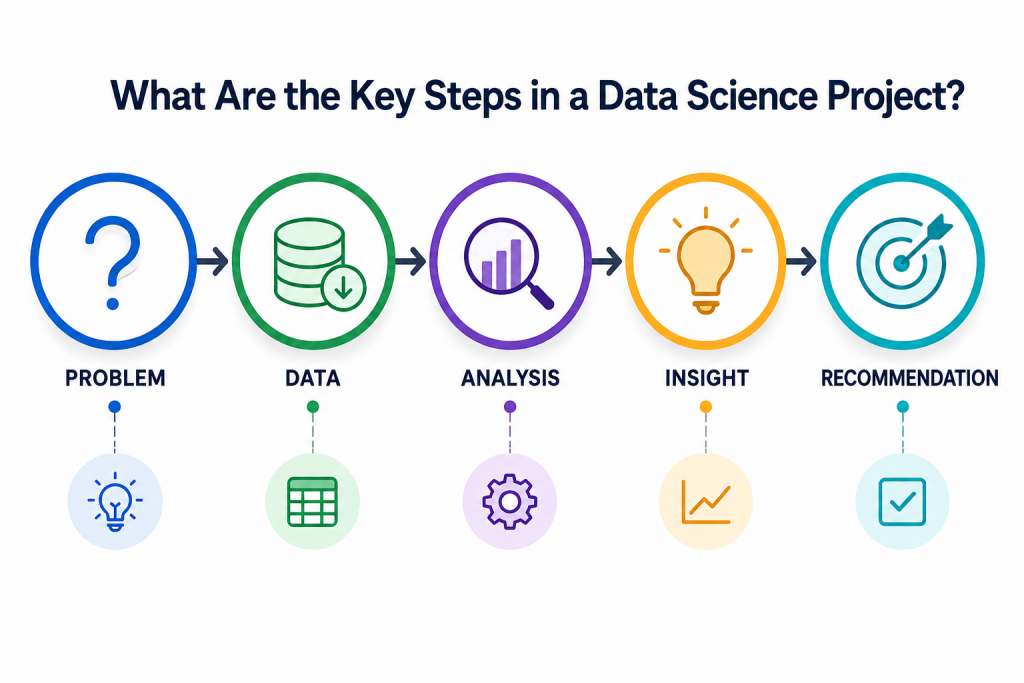
A strong project should demonstrate a clear problem → data → analysis → insight → recommendation process. This shows employers not only that you know the tools but also that you can use data to support decisions.
FAQs About Data Science for Non-Tech Graduates
Can a non-technical graduate learn Data Science?
Yes. With a structured learning path, non-tech graduates can build skills in statistics, Python, SQL, visualization, and Machine Learning without having a computer science degree.
Can I become a Data Scientist without a CS degree?
Yes, but the transition requires strong technical skills, practical projects, and the ability to apply Data Science concepts to real problems.
What is the fastest way to learn Data Science?
A structured, project-based program can provide a more focused path than learning disconnected skills independently.
Is a Master's degree necessary for a Data Science career?
Not always. A master's degree can provide deeper academic preparation, while shorter certificate or postgraduate programs may be more suitable for learners focused on targeted skill development.