Artificial intelligence (AI) is creating new opportunities for data-driven problem-solving, but having access to AI tools does not automatically mean professionals know how to use them effectively. The OECD’s 2026 report, AI and Skills, found that around 40% of employers in manufacturing and finance that had not yet adopted AI cited skills shortages as a main barrier to adoption. For professionals outside traditional technology roles, learning to work with AI can be an opportunity to build on existing analytical strengths without necessarily starting with advanced programming.
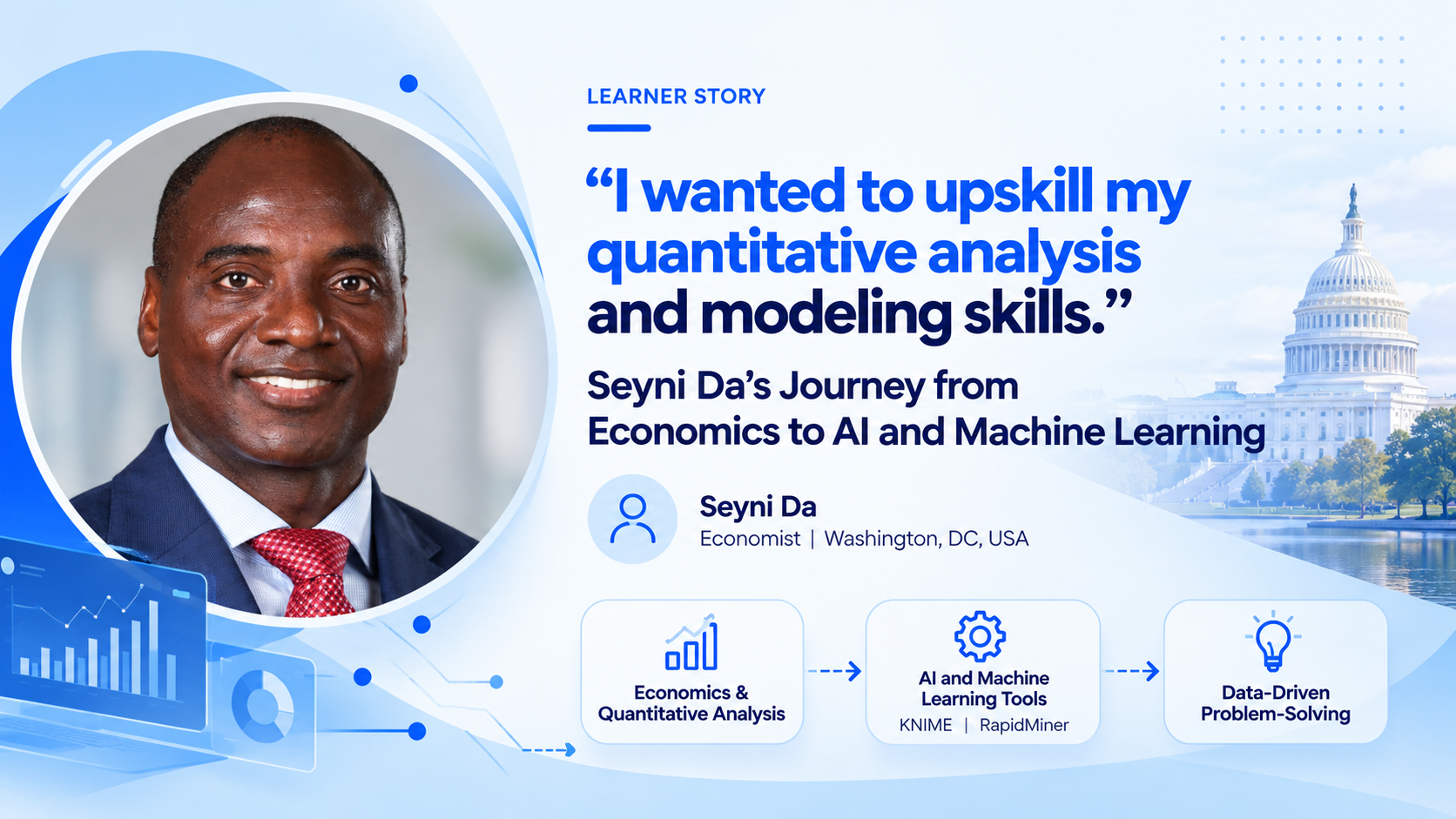
Seyni Da, a trained economist from Washington, DC, took this approach through MIT Professional Education's No Code and Agentic AI program. Motivated to strengthen his quantitative analysis and modeling skills, he explored tools such as KNIME and RapidMiner to build practical AI skills without coding.
Build AI and machine learning tools without any coding. Made for professionals ready to lead in the AI-driven world.
Why Did an Economist Decide to Learn AI?
Economics involves interpreting data, identifying patterns, and using quantitative methods to understand complex problems. AI and Machine Learning can extend these analytical skills by helping professionals process large datasets, make predictions, and explore data-driven solutions.
For Seyni, the motivation was to strengthen his existing analytical capabilities with new tools. As he explains, “I wanted to upskill my quantitative analysis and modeling skills with AI and Machine Learning tools.”
His goal was to connect his quantitative background with practical AI applications. For professionals in economics, finance, research, and business analysis, no-code AI for economists offers a way to explore data analysis and machine learning tools while building on existing domain knowledge.
How Can No-Code AI Help Non-Technical Professionals Learn Machine Learning?
Machine Learning can seem challenging for professionals with limited programming experience. No-code tools offer an alternative starting point by allowing users to explore selected Data Science and modeling workflows through visual interfaces.
Seyni chose the program specifically to develop practical skills without writing code. In his words, he enrolled “to build practical AI skills without coding.”
The program introduced him to Data Science concepts, AI and Machine Learning tools, and modeling. His testimonial specifically names KNIME and RapidMiner, platforms used for visual data analytics and Machine Learning workflows.
Such tools can help learners explore how data is prepared, how models are developed, and how analytical results can be interpreted. They can also make it easier to focus on understanding a problem and the logic behind a workflow before progressing to more technically demanding tasks.
No-code learning does not eliminate the need for technical knowledge in every AI application. However, it can provide a practical entry point for professionals who want to understand Machine Learning concepts and experiment with selected tools before pursuing deeper programming skills.
What Did Seyni Learn Through the Program?
Seyni’s learning experience focused on understanding Data Science, AI tools, and modeling through training sessions that connected concepts with real-world applications. He describes the program as offering “a great understanding of data science dimensions, AI and Machine Learning tools and modeling.”
The curriculum connects data science concepts with practical modeling techniques. Key areas include:
- Data exploration: Understanding datasets and identifying meaningful patterns.
- Machine learning techniques: Exploring methods such as clustering, regression, and classification to analyze data and make predictions.
- No-code tools: Using platforms such as KNIME to build visual machine learning workflows.
These areas align with Seyni’s goal of strengthening his quantitative analysis and modeling skills. As he explains, he wanted to use machine learning algorithms to “process massive datasets, identify patterns, make predictions and build customized business solutions.”
Seyni also valued the accessibility of the training, noting that the sessions made concepts, tools, and modeling accessible to professionals with different levels of quantitative analysis and modeling experience. His experience highlights how structured instruction and practical applications can help learners build AI skills without relying entirely on a programming-first approach.
(Note: The curriculum listed above is indicative and subject to updates as technology evolves. The current program curriculum may cover additional modeling techniques.)
How Can Economists Apply AI and Data Skills?
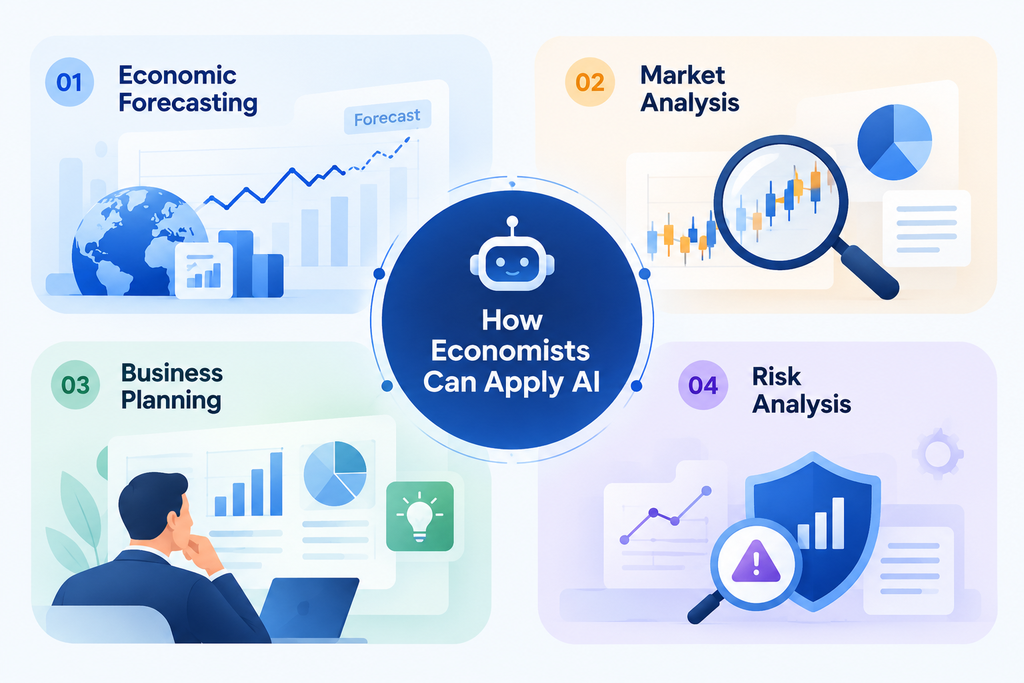
AI and machine learning can support data-driven work in different professional settings, depending on the problem and the quality of the available data. For economists, potential applications include analyzing economic indicators, examining trends, and exploring forecasting methods. In business settings, similar techniques may support customer analysis, operational planning, and other data-informed decisions.
The distinction matters because learning to use a tool is only one part of applying AI effectively. Professionals must also understand the problem, assess the quality of the data, and interpret model outputs appropriately.
Is No-Code AI Learning Worth Exploring for Economists?
For economists and other professionals who want to explore machine learning without beginning with extensive coding, a no-code learning pathway can be a useful option. Tools such as KNIME and RapidMiner provide ways to explore selected data analytics and modeling workflows, while structured training can help learners understand the concepts behind them.
The right program depends on individual goals. Prospective learners should review the curriculum, tools covered, practical exercises, and expected outcomes before choosing a course.
Seyni Da’s experience shows how a trained economist approached AI education with a specific objective: to strengthen his quantitative analysis and modeling skills. His stated takeaways—processing data, identifying patterns, making predictions, and building solutions—offer a useful starting point for professionals considering a similar learning path.
You do not need a computer science background to begin exploring no-code AI. Start by identifying how data analysis and modeling tools could complement your existing skills, then choose a learning path that matches your goals.
Also Read: https://www.mygreatlearning.com/blog/business-director-ai-upskilling-story