
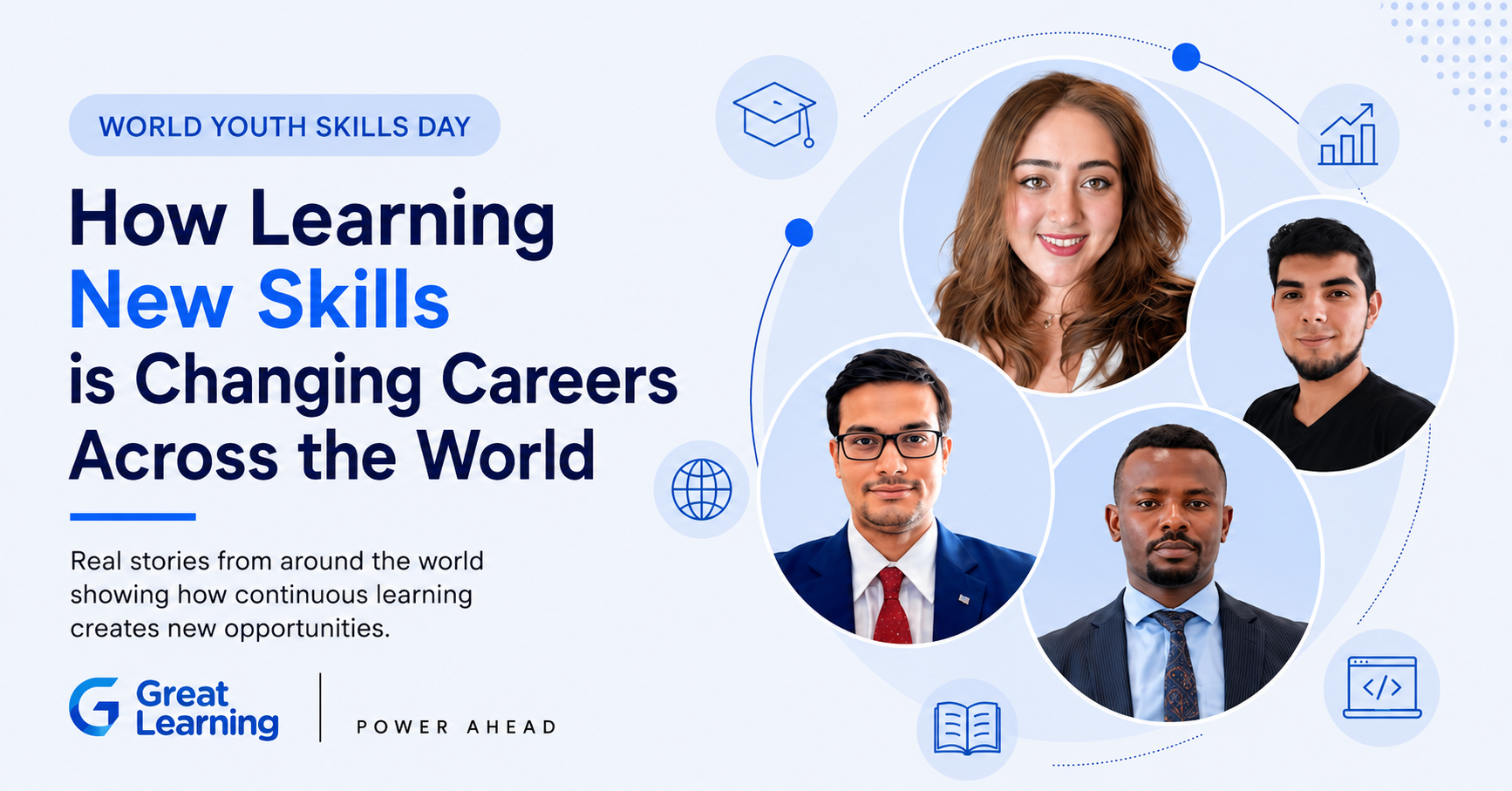
Every year on World Youth Skills Day, we celebrate the power of education and skill development in helping people prepare for the future of work. Established by the United Nations, the day highlights the importance of equipping young people with the knowledge and practical skills they need to thrive in a rapidly changing world. Today, that conversation has become even more relevant. Artificial intelligence (AI), automation, and digital transformation are reshaping industries faster than ever before. New roles are emerging, existing jobs are evolving, and continuous learning has become a key driver of career growth.
Behind this global shift are countless personal journeys. Across countries and professions, learners are gaining new skills to overcome challenges, explore new opportunities, and build meaningful careers.
Why Continuous Learning Matters More Than Ever
Just a short time ago, learning how to use ChatGPT felt like a competitive advantage. Today, AI has moved beyond chatbots to AI agents, multimodal systems, and autonomous workflows, making continuous learning more important than ever.
For today's generation, building a career is a bit like boarding a moving train. You don't wait for it to stop before you learn how it works; you learn while it's moving. The same is true for technology. Whether you're entering the workforce, switching careers, or stepping into leadership, staying relevant means continuously adding new skills as industries evolve.
The following learner stories remind us that while careers rarely follow the same path, curiosity and a willingness to learn remain universal drivers of growth.
How Four Learners Turned Skills into Opportunities
Building Cross-Disciplinary Skills
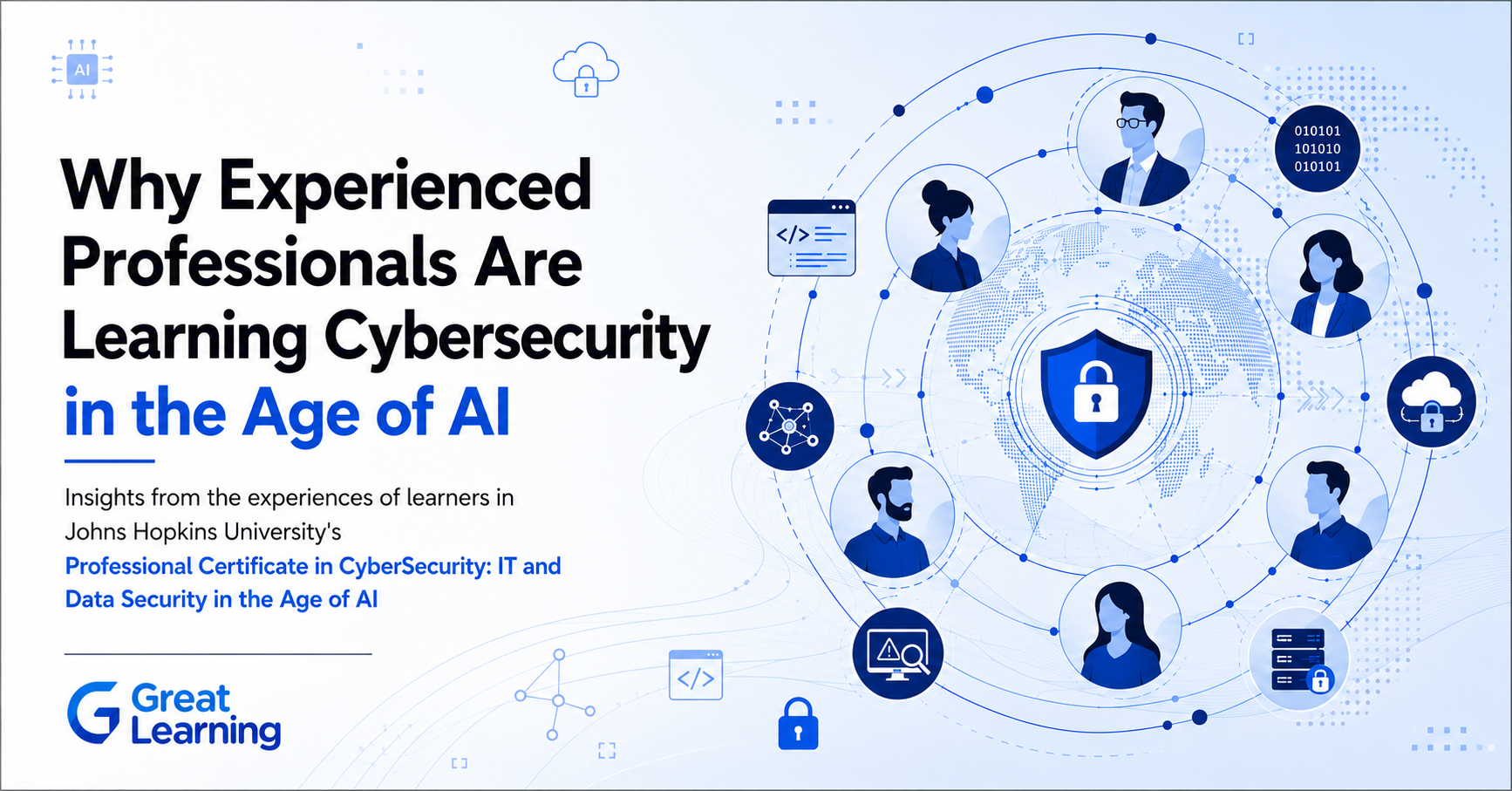
Fresh out of a Business degree at Seton Hall University, Nicole Amador from New Jersey, USA, wanted to complement her marketing background with technical knowledge as Cybersecurity became increasingly important for businesses.
She enrolled in the Johns Hopkins University Cybersecurity program to understand data privacy, cybersecurity fundamentals, and the role technology plays in protecting consumer information.
The flexible online format helped her develop practical Cybersecurity knowledge while strengthening her analytical thinking, giving her a broader perspective on today's digital landscape.
"The online option gave me flexibility, and I learned a lot about cybersecurity fundamentals and how important data security is in today's world."
Building a New Career Through Practical Learning
Coming from a Physics background, Sangram Keshari Patro from India aspired to build a career in data analytics but found it difficult to bridge the gap between academic knowledge and industry expectations.
To gain practical, job-ready skills, he enrolled in the Post Graduate Program in Data Science with Generative AI: Applications to Business by Texas McCombs.
Through hands-on projects and a capstone experience, Sangram strengthened his analytical thinking, learned to solve real business problems, and successfully transitioned into his current role as a Data Analyst.
"Don't let your background limit your ambitions. Investing in the right skills can open doors to exciting career opportunities."
Using AI Skills to Create Greater Impact
As a healthcare systems professional in Rwanda, Fils Uwitonze realized that analyzing historical data was no longer enough. He wanted to use AI to predict outcomes and improve healthcare decision-making rather than simply report on past performance.
To build those capabilities, he enrolled in MIT Professional Education's No Code and Agentic AI program, looking for a practical way to apply AI to real-world health challenges.
The program helped him build predictive models, approach problems more strategically, and collaborate with a global community of professionals applying AI across industries.
"The program has completely transformed my approach to problem-solving."
Learning to Lead AI, Not Just Build It
As an Industrial Engineer working in Business Intelligence in Peru, Salvatore Simonovich wasn't looking to become an AI developer. He wanted to understand how to evaluate AI initiatives and lead technology-driven decisions within his organization.
He enrolled in the Post Graduate Program in Artificial Intelligence for Leaders by Texas McCombs to develop a strategic understanding of AI, focusing on business value rather than coding.
Through real-world business cases and a capstone project, Salvatore learned to assess AI opportunities, align them with organizational goals, and contribute more confidently to strategic decision-making.
"I can now evaluate AI initiatives more critically, align them with business value, and contribute to decision-making from a strategic perspective."
What These Stories Teach Us About the Future of Work
Although these learners come from different countries and career stages, their journeys reveal a common thread.
- They embraced learning with purpose. Whether returning after a career break, changing fields, or preparing for leadership, each recognized a skill gap and chose to act.
- They learned by doing. Hands-on projects and real-world applications helped turn knowledge into confidence and practical workplace skills.
- Future-ready skills have universal value. AI, data literacy, and digital skills are becoming essential across industries—from healthcare and Cybersecurity to business and analytics.
- Learning is a lifelong advantage. Career growth isn't defined by where you start but by your willingness to keep learning and adapt as the world evolves.
World Youth Skills Day isn't just about celebrating skills; it's about celebrating the people who choose to keep building them. The learners featured here began their journeys in different countries, industries, and stages of life, yet they all arrived at the same realization: learning creates opportunities that weren't possible before.
As technology continues to reshape the way we work, the careers of the future won't belong only to those with the most experience; they'll belong to those who remain curious, adaptable, and committed to lifelong learning. In a world that keeps changing, curiosity may be the most valuable skill of all.
Frequently Asked Questions About World Youth Skills Day
1. What is World Youth Skills Day?
An observance declared by the UN General Assembly in 2014, marked every July 15 to highlight the importance of equipping young people with skills for employment, decent work, and entrepreneurship.
2. Why does upskilling matter for young professionals specifically?
Because the skills gap isn't only about people entering the workforce for the first time, as these stories show; it also affects people already employed, whose roles are being reshaped by AI and automation faster than their formal training can keep pace.
3. How do you know it's time to learn a new skill?
Usually not from a single dramatic moment; more often it's a slow accumulation of friction: rejected applications, decisions you can't fully justify, tools you use without understanding, or a sense that your role has quietly outgrown what you originally trained for.
4. What skills are most valuable for future careers?
While requirements vary by industry, employers increasingly value AI literacy, data analysis, digital skills, critical thinking, communication, problem-solving, and adaptability. Combining technical expertise with strong analytical and interpersonal skills can help professionals succeed in the future workplace.