
Claude AI Free Course
Introduction to Claude
 4.55
Beginner level
2.25 learning hrs
4.55
Beginner level
2.25 learning hrs
Learn Claude basics, AI assistant use cases, prompt engineering, hands-on workflows, and the Claude 2 API. Enroll in this free Claude AI course to create better outputs and integrate AI into real projects.
Instructor:
Pragya P


What you'll learn


About this course
The free Claude AI course equips you with practical skills to use Claude as an AI assistant for writing, research, summarization, analysis, and productivity tasks. You’ll learn the role of AI assistants, their advantages, limitations, and real-world applications, then understand Claude’s core capabilities and how it can support everyday work. The course also teaches prompt engineering for Claude, helping you write clearer prompts, better guide responses, and improve the quality of AI-generated outputs.
You’ll gain hands-on experience using Claude, starting with setup and basic usage before moving into advanced exercises that strengthen your ability to complete real tasks with the tool. The course also introduces the Claude 2 API, showing how to integrate Claude into applications and projects. By the end of this Claude AI free online course, you’ll be able to use Claude more confidently, create better prompts, improve task efficiency, and apply AI assistant skills in the workplace, learning, and project-based scenarios.
Course outline
Overview of AI Assistants
In this module, we will explore the landscape of AI assistants and understand their advantages, limitations, and roles in various applications.
Introduction to Claude
In this module, we will dive into the foundations of Claude, learning about its capabilities and potential.
Applying Prompt Engineering in Claude
In this module, we will discover how to effectively use prompt engineering techniques to harness Claude's power.
Hands-on for Getting Started with Claude
In this module, we will get practical experience in installing and using Claude in this hands-on session.
Hands-on for Mastering Claude
In this module, we will take our Claude skills to the next level through advanced hands-on exercises.
Claude 2 API
In this module, we will learn about the Claude 2 API and how to integrate Claude into your applications and projects.
Get access to the complete curriculum once you enroll in the course
This course is ideal for
- Beginners exploring new AI tools.
- Writers looking for AI writing assistance.
- Researchers needing document summarization.
- Tech enthusiasts wanting to evaluate Claude.
 4.55
4.55














Our course instructor

Pragya P
ChatGPT and Generative AI Expert


Frequently Asked Questions
Will I receive a certificate upon completing this free course?
Is this course free?
What will I learn in this free Claude AI course?
You’ll learn about the AI assistant landscape, Claude’s core capabilities, prompt engineering, hands-on Claude usage, advanced Claude workflows, and Claude 2 API basics for application and project integration.
How long does it take to complete this Claude course?
It is a 2.25-hour-long course, but it is self-paced. Once you enrol, you can take your own time to complete the course.
Is this Claude AI free online course suitable for beginners?
Yes, this course is designed for beginners. It starts with AI assistant basics and Claude foundations, then moves into prompt engineering, hands-on practice, and API concepts.
Will I have lifetime access to the free course?
Yes, once you enrol in the course, you will have lifetime access to any of the Great Learning Academy’s free courses. You can log in and learn whenever you want to.
What skills will I gain if I learn Claude AI free?
You’ll gain the following skills:
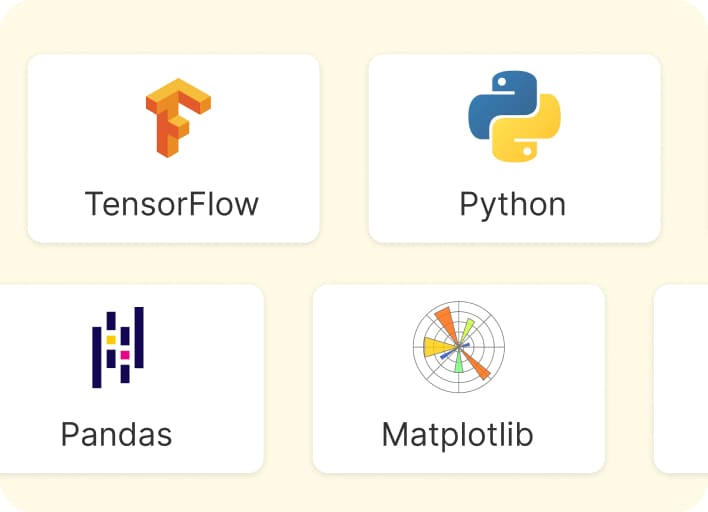
AI tools
AI advantages
Claude
Claude benefits
Claude 2 API
Prompts uses in Claude
Is there a Claude AI training course free for professionals?
Yes, this course is useful for professionals who want to use Claude for writing support, summarization, analysis, research, productivity, and project-based tasks.
Does this course teach prompt engineering in Claude?
Yes, you’ll learn how to write better prompts for Claude, add context, guide responses, and improve output quality. This makes the free Claude AI training course useful for practical workplace tasks.
Is there any limit on how many times I can take this free course?
No. There is no limit. Once you enrol in the Claude course, you have lifetime access to it. So, you can log in anytime and learn it for free online.
Will I get hands-on practice with Claude?
Yes, the course includes hands-on sessions for installing, starting, and mastering Claude. This free Claude AI training course helps you move from basic usage to more advanced workflows.
Does this free online Claude AI course cover the Claude 2 API?
Yes, the course introduces the Claude 2 API and explains how Claude connects with applications and projects. It is useful for learners who want to understand AI assistant integration.
What outcome should I expect after completing this course?
By the end, you’ll be able to use Claude for writing, summarization, analysis, productivity, and project support. You’ll also understand how to create better prompts and apply Claude in real workflows.
Who should take this free Claude AI course?
This course is useful for beginners, professionals, writers, researchers, students, and tech learners who want to understand Claude, improve AI-assisted work, and explore Claude 2 API integration.
What prerequisites are required to enrol in this Claude course?
You do not need any prior knowledge to enrol in this Claude course.
What advanced online programs can I explore to build or manage generative AI solutions after this free Claude course?
After learning how Claude supports prompting, analysis, content creation, and workplace tasks, you may explore broader generative AI concepts and applications. For deeper technical study, consider the IIT Bombay Certificate in Generative AI. Managers and business leaders seeking to apply AI to strategy and organizational decisions may explore the Executive Certificate Programme in Artificial Intelligence and Generative AI for Managers from SPJIMR.

Recommended Free AI courses
 FREE
FREE


.jpg "Course thumbnail image")
Similar courses you might like
.jpg "Course thumbnail image")


Related ChatGPT and Generative AI Courses

-

6 Weeks · Online · Weekend
Money Back GuaranteeKnow More
-
Johns Hopkins University
Certificate Program in AI Business Strategy10 weeks · Online
Know More
-
Walsh College
MS in Artificial Intelligence & Machine Learning2 Years · Online
Know More






Introduction to Claude
In the ever-evolving landscape of artificial intelligence (AI), Claude AI emerges as a prominent player, pushing the boundaries of what AI can achieve. Named after the renowned French impressionist painter Claude Monet, Claude AI's primary goal is to bring a new level of creativity and innovation to the field of AI. With its unique blend of cutting-edge technology and artistic inspiration, Claude AI has made significant strides in various domains, captivating both researchers and enthusiasts alike.
Claude AI's journey began with a vision to bridge the gap between art and technology. Drawing inspiration from Monet's iconic works, the creators of Claude AI sought to imbue AI with the ability to perceive and interpret the world in a manner reminiscent of human artistic expression. This ambitious undertaking led to the development of a multi-faceted AI system capable of remarkable feats.
One of Claude AI's most celebrated features is its ability to generate art in a multitude of styles, from classical to contemporary. Using deep learning algorithms, Claude AI analyzes vast datasets of artwork and understands the underlying principles of various artistic movements. This understanding allows Claude AI to generate original pieces of art that exhibit the characteristics of specific styles or emulate the techniques of famous artists.
Claude AI's artistic prowess extends beyond mere imitation; it encourages collaboration between humans and AI in the creative process. Artists and designers can work alongside Claude AI, leveraging its knowledge and creativity to enhance their projects. Whether it's generating concept art, suggesting color palettes, or assisting with complex design tasks, Claude AI serves as a valuable partner, inspiring human creativity.
Beyond the realm of art, Claude AI has found applications in fields such as healthcare, finance, and autonomous vehicles. Its robust machine learning capabilities enable it to analyze complex data sets, identify patterns, and make predictions with remarkable accuracy. In healthcare, Claude AI aids in disease diagnosis and treatment recommendations, while in finance, it assists in risk assessment and investment strategies. In the world of autonomous vehicles, Claude AI contributes to safer and more efficient navigation.
One of the defining characteristics of Claude AI is its commitment to ethical AI development. Its creators prioritize transparency, fairness, and accountability in AI systems. Claude AI undergoes rigorous testing and validation to ensure its outputs are unbiased and devoid of harmful biases. This ethical approach sets a standard for responsible AI development, addressing concerns about the impact of AI on society.
Claude AI's impact extends to education and research as well. It provides a valuable tool for educators, helping students understand complex concepts through interactive and immersive experiences. Researchers benefit from Claude AI's ability to process and analyze vast amounts of data, accelerating scientific discovery in various domains.
Despite its remarkable achievements, Claude AI faces challenges on its path to further advancement. Addressing issues of data privacy, ethical use, and potential misuse of AI remains a top priority. Continued research and development efforts are necessary to enhance Claude AI's capabilities and make it even more accessible to a wider audience.
In conclusion, Claude AI represents a groundbreaking fusion of art and technology, redefining the possibilities of artificial intelligence. Its ability to generate art, collaborate with humans, and excel in various domains showcases the vast potential of AI when combined with artistic inspiration. As Claude AI continues to evolve, it promises to play a pivotal role in shaping the future of AI and its impact on society. Just as Claude Monet's art revolutionized the world of painting, Claude AI is poised to revolutionize the world of artificial intelligence.