- What Is India's Tech Industry Prioritizing in 2027?
- 1. MCA in Artificial Intelligence: For Those Who Want to Build Intelligent Systems
- 2. MCA in Cloud Computing: For Those Who Want to Build Digital Infrastructure
- 3. MCA in Cybersecurity: For Those Who Want to Protect Digital Systems
- AI vs Cloud Computing vs Cybersecurity: How Do They Compare?
- How Should You Choose Your MCA Specialization in 2027?
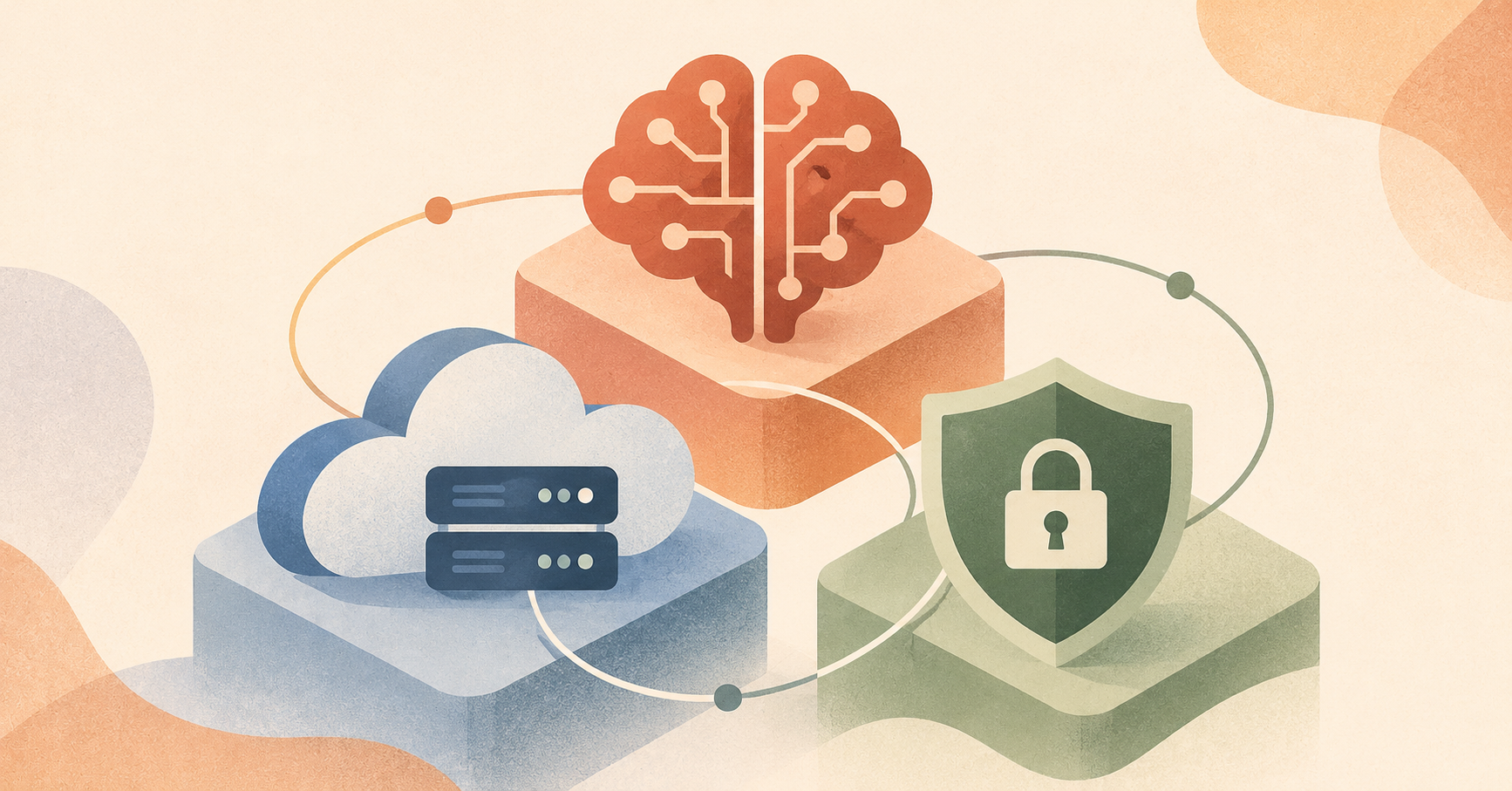
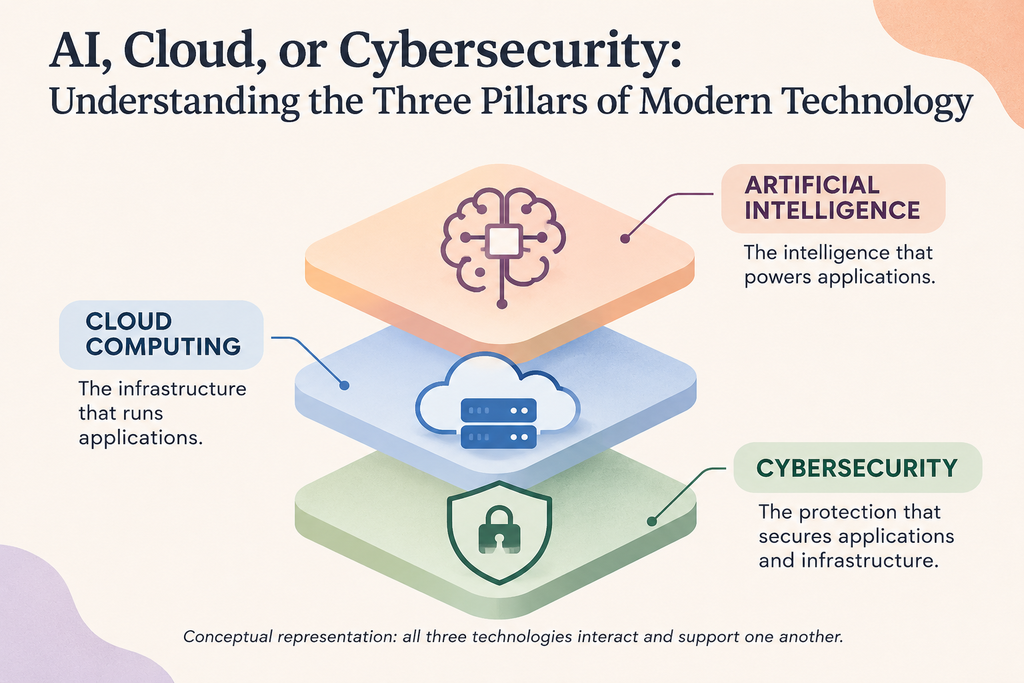
Choosing an MCA specialization in 2027 means deciding which part of the technology ecosystem you want to work in. Artificial intelligence (AI) is changing how businesses process information, Cloud Computing is powering digital infrastructure, and Cybersecurity is becoming essential as organizations manage increasingly complex digital environments.
All three offer promising career paths, but they require different technical skills and interests. So, should you pursue an MCA in AI, Cloud Computing, or Cybersecurity? The answer depends on the kind of problems you want to solve and the career you want to build.
What Is India's Tech Industry Prioritizing in 2027?
The demand for specialized technology skills is becoming more evident in India's hiring market. According to Quess Corp's India GCC Tech Talent Landscape – Q2 FY27 report, AI, Data, and Cybersecurity accounted for 30.3% of technology hiring demand across India's Global Capability Centers (GCCs) between July and September 2026, up from 25.8% in the previous quarter.
Demand for AI, data, and analytics professionals grew 14% quarter-on-quarter, while Cybersecurity and risk management hiring increased 12%. India's public cloud market has also recorded strong growth, with Gartner forecasting a 28.1% increase in end-user spending in 2026, taking it to approximately $17.5 billion, up from $13.7 billion in 2025.
These trends point to opportunities across all three domains. However, the work involved in each specialization is quite different.
1. MCA in Artificial Intelligence: For Those Who Want to Build Intelligent Systems
Artificial intelligence is changing how software interprets information, makes predictions, and responds to users. An MCA in Artificial Intelligence prepares learners to work on the technology behind these capabilities, from developing machine learning models to building applications that automate complex tasks.
The curriculum typically covers Python, Machine Learning, deep learning, neural networks, natural language processing, and Generative AI. Learners apply these concepts to projects involving recommendation engines, predictive models, chatbots, and intelligent applications.
Career opportunities include:
- AI/ML Engineer
- Machine Learning Developer
- NLP Engineer
- AI Application Developer
- Data Scientist (with relevant additional skills)
This specialization suits learners interested in programming, mathematics, and working with data. However, building AI systems requires more than familiarity with AI tools. It involves understanding algorithms, training models, evaluating their performance, and translating business problems into technical solutions.
If you are looking to develop these capabilities, you can explore an online MCA in Artificial Intelligence, which covers Machine Learning, Natural Language Processing, Large Language Models, and Generative AI application development.
2. MCA in Cloud Computing: For Those Who Want to Build Digital Infrastructure
While AI focuses on making applications more intelligent, cloud computing provides the infrastructure that allows those applications to function at scale. From streaming platforms to enterprise software, digital services depend on cloud environments to store information, process requests, and manage growing workloads.
An MCA in Cloud Computing typically covers cloud architecture, virtualization, networking, AWS, Microsoft Azure, Google Cloud, containerization, Kubernetes, and DevOps. Learn to deploy applications, configure cloud environments, automate infrastructure, and maintain system performance.
Career opportunities include:
- Cloud Engineer
- DevOps Engineer
- Cloud Administrator
- Site Reliability Engineer
- Cloud Architect (with relevant experience)
This specialization is a strong consideration for learners interested in operating systems, networking, infrastructure, and automation. The work extends beyond deploying applications; it involves ensuring that digital services remain reliable, scalable, and accessible as organizational needs change.
3. MCA in Cybersecurity: For Those Who Want to Protect Digital Systems
As applications, data, and infrastructure become increasingly interconnected, securing them becomes just as important as building them. Cybersecurity focuses on identifying weaknesses, preventing unauthorized access, and responding to threats that could disrupt digital operations.
An MCA in Cybersecurity typically introduces learners to network security, ethical hacking, cryptography, digital forensics, vulnerability assessment, security operations, and incident response. Through practical exercises, learn to assess system vulnerabilities, investigate suspicious activities, and strengthen security controls.
Career opportunities include:
- Cybersecurity Analyst
- SOC Analyst
- Penetration Tester
- Application Security Engineer
- Security Consultant
This specialization may suit learners with an aptitude for analytical thinking, investigation, and problem-solving. It also demands an understanding of how networks and applications operate, since identifying security weaknesses often requires looking at systems from both a developer's and an attacker's perspective.
Cybersecurity is not limited to ethical hacking. It also involves monitoring systems, managing risks, responding to incidents, and ensuring that organizations can protect their digital assets.
If you are considering this career path, the online MCA in Cybersecurity from SRMIST combines core computer application subjects with specialized learning in security risk assessment, cyber forensics, cyber laws, and cybersecurity governance.
AI vs Cloud Computing vs Cybersecurity: How Do They Compare?
| Factor | AI | Cloud Computing | Cybersecurity |
| Key skills | Python, ML, statistics | Networking, cloud platforms, DevOps | Network security, threat analysis |
| Popular tools | TensorFlow, PyTorch | AWS, Azure, Kubernetes | SIEM tools, Kali Linux |
| Career direction | AI/ML engineering | Cloud and DevOps engineering | Security and risk management |
| Best suited for | Analytical and mathematical thinkers | Infrastructure-oriented learners | Investigative problem-solvers |
These specializations are not entirely separate. AI applications run on Cloud infrastructure, while both AI systems and Cloud environments need Cybersecurity. This overlap also creates opportunities to develop expertise across multiple domains.
How Should You Choose Your MCA Specialization in 2027?
Before selecting a specialization, consider three questions:
- Do you enjoy mathematics, programming, and experimentation? AI may be a good fit if you want to develop models and intelligent applications.
- Do you prefer working with networks, infrastructure, and deployment? Cloud computing may suit you if you enjoy building and maintaining technology environments.
- Are you interested in investigating vulnerabilities and protecting information? Cybersecurity could be the right direction if you enjoy analyzing threats and solving security problems.
Also, evaluate the MCA curriculum before enrolling. Look for practical lab sessions, industry-relevant projects, internship opportunities, and exposure to tools used by technology teams. A specialization should help you develop transferable technical skills, not just familiarity with a particular software platform.
If you are still comparing your options, the online MCA degree from SRMIST offers three elective tracks: General Computer Applications, Generative AI, and Cyber Security and Forensics. These options allow you to choose an academic direction based on their technical interests and career goals.
Advance your IT career with SRMIST's UGC-entitled Online MCA. Learn Python, Generative AI, Cyber Security and advanced software development through industry-focused projects.