


India’s finance sector is increasingly looking for professionals who can combine technical expertise with leadership and communication skills. A 2025 CFA Institute study of more than 100 firms found that 49% of employers consider communication, presentation, and other soft skills important when hiring finance talent.
This shift is particularly relevant for finance executives aiming to move into managerial roles, where success depends on more than financial reporting and analysis. Finance managers are expected to lead teams, influence business decisions, and connect financial insights with broader organizational goals.
An online MBA for finance professionals can help bridge this gap by developing leadership, business strategy, communication, and decision-making skills while allowing professionals to continue working.
How do I move from finance executive to finance manager?
The transition from finance executive to finance manager can be challenging because the nature of the role changes significantly. Instead of primarily managing individual responsibilities, finance managers may oversee teams, budgets, forecasts, and strategic financial initiatives.
They also need to collaborate with departments such as operations, marketing, and sales and communicate financial insights to senior leaders. This requires skills beyond technical finance expertise, including people management, strategic thinking, stakeholder communication, and business decision-making.
So, what skills does a finance executive need to become a finance manager? Along with strong financial knowledge, professionals typically benefit from leadership, business strategy, analytical thinking, communication, and team management skills.
Master financial planning, investment analysis, and corporate finance with SRMIST's UGC-entitled Online MBA. Develop strategic decision-making and risk management skills for leadership roles in global financial markets.
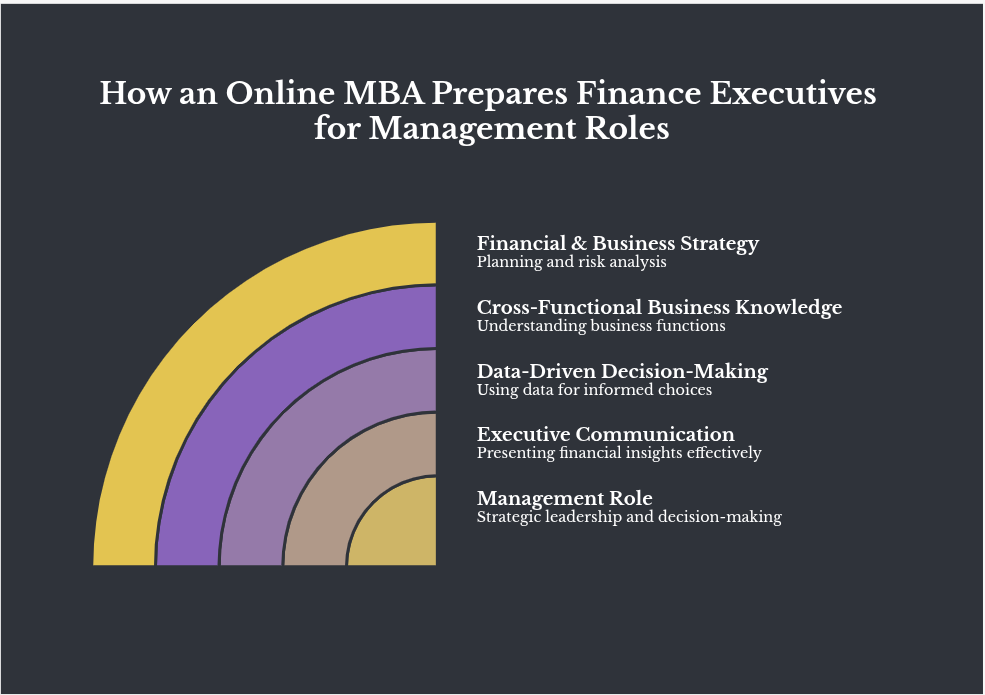
How an Online MBA Prepares Finance Executives for Management Roles
An online MBA can help finance professionals develop the broader business and leadership capabilities required for managerial positions.
Builds Leadership and People Management Skills
Finance managers are responsible for guiding teams, delegating work, managing performance, and resolving conflicts. MBA coursework in leadership and organizational behavior can help professionals develop these people-management capabilities.
Strengthens Financial and Business Strategy
An MBA can expand a finance executive's perspective beyond financial processes. Subjects such as corporate finance, business strategy, and risk management can help professionals understand how financial decisions affect business growth and long-term performance.
Develops Cross-Functional Business Knowledge
Managers need to understand how different business functions work together. Exposure to areas such as marketing, operations, analytics, and organizational management can help finance professionals collaborate more effectively with cross-functional teams.
Improves Data-Driven Decision-Making
Finance managers increasingly use data to evaluate performance, forecast outcomes, identify risks, and support business decisions. MBA training in analytics and financial decision-making can strengthen these capabilities.
Builds Executive Communication Skills
A finance manager may need to explain complex financial information to senior executives and non-finance stakeholders. An MBA can help professionals communicate financial insights clearly and connect numbers with actionable business recommendations.
Finance Executive vs. Finance Manager: What Changes?
| Area | Finance Executive | Finance Manager |
| Primary focus | Financial operations and reporting | Financial planning and business decisions |
| Responsibilities | Preparing reports, analysis, and finance processes | Managing teams, budgets, forecasts, and strategy |
| Decision-making | Provides financial inputs | Uses financial insights to guide decisions |
| Role approach | Individual contributor | Team leader and business partner |
| Key skills | Finance knowledge and analytical ability | Leadership, communication, and strategic thinking |
The key difference is the shift from executing finance activities to managing people, processes, and business outcomes.
Career Opportunities After an Online MBA for Finance Professionals
An online MBA does not guarantee a promotion, but it can complement finance experience by strengthening the skills employers may look for in management candidates. Depending on their experience and career goals, finance professionals may pursue roles such as
- Finance Manager
- FP&A Manager
- Financial Planning Manager
- Finance Business Partner
- Corporate Finance Manager
- Senior Finance Manager
Professionals can also use the broader business knowledge gained through an MBA to explore leadership opportunities beyond traditional finance functions.
SRM University, Sikkim Online MBA
Advance your career with SRM University, Sikkim's UGC-entitled online MBA. Choose from 7 in-demand specializations in Finance, Marketing, HR, Analytics, Operations, Healthcare & Hospitality.
Is an Online MBA Worth It for Finance Executives?
An online MBA can be worth considering for finance executives who want to move into management roles while continuing their careers. The value of an MBA depends on factors such as the program curriculum, institution credibility, flexibility, learning outcomes, and how well the program aligns with career goals. Most importantly, an MBA should complement—not replace—relevant finance experience and demonstrated leadership ability.
The path from finance executive to finance manager requires a shift from financial execution to leadership, strategic thinking, and business decision-making. An online MBA can help finance professionals build these capabilities while continuing their careers. By combining practical finance experience with broader management skills, professionals can position themselves for greater responsibility and future leadership opportunities.
FAQs
1. Can a finance executive become a finance manager after an online MBA?
An online MBA can help finance executives develop management skills such as leadership, strategy, communication, and decision-making. Career progression also depends on professional experience, performance, and organizational opportunities.
2. What skills are required to become a finance manager?
Finance managers need skills in financial planning, forecasting, team leadership, business strategy, stakeholder communication, and data-based decision-making.
3. Is an online MBA useful for working finance professionals?
An online MBA can be useful for working professionals who want to develop management skills without leaving their current roles. The value depends on the program quality, curriculum, and alignment with career goals.
4. What jobs can finance professionals pursue after an MBA?
Finance professionals may explore roles such as Finance Manager, FP&A Manager, Finance Business Partner, Corporate Finance Manager, and Senior Finance Manager based on their experience and skills.
5. How is a finance executive role different from a finance manager role?
Finance executives generally focus on financial processes, reporting, and analysis, while finance managers oversee teams, planning, business decisions, and strategic initiatives.
6. Which is the best online MBA in Finance in India for working professionals?
The right program should combine a recognized degree, industry-focused curriculum, practical learning through projects and case studies, flexible online delivery, and career support. SRMIST's Online MBA Degree offers a Finance specialization with these features to help learners prepare for leadership roles.