

Free AWS Cloud Storage and Database Systems Course
Databases and Files Systems in AWS
 4.51
Beginner level
2.25 learning hrs
4.51
Beginner level
2.25 learning hrs
Enrol for free in our Databases and File Systems in AWS course. Learn about AWS storage, databases, object storage, and file systems. Gain hands-on skills and boost your AWS storage expertise.
Instructor:
Mr. Anirudh Rao


About this course
In this course, we'll cover everything you need to know about cloud computing, why it's essential, and how it can benefit you. So, let's dive in! First off, we'll explore why cloud computing is a game-changer. It offers scalability, flexibility, and cost-efficiency, allowing you to focus on your core business instead of managing infrastructure. That's where AWS comes in. AWS (Amazon Web Services) is a leading cloud platform that provides a wide range of services to build and deploy applications easily.
We'll then delve into cloud storage, a fundamental component of cloud computing. Cloud storage offers numerous benefits like durability, accessibility, and unlimited scalability. It's an excellent solution for storing and managing your data securely. Next, we'll zoom in on database services in AWS. You'll discover the various options available, such as Amazon RDS, DynamoDB, and Amazon Aurora. These services offer managed database solutions, making it easier for you to handle your data efficiently.
We'll also address common myths surrounding AWS cloud storage. It's essential to debunk misconceptions and provide you with accurate information to make informed decisions about your cloud storage needs. Lastly, we'll conclude the course with an exciting demo. You'll get hands-on experience in setting up databases and file systems in AWS, allowing you to see the concepts we've covered in action.
Build your Cloud Computing skills and elevate your career by enrolling in the most comprehensive Cloud Computing course. Learn to apply the concepts with 90+ cloud services. Work with widely used tools and platforms like AWS, Azure, Google Cloud, and more. Check out our online Cloud Computing Courses today.
Course outline
Legacy IT vs. Cloud: From CapEx to OpEx Models
Analyze the shift from on-premise data centers (Capital Expenditure/CapEx) to variable cost models (Operational Expenditure/OpEx). Solve legacy challenges like hardware procurement latency and over-provisioning.
AWS Value Proposition: Agility, Elasticity, and Cost Savings
Explore the six advantages of cloud computing including Trade Capital for Variable Expense, Economies of Scale, Speed and Agility, and Global Reach. Master the concept of Elasticity (scaling up/down).
What is Cloud Storage?
Cloud storage is online storage available as a network. Let's understand in detail what exactly cloud storage is followed by the benefits of cloud storage.
Get access to the complete curriculum once you enroll in the course
 4.51
4.51










What our learners enjoyed the most
Skill & tools
63% of learners found all the desired skills & tools
Our course instructor

Mr. Anirudh Rao
Cloud Computing Expert


Frequently Asked Questions
Will I receive a certificate upon completing this free course?
Is this course free?
Will I get a certificate after completing this Databases and Files Systems in AWS free course?
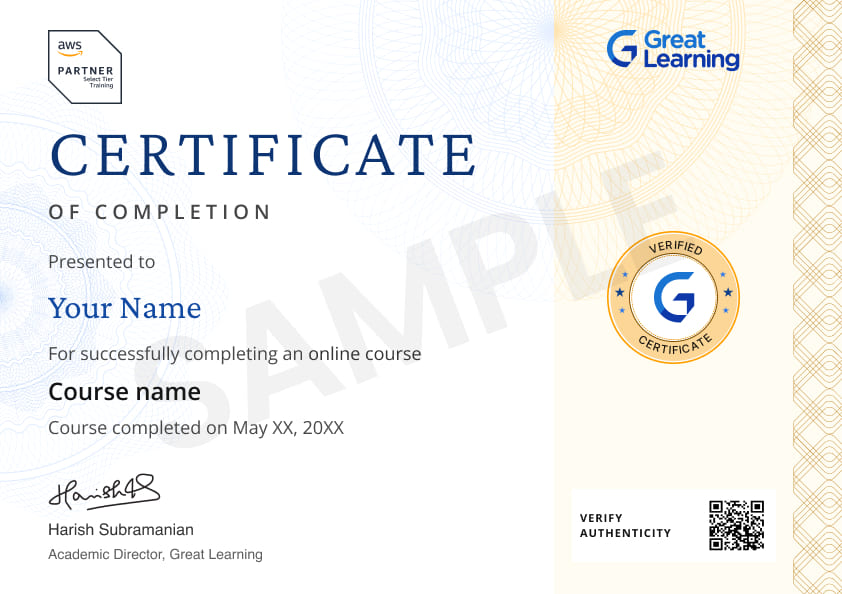
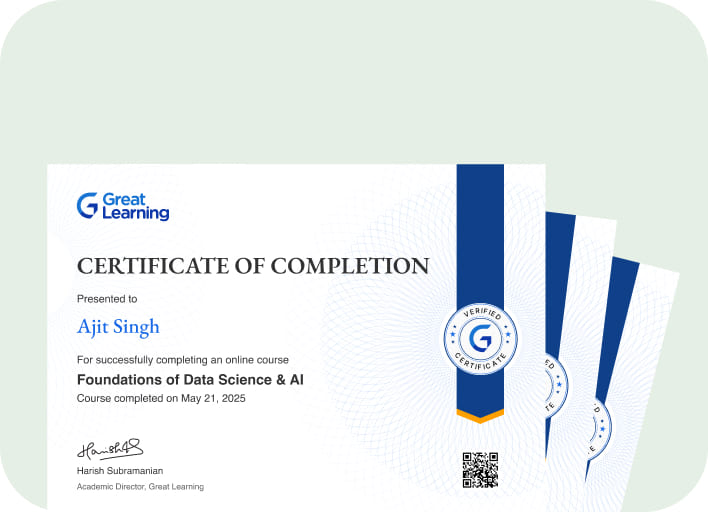
Yes, you will get a certificate of completion for Databases and Files Systems in AWS after completing all the modules and cracking the assessment. The assessment tests your knowledge of the subject and badges your skills.
How much does this Databases and Files Systems in AWS course cost?
It is an entirely free course from Great Learning Academy. Anyone interested in learning the basics of Databases and Files Systems in AWS can get started with this course.
Is there any limit on how many times I can take this free course?
Once you enroll in the Databases and Files Systems in AWS course, you have lifetime access to it. So, you can log in anytime and learn it for free online.
Can I sign up for multiple courses from Great Learning Academy at the same time?
Yes, you can enroll in as many courses as you want from Great Learning Academy. There is no limit to the number of courses you can enroll in at once, but since the courses offered by Great Learning Academy are free, we suggest you learn one by one to get the best out of the subject.
Why choose Great Learning Academy for this free Databases and Files Systems in AWS course?
Great Learning Academy provides this Databases and Files Systems in AWS course for free online. The course is self-paced and helps you understand various topics that fall under the subject with solved problems and demonstrated examples. The course is carefully designed, keeping in mind to cater to both beginners and professionals, and is delivered by subject experts. Great Learning is a global ed-tech platform dedicated to developing competent professionals. Great Learning Academy is an initiative by Great Learning that offers in-demand free online courses to help people advance in their jobs. More than 5 million learners from 140 countries have benefited from Great Learning Academy's free online courses with certificates. It is a one-stop place for all of a learner's goals.
What are the steps to enroll in this Databases and Files Systems in AWS course?
Enrolling in any of the Great Learning Academy’s courses is just one step process. Sign-up for the course, you are interested in learning through your E-mail ID and start learning them for free online.
Will I have lifetime access to this free Databases and Files Systems in AWS course?
Yes, once you enroll in the course, you will have lifetime access, where you can log in and learn whenever you want to.

Recommended Free Cloud Computing courses
 FREE
FREE


Similar courses you might like





Related Cloud Computing Courses

-

McCombs School of Business at The University of Texas at Austin
PG Program in Cloud Computing: Leveraging GenAI6 months · Online · Weekend
360° Cloud LearningKnow More
-
Microsoft Azure
AZ-104 - Microsoft Azure Administrator Training Course6 Weeks · Online
Know More
-
Great Lakes Institute of Management
Post Graduate Program in Cloud Computing8 months · Online
360° Cloud LearningKnow More





Relevant Career Paths >



Databases and Files Systems in AWS
Databases and file systems are essential components of modern applications and systems, enabling efficient data storage, retrieval, and management. In the context of cloud computing, Amazon Web Services (AWS) provides a range of robust and scalable services for databases and file systems. This article explores some of the key offerings and features of databases and file systems in AWS. AWS offers a variety of managed database services, each designed to cater to different use cases and workloads. Amazon Relational Database Service (RDS) is a fully managed service that supports popular relational database engines such as MySQL, PostgreSQL, Oracle, and SQL Server. RDS takes care of tedious administrative tasks like hardware provisioning, software patching, and backups, allowing developers to focus on building applications. It provides features like automatic backups, automated software patching, and scalability options to handle varying workloads. For NoSQL database requirements, AWS offers Amazon DynamoDB. DynamoDB is a fully managed, highly scalable, and low-latency NoSQL database service. It provides seamless scalability and on-demand capacity provisioning, making it ideal for applications with unpredictable workloads or rapidly growing datasets. DynamoDB offers features like built-in multi-region replication, encryption at rest, and flexible querying options.
Another popular database service in AWS is Amazon Aurora. Aurora is a MySQL and PostgreSQL-compatible relational database engine designed for high-performance and scalability. It provides advantages like automated scaling, fault-tolerance, and high availability. Aurora offers capabilities such as read replicas for scaling reads, automatic backups, and point-in-time recovery. AWS also provides Amazon DocumentDB, a fully managed document database service compatible with MongoDB. It offers the scalability and flexibility of a NoSQL database while maintaining the familiar MongoDB API and data model. DocumentDB is designed to handle large amounts of semi-structured data and provides features like automatic scaling, encryption, and backup and restore capabilities.
When it comes to file systems, AWS offers Amazon Elastic File System (EFS), a fully managed network file system compatible with multiple instances. EFS provides shared access to files across multiple instances, making it suitable for applications that require shared storage for data consistency and collaboration. It offers features like automatic scaling, high availability, and strong data durability. EFS is compatible with Linux and Windows instances and seamlessly integrates with other AWS services like EC2 and ECS. Another option for file storage in AWS is Amazon Simple Storage Service (S3), which provides object storage for various data types, including files. S3 is designed for high durability, availability, and scalability. It offers features like versioning, encryption, lifecycle policies, and access control mechanisms, making it a versatile and reliable choice for storing and retrieving files. S3 can also be integrated with other AWS services like AWS Lambda and AWS Glacier for extended functionality.
In addition to these managed database and file system services, AWS provides various other complementary services that enhance data management and analysis. For example, AWS Glue is a fully managed extract, transform, and load (ETL) service that simplifies the process of preparing and loading data for analytics. AWS Redshift is a fully managed data warehousing service that allows organizations to analyze large datasets efficiently. AWS Athena enables users to run interactive queries directly on data stored in S3 using standard SQL syntax.
In conclusion, AWS offers a comprehensive suite of services for databases and file systems, catering to diverse application needs and workloads. These managed services eliminate the complexity of infrastructure management, providing developers and organizations the flexibility, scalability, and reliability required to build and run their applications effectively in the cloud. Whether it's relational databases, NoSQL databases, network file systems, or object storage, AWS provides a range of options to meet the evolving data storage and management requirements of modern applications.