
Offered by C1973 EV Power Train Lab, IIT Bombay
e-Postgraduate Diploma in E-Mobility
 Application closes on
19th Sep 2026
Application closes on
19th Sep 2026
 Speak with our expert
079 7117 1309
Speak with our expert
079 7117 1309




Learn more about the course
Get details on syllabus, projects, tools, and more
e-Postgraduate Diploma in E-Mobility
Application closes 19th Sep 2026
What's new in this online IIT Bombay course?
-

Campus Immersion
Interact with faculty and experience the IIT Bombay campus during visits, including an in-person graduation ceremony.
-
Lateral Hiring Access
Gain exclusive access to IIT Bombay's Lateral Hiring Group to explore relevant career opportunities in the EV industry.


ePGD Outcomes
Elevate your career in E-Mobility
Become an Electric Vehicle technology expert.
-
Develop in-depth knowledge of battery chemistry, design, management systems, and charging technologies.
-
Learn to design and analyse power electronic converters tailored for electric vehicle applications.
-
Understand principles for controlling electric drives, including DC, BLDC, and PMSM motors.
-
Explore the integration of EVs with grid infrastructure, smart charging, and regulatory frameworks.
Earn an e-Postgraduate Diploma from IIT Bombay
-
#2 in India
QS World University Rankings, 2026
-
#28
QS Rankings in Engineering & Technology, 2025
-
#3
NIRF India Rankings 2025


ePGD Highlights
Why choose the ePGD in E-Mobility?
-
ePGD delivered by IIT Bombay
Designed and delivered by IIT Bombay faculty
-
36 IIT Bombay credits
Earn a credit-bearing diploma from IIT Bombay, with credits savable in the Academic Bank of Credits (ABC).
-
Campus Immersion
Interact with faculty and experience the IIT Bombay campus during visits and an in-person graduation.
-
eAlumni Status
Upon successful completion, candidates are awarded IIT Bombay eAlumni status and join a prestigious network.
-
Lateral Hiring
Gain exclusive access to IIT Bombay's Lateral Hiring Group to explore relevant career opportunities.
-
No GATE Score
A GATE score is not required for registration, ensuring accessibility for working professionals.
-
In-person graduation
In-person graduation ceremony at the IIT Bombay campus
-
Personalised assistance
Personalised assistance with a Programme Manager


Battery Technology
Power Electronics
Electric Drives
Grid Integration
Vehicle Styling
Manufacturing Technologies
BMS
Python.
Battery Technology
Power Electronics
Electric Drives
Grid Integration
Vehicle Styling
Manufacturing Technologies
BMS
Python.
view more
- Overview
- Learning Path
- Curriculum
- Faculty
- Reviews
- Fees
- FAQ
This ePGD is ideal for
The e-Postgraduate Diploma in E-Mobility has been crafted for users with the following objectives.
-
Early to Mid-career Professionals
Upskill yourself and advance your career in the rapidly growing electric vehicle industry.
-
Scientists and R&D Professionals
Build cutting-edge solutions and drive innovation for the expanding EV market.
-
Entrepreneurs
Enhance technical skills to effectively lead and manage the next EV startup.
-
Academicians and Educators
Equip yourself with the latest knowledge to inspire the next generation of EV professionals.
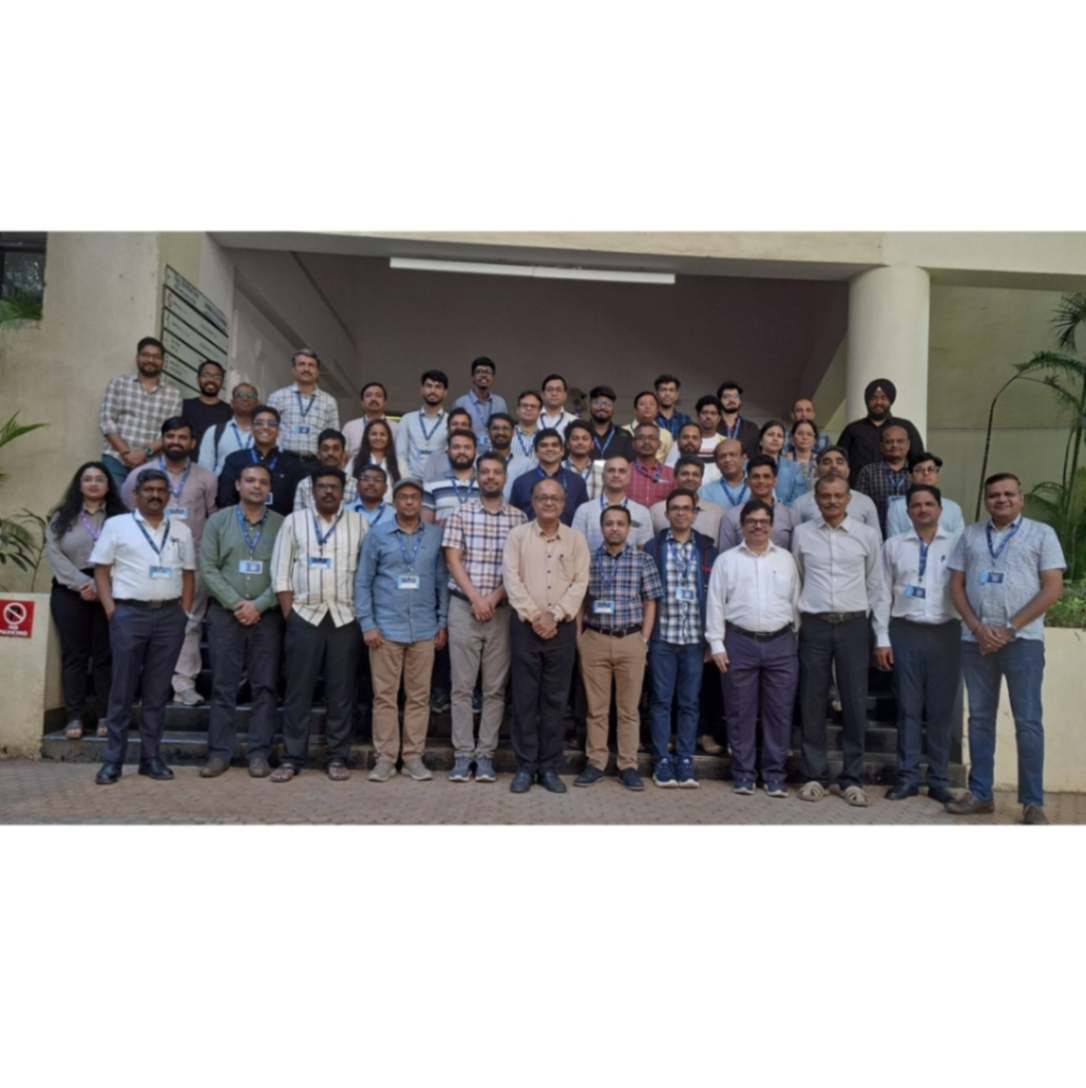
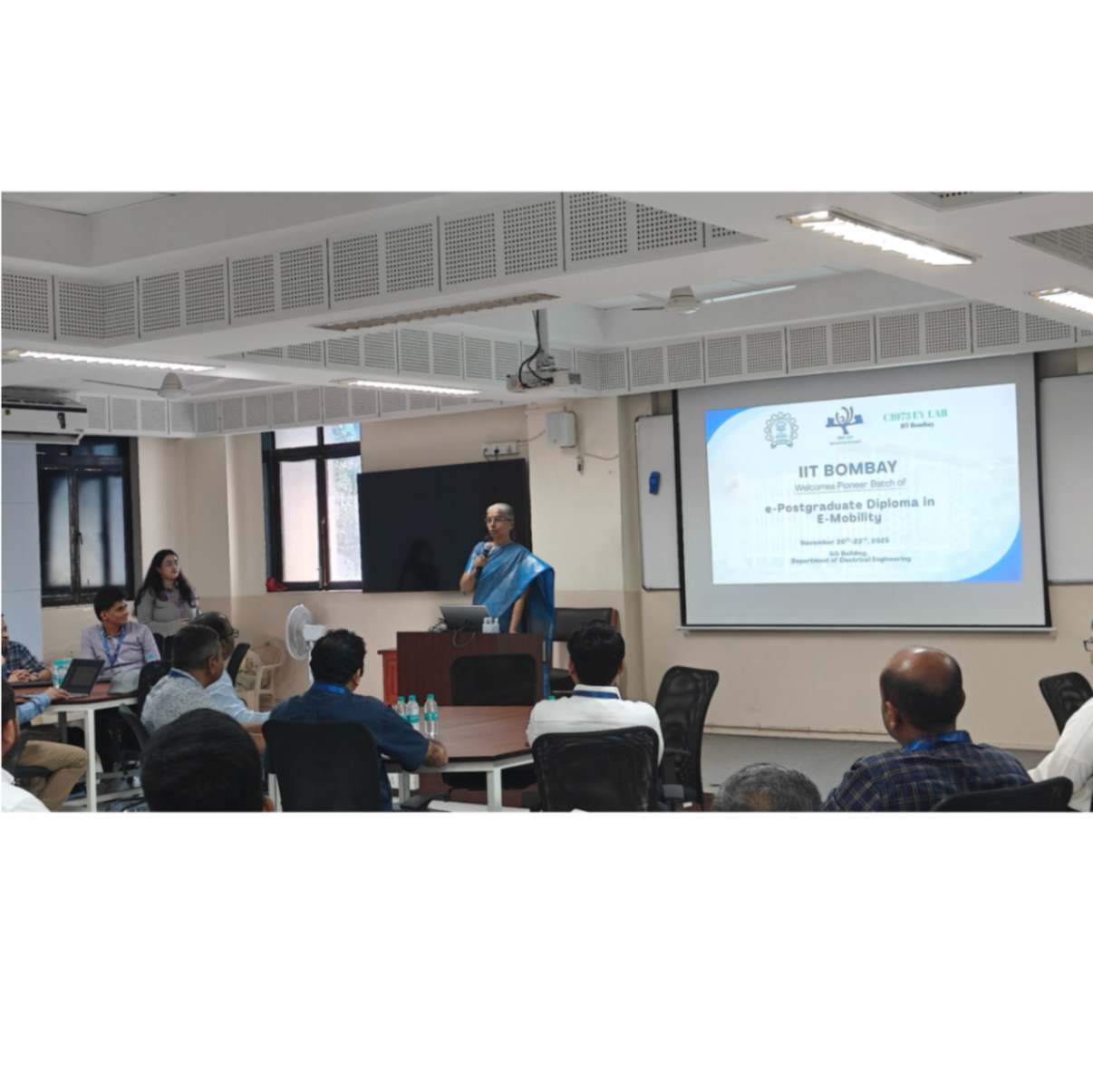
Campus Immersion at IIT Bombay
-
Experience the IIT Bombay campus
The campus immersion of ePGD learners at IIT Bombay Campus.
-
Interact with IIT Bombay faculty
Campus immersion orientation session for the learners by the IIT Bombay Faculty
-
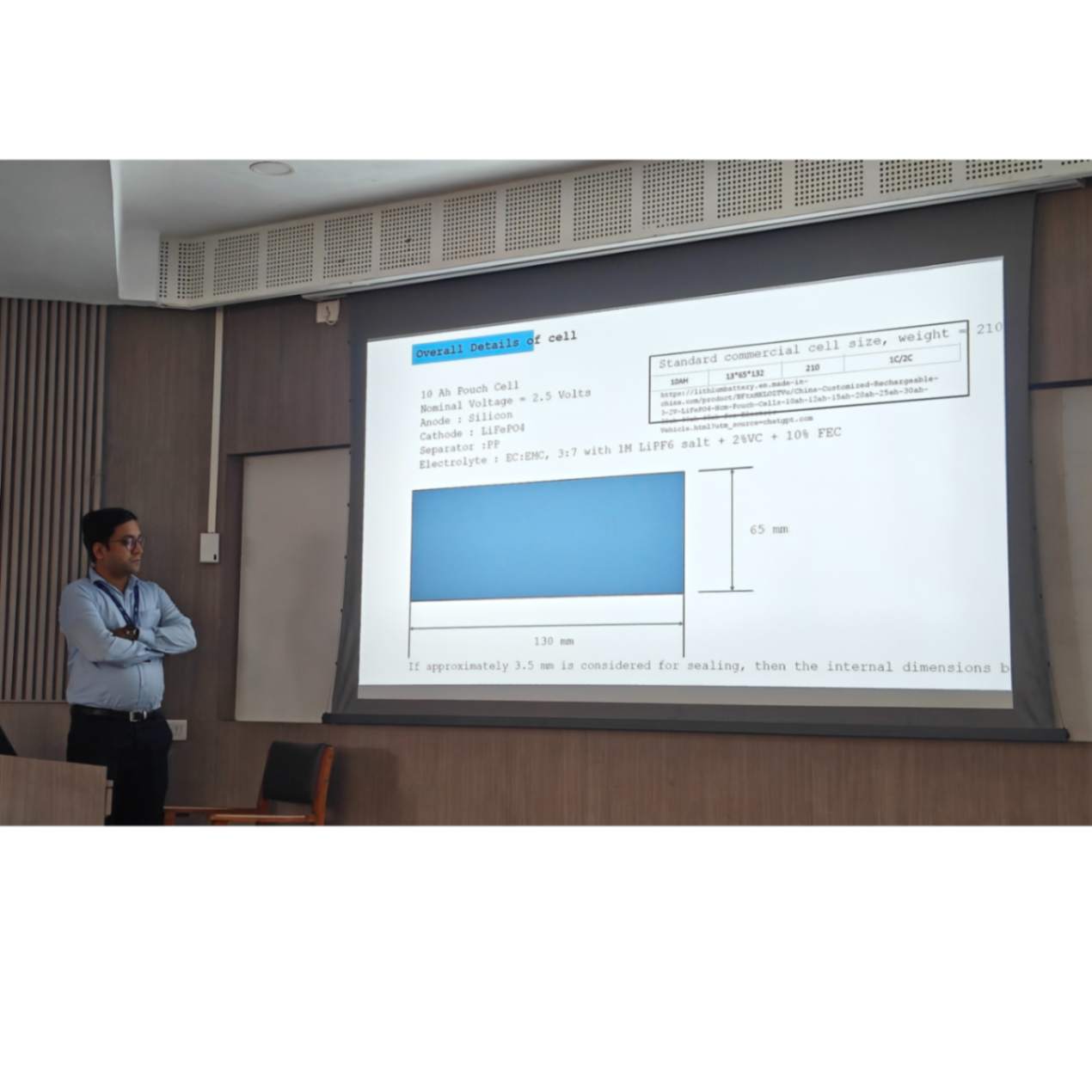
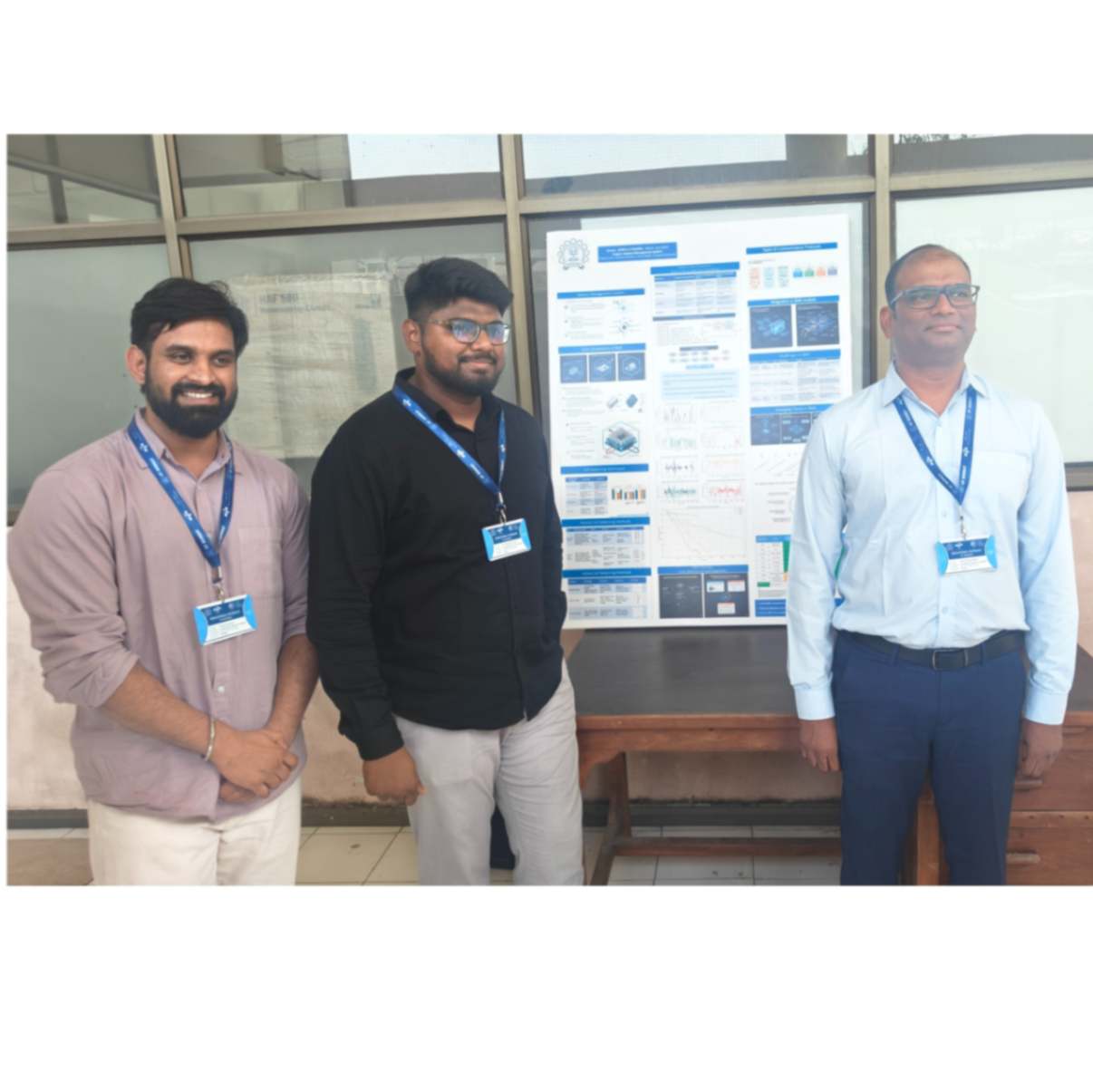
Learners showcase their work
Learners showcasing their understanding of battery technology at IIT Bombay
-
Peer to peer learning
Learners presenting their research through poster sessions during the campus immersion.
Comprehensive Curriculum
This e-Postgraduate Diploma requires candidates to successfully complete 36 IIT Bombay credits across 6 courses: 2 core courses and 4 electives. The courses offered are:
-
36
IIT Bombay credits
-
6
Course Curriculum
-
Elective Course
6 Elective Courses
Core Courses
Introduction to E-Mobility
Battery Technology for Electric Vehicles
Electives
Manufacturing Technologies for Electric Mobility
Power Electronic Converters for EV Applications
Electrical Drives for EVs
Electric Vehicle Grid Integration
E-vehicle Styling and Design
Thermal Management for Electric Vehicles
Note: The curriculum listed above are indicative and subject to updates as technology evolves.
Learn from IIT Bombay Faculty
Meet the IIT Bombay faculty with in-depth EV knowledge and a passion to help you succeed.
-
Prof. Sandeep Anand
Professor and ePGD Coordinator, Dept. of Electrical Engineering, IIT Bombay
Know More -
Prof. Shiladri Chakrabarty
Assistant Professor, Dept. of Electrical Engineering, IIT Bombay
Know More -
Prof. Kishore Chatterjee
Dr. D.T. Manwani Chair Professor in Electric Vehicles, Dept. of Electrical Engineering, IIT Bombay
Know More -
Prof. Prashant P. Date
Professor, Dept. of Mechanical Engineering, IIT Bombay
Know More -
Prof. Baylon G. Fernandes
Professor, Department of Electrical Engineering
Know More -
Prof. Ravi Prakash
Assistant Professor, Energy Science and Engineering, IIT Bombay
Know More -
Prof. Zakir Rather
Professor, Dept. of Energy Science and Engineering, IIT Bombay
Know More -
Prof. Nishant Sharma
Professor, Industrial Design Centre, IIT Bombay
Know More -
Prof. Bharatkumar Suthar
Assistant Professor, Dept. of Chemical Engineering, IIT Bombay
Know More


 LinkedIn Profile
 University Link
Hear from our learners
Hear what our learners have to say about their experience of the dedicated support, faculty & mentors
-
Watch story
"IIT Bombay ePGD in E-Mobility"
Vidhi Rupchandani
Managing Director , A&J Elevators & Parking Systems
-
Watch story
"IIT Bombay ePGD in E-Mobility"
Vijay Rajhans
General Manager , Kinetic Green Energy
Course Fees
Course fees
-
Understand EV categories, powertrain components, and power electronics design for vehicle applications cores
-
Gain insights into EV manufacturing, assembly techniques, and vehicle design to enhance user experience now
-
This ePGD is eligible for PM-Vidyalaxmi Scheme Loan Options
-
*For more details on flexible fee payments, please get in touch with the Registration Team


Application Process
Admissions close once the required number of participants enroll. Apply early to secure your spot
-
1. Application
Interested candidates can apply for ePGD by filling out a simple online application form.
-
2. Screening
Applicants will go through a mandatory screening call to assess their suitability for the ePGD.
-
3. Offer of Registration
Selected candidates will receive an offer letter they will need to pay the registration fee.


Eligibility
- Candidates must hold a B.E./B.Tech degree or a 4-year B.Sc/BS degree in a relevant domain of engineering or technology.
- Candidates with PG (M.Tech/M.Sc/MS) or doctorate degrees in relevant domains can also apply.
Frequently Asked Questions
What is the e-Postgraduate Diploma in E-Mobility from IIT Bombay?
The ePGD in E-Mobility is an 18-month online diploma offered by IIT Bombay through the C1973 EV Power Train Lab.
The ePGD includes six courses covering electric vehicles, batteries, power electronics, electric drives, grid integration, design, and manufacturing.
On completion, you will earn 36 IIT Bombay credits, including mandatory in-person end-term exams at the IIT Bombay campus. On completion of this ePGD in E-Mobility, you will receive IIT Bombay eAlumni status.
Is the ePGD in E-Mobility delivered fully online?
Yes. All live classes are conducted online by IIT Bombay faculty. All end-term exams are conducted in person at IIT Bombay, or any other designated location, and attendance is mandatory for passing each course. In addition, students will be invited to campus for the graduation ceremony at the end of their diploma.
How many credits will I earn during the ePGD in E-Mobility?
Students are required to complete 36 IIT Bombay credits across six courses:
- Two core courses
- Four electives
These credits can be saved in the Academic Bank of Credits (ABC) and may be used for future higher education as per UGC guidelines.
How can the credits earned in the ePGD be used?
The ePGD requires completion of 36 IIT Bombay credits, which are stored in your Academic Bank of Credits (ABC) account. After earning the credits, you have two options:
Apply for the ePGD diploma from IIT Bombay:
- All 36 credits are utilized.
- You will be formally awarded the e-Postgraduate Diploma and granted IIT Bombay eAlumni status.
- Once used for the diploma, the credits cannot be reused for other courses.
Retain credits for higher education:
- If you do not apply for the diploma, your credits remain in your ABC account.
- These can be used for pursuing higher degrees as per the policies of the admitting institution.
- In this case, you will not be recognized as an IIT Bombay alumnus.
What is the weekly time commitment for the ePGD in E-Mobility?
You should plan for about 6–8 hours a week for live online sessions, along with 4–6 hours for self-study, projects, and assignments.
The weekly commitment is around 12–14 hours. It includes:
- Live online sessions (6-8 hours)
- Additional time for self-study, projects, and assignments (4–6 hours).
Multiple courses may run simultaneously. You may need to adjust your schedule accordingly to manage overlapping coursework.
Does IIT Bombay in E-Mobility recognize the ePGD?
Yes. It is a formal postgraduate diploma offered and evaluated by IIT Bombay. The institute manages all assessments, credits, and the final EV diploma certificate.
Is the e-Postgraduate Diploma equivalent to a regular PG Diploma?
Yes. The e-Postgraduate Diploma is equivalent to a regular Postgraduate Diploma (PGD) offered by IIT Bombay. The only difference is that it is delivered in an online format.
Graduates receive the same recognition, credits, and eAlumni status as any other PG Diploma from IIT Bombay.
Is the e-Postgraduate Diploma WES-recognized?
Yes. All degrees and diplomas from IIT Bombay are verified by WES (World Education Services). This makes the ePGD internationally valid for higher education and professional purposes.
Is the ePGD in E-Mobility approved by UGC or AICTE?
The e-Postgraduate Diploma is offered directly by IIT Bombay, an Institute of National Importance. It is fully recognized under IIT Bombay’s charter, so UGC/AICTE approvals are not applicable.
What is the batch size for the ePGD in E-Mobility?
Each cohort is expected to have around 60–80 learners. All live sessions are conducted simultaneously for every enrolled student.
What if I fail a course or miss a semester in the ePGD? How does the deferral process work for the ePGD in E-Mobility?
If you are unable to complete a course or need to miss a semester, you can submit a deferral application within the first 2 weeks after the academic delivery begins.
The application may need to be accompanied by relevant documentation. If accepted, you will need to pay a deferral fee of ₹2,000 per course. The deferral will only be approved if the academic unit accepts the request.
The maximum duration to complete the ePGD is 36 months, including any delays due to course deferral.
Note: Deferral requests submitted after the first 2 weeks will not be accepted.
How is this ePGD different from online EV courses?
Unlike short-term EV courses or online certificate training, the e-Postgraduate Diploma (ePGD) in E-Mobility is a formal postgraduate diploma offered by IIT Bombay. It spans 18 months, carries 36 IIT Bombay credits, and includes both core and elective courses, hands-on projects, and assessments. Learners also receive IIT Bombay eAlumni status and can participate in a formal on-campus graduation ceremony.
Who are the faculty teaching the ePGD in E-Mobility?
The ePGD is taught by IIT Bombay faculty from multiple departments, including Electrical Engineering, Energy Science and Engineering, Mechanical Engineering, Industrial Design, and Chemical Engineering. Some of the leading faculty members include:
Note: This is an indicative list of faculty and is under the purview of IIT Bombay.
What is the structure of the ePGD in the E-Mobility curriculum?
The ePGD includes six courses worth 36 credits. You will complete:
Core Courses (2)
- Introduction to E-Mobility
- Battery Technology for Electric Vehicles
Electives (any 4)
- Manufacturing Technologies for Electric Mobility
- Power Electronic Converters for EV Applications
- Electrical Drives for EVs
- Electric Vehicle Grid Integration
- E-Vehicle Styling and Design
The curriculum is reviewed and updated periodically by IIT Bombay to ensure it reflects the latest academic and industry developments.
Does the ePGD in E-Mobility cover both theory and practical learning?
Yes. The curriculum combines conceptual foundations with hands-on projects and simulations, giving you both theoretical knowledge and practical skills in electric vehicle technologies.
What type of projects will I work on during the ePGD in E-Mobility?
You will gain hands-on experience through projects such as:
- Vehicle sub-system modelling
- Battery modelling techniques and degradation analysis
- Simulation of power electronic systems
- Modelling and control of EV chargers
- Embedded controller for electric motors
- Impact assessment of EVs on grid infrastructure
What tools/software will be used in the ePGD in E-Mobility?
The ePGD uses a range of open-source and industry-relevant tools, such as:
- GNU Octave (alternative to MATLAB) or equivalent
- CAD software or equivalent
- LT Spice or equivalent simulation tools
These will support practical learning in modeling, simulation, and EV system design.
What is the attendance policy for the ePGD in E-Mobility?
As per IIT Bombay’s guidelines, candidates must maintain at least 80% attendance in live faculty sessions. TA (Teaching Assistant) sessions are optional and not counted towards this requirement.
Will the end-term exams be conducted on campus?
Yes. All end-term exams for each course are conducted in person at the IIT Bombay campus. Attendance is mandatory.
Students who miss campus exams will not be able to pass the respective course, even if they have cleared other evaluation components. No re-exam option is provided.
Who should apply for the ePGD in E-Mobility?
This ePGD is meant for those who want to build expertise in electric vehicle technologies. It is ideal for:
- Early to mid-career professionals looking to grow in the EV industry
- Scientists and R&D professionals working on EV solutions
- Entrepreneurs who want stronger technical skills to lead EV startups
- Academicians and educators aiming to update their knowledge in e-mobility
- Recent graduates seeking a solid foundation to start their careers in electric mobility
What are the eligibility requirements for the ePGD in E-Mobility?
You can apply if you hold any of the following from a recognised institution:
- B.E. / B.Tech degree or a 4-year B.Sc / BS degree in a relevant domain of engineering or technology
- Postgraduate degree (M.Tech / M.Sc / MS) or a doctoral degree in a relevant engineering or technology field
Do I need a GATE score to apply for the ePGD in E-Mobility?
No. A GATE score is not required. This makes the ePGD accessible to both working professionals and recent graduates.
Can Overseas Citizens of India (OCI) or foreign candidates apply for the ePGD?
Yes. OCI candidates who have completed higher education in India may apply. However, they have to attend the mandatory on-campus exams. For foreign candidates educated outside India, the degree must be from an institution recognized by IIT Bombay. The Educational Outreach office will verify recognition status before confirming registration.
What is the registration process for the ePGD in E-Mobility?
The process has three steps:
- Application –Submit the online application form
- Screening –Attend a screening call with the Registration Office to check eligibility and suitability
- Offer of Registration –Selected candidates receive an offer letter and confirm their seat by paying the registration fee
What is the fee structure for the ePGD in E-Mobility?
The total fee is ₹6,00,000 + GST. It includes:
- Registration fee: ₹30,000 + GST (payable within 7 days of receiving the offer letter)
- Course fee: 95,000 + GST for each of the 6 courses, payable at the start of every course
- Please note that scholarships/waivers are deducted from the course fee.
- Multiple courses may run simultaneously, and fees are payable accordingly.
Are there financial assistance or EMI options for the ePGD in E-Mobility?
Yes. Financial assistance and EMI options are available through loan partners. Candidates may contact the Registration Office for details.
What is the refund policy for the ePGD in E-Mobility?
Please note: Refund requests must be made via email to be considered official.
Candidates can withdraw from the ePGD at any time by sending a formal email to the Program Office. The refund amount depends on the withdrawal date, course timeline, and total fees paid.
For Term 1 Courses:
- Before the last date of registration: 50% refund of registration fees, full refund of course fees.
- Between the last date of registration and the course start: 70% refund of total fees (registration + course fees).
- After the course starts: No refund for registration or course fees.
- Completed courses: No refund for completed courses.
- A ₹1,000 processing fee is deducted from all refunds.
For Courses After Term 1:
- Before the last date of registration: Full refund of course fees.
- Between registration deadline and course start: 70% refund of course fees.
- After the course starts: No refund for course fees.
- A ₹1,000 processing fee is deducted from all refunds.
Please note: Refund requests must be made via email to be considered official.
What is the onboarding process for the ePGD in E-Mobility?
After selection, you will need to submit your academic and identity documents for verification. Once verified, you will be officially enrolled, receive your IIT Bombay student credentials, and gain access to academic resources.
Will I get to visit the IIT Bombay campus during the ePGD in E-Mobility?
Yes. All end-term exams are conducted in person at IIT Bombay. The attendance is mandatory for passing each course. Students need to visit the campus for the graduation ceremony at the end of their diploma.
What will I receive after completing the ePGD in E-Mobility? Will there be a graduation ceremony?
You will be awarded an e-Postgraduate Diploma in E-Mobility from IIT Bombay after fulfilling all requirements. A formal in-person graduation ceremony will be organised at the IIT Bombay campus.
Will I get IIT Bombay eAlumni status after completing the ePGD in E-Mobility?
Yes. After completing the ePGD, you will receive IIT Bombay eAlumni status and can register with the IIT Bombay eAlumni Association, gaining access to a global professional network.
What are the eAlumni benefits after completing the ePGD in E-Mobility?
Graduates of the ePGD are awarded IIT Bombay eAlumni status and are eligible to register with the IIT Bombay eAlumni Association. eAlumni enjoy benefits such as:
- eAlumni identity card for lifelong recognition and campus access.
- A dedicated eAlumni email ID (yourname@iitbombay.org) with 30 GB space.
- Access to eAlumni chapters, networking groups, and professional communities worldwide.
- Discounts on select campus facilities, such as sports amenities and the library.
- Job postings and lateral hiring opportunities shared within the eAlumni network.
- Opportunities to mentor students, volunteer, and contribute to eAlumni-driven initiatives.
- Regular updates on IIT Bombay research, events, and institutional developments.
Will I receive transcripts or individual course certificates during the ePGD?
Yes. IIT Bombay will issue transcripts and individual course certificates for successfully completed courses. Each course certificate reflects the credits earned.
After completing all requirements, students will also receive the e-Postgraduate Diploma certificate during the IIT Bombay convocation.
Does the ePGD in E-Mobility offer peer-to-peer learning and networking?
Yes. The ePGD promotes peer-to-peer learning through live sessions, group projects, and discussions. You will interact closely with faculty and fellow learners, and further grow your network through the IIT Bombay eAlumni community.
Will I have access to IIT Bombay’s digital resources during the ePGD in E-Mobility?
Yes. Once enrolled, you will receive digital credentials that allow access to IIT Bombay’s academic resources and digital library.
Can I extend the duration of the ePGD in E-Mobility if required?
The ePGD is structured for 18 months, but you are allowed up to 3 years from the date of enrolment to finish all credit requirements. However, deferrals or withdrawals in the middle of a semester are not permitted.
Does the ePGD in E-Mobility include career or placement support?
No dedicated placement support is provided. However, learners get access to IIT Bombay’s Lateral Hiring Group and the eAlumni network, which can help in exploring professional opportunities.
How will the ePGD in E-Mobility support my career growth?
The ePGD will help you:
- Develop expertise in EV categories, batteries, power electronics, and electric drives
- Gain hands-on experience through projects and simulations
- Earn 36 IIT Bombay credits, which can be stored in the Academic Bank of Credits (ABC)
- Receive IIT Bombay eAlumni status for added professional recognition
- Build networks through peer-to-peer learning and the IIT Bombay eAlumni community
Do I need to quit my job to pursue the ePGD in E-Mobility?
No. The ePGD is designed for working professionals. Live online sessions are held during evenings or weekends, with a recommended weekly commitment of about 12–14 hours, including self-study.
 Application Closes
19th Sep 2026
Application Closes
19th Sep 2026

Related EV Design Courses
-
Johns Hopkins University
Certificate Program in AI and Agentic AI Engineering
22 Weeks · Mentored
-
Johns Hopkins University
Certificate Program in AI Business Strategy
10 weeks · Online
-
MIT Professional Education
No Code and Agentic AI
14 Weeks · Online · Weekend
Learn from MIT Faculty -
McCombs School of Business at The University of Texas at Austin
PG Program in Artificial Intelligence and Machine Learning: Business Applications
23 Weeks · Online · Weekend
-
MIT Professional Education
Applied AI and Data Science Program
15 Weeks · Live Online · Weekdays & Weekend
-
McCombs School of Business at The University of Texas at Austin
PG Program in Artificial Intelligence for Leaders
4 Months · Online · Weekend
No Programming Exp Required






Hey there! Welcome back.

Forgot your password? No problem.

You are already registered. Please login instead.
Login
Forgot Password?
Enter your registered email and we'll send you a link to change your password.