
Free MEAN Stack Fundamentals Course
MEAN Stack Fundamentals
 4.54
Intermediate level
6.0 learning hrs
4.54
Intermediate level
6.0 learning hrs
Practice-focused MEAN Stack Fundamentals free course content shows how core concepts, examples, and practice tasks work together, helping you turn course learning into clearer action.
Instructor:
Mr. Ritwik Raj




About this course
Free mean stack fundamentals learning should help students, developers, and hands-on beginners understand why the topic matters before moving into deeper practice. The course introduces setup, syntax, core logic, and debugging in a way that shows how the pieces work together. Instead of treating mean stack fundamentals as a list of terms, it explains what to look for, how to reason through common tasks, and why the subject appears in real projects, teams, or business decisions.
The course is a good fit if you want to build small working examples and explain the logic behind them. You can use it to prepare for assignments, interviews, workplace conversations, or a first hands-on project depending on your goal. After finishing, you should be able to explain the core idea of mean stack fundamentals, recognize when it is relevant, and choose a sensible next step such as practice exercises, deeper tools, related frameworks, or a more advanced course.
Course outline
MongoDb
In this module, you'll learn the ins and outs of MongoDB, a NoSQL database, and understand how to create, query, and manage databases effectively.
ExpressJs
In this module you will explore Express.js, a robust Node.js framework for building web applications.
AngularJs
We will dive into AngularJS, a powerful front-end JavaScript framework. This module covers the essentials of building interactive and responsive web interfaces, incorporating features like data binding, dependency injection, and modular development.
NodeJs
We will Learn the fundamentals of server-side JavaScript development with Node.js, including asynchronous programming, building APIs, and handling data in real-time applications.
Get access to the complete curriculum once you enroll in the course
 4.54
4.54













What our learners enjoyed the most
Skill & tools
61% of learners found all the desired skills & tools
Our course instructor

Mr. Ritwik Raj
IT & Software Expert


Frequently Asked Questions
Will I receive a certificate upon completing this free course?
Is this course free?
What prerequisites are required to enrol in this MEAN Stack course?
You do not need any prior knowledge to enrol in this MEAN Stack course.
What will I learn in this free MEAN Stack course?
How long does it take to complete this MEAN Stack course?
It is a 5.0 hour long course, but it is self-paced. Once you enrol, you can take your own time to complete the course.
Who should start with this MEAN Stack course?
Will I have lifetime access to the free course?
Yes, once you enrol in the course, you will have lifetime access to any of the Great Learning Academy’s free courses. You can log in and learn whenever you want to.
How does MEAN Stack help in practical learning?
Will I get a certificate after completing this MEAN Stack course?
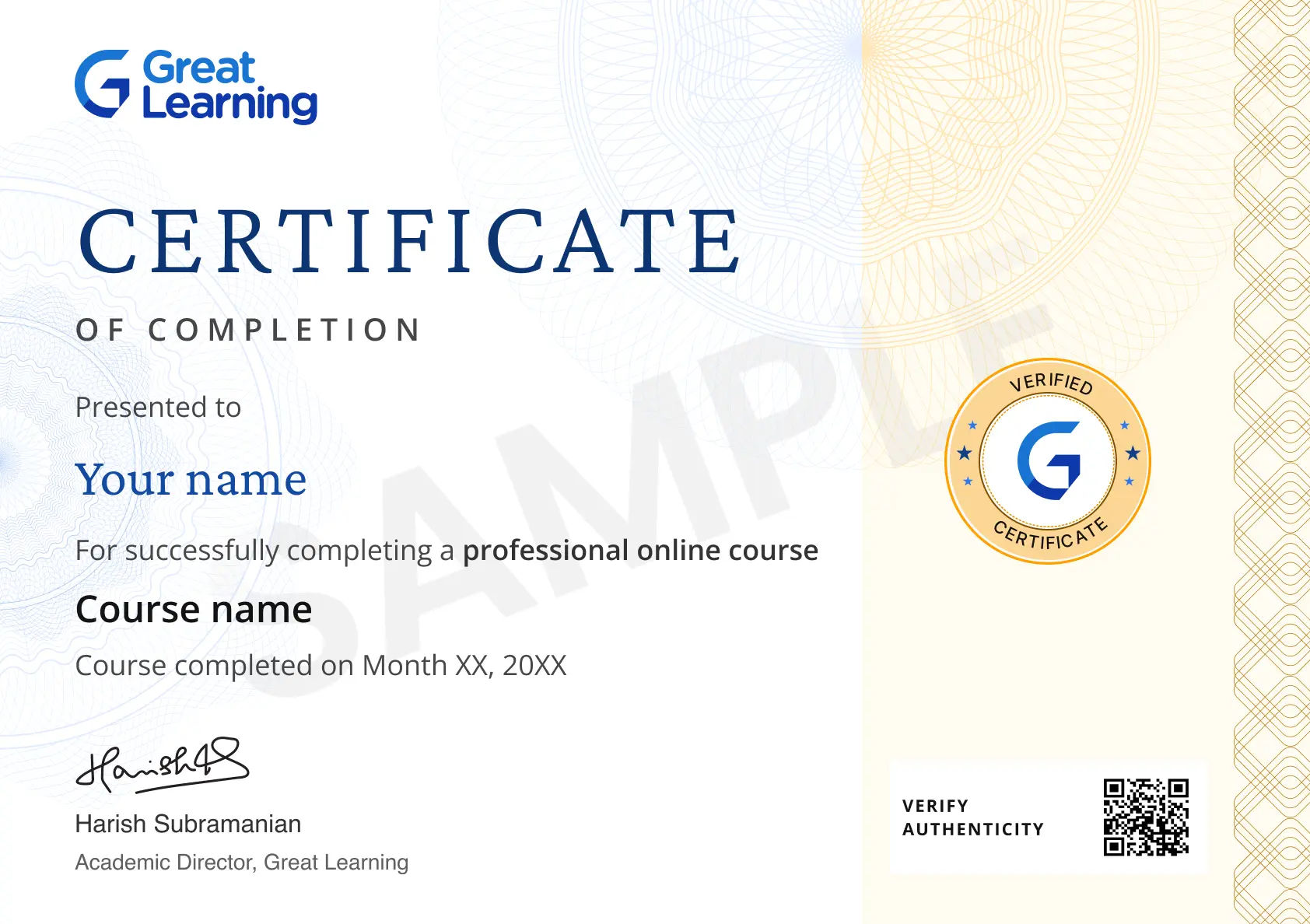
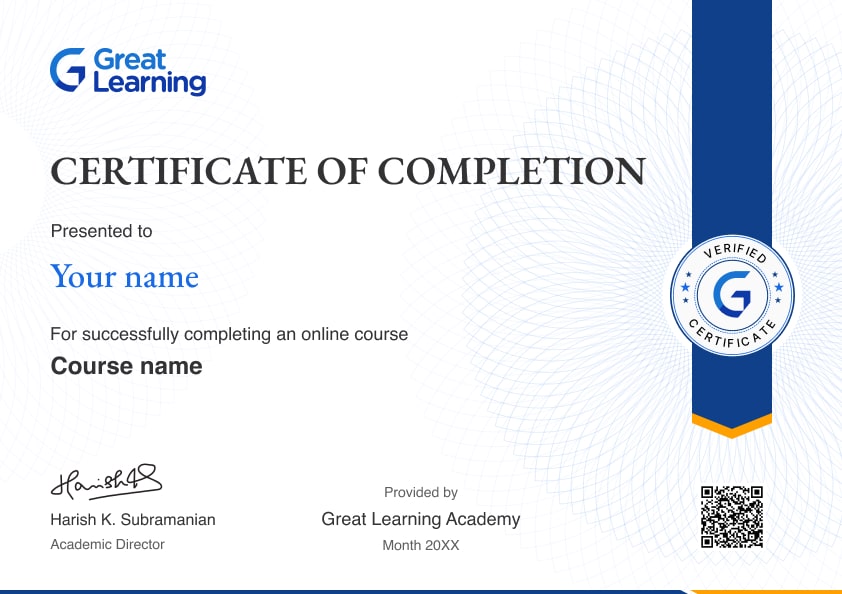
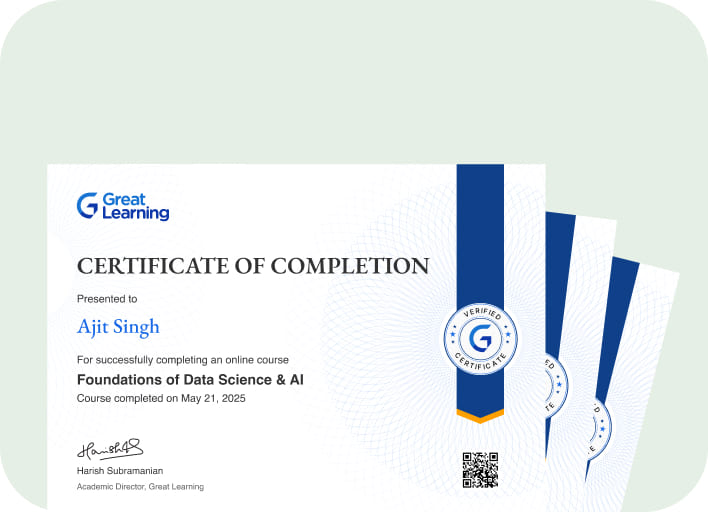
Yes, you will get a certificate of completion after completing all the modules and cracking the assessment.
What MEAN Stack basics should I know before advanced study?
How much does this MEAN Stack course cost?
It is an entirely free course from Great Learning Academy.
Can beginners learn MEAN Stack online through this course?
Is there any limit on how many times I can take this free course?
No. There is no limit. Once you enrol in the MEAN Stack course, you have lifetime access to it. So, you can log in anytime and learn it for free online.
What makes this MEAN Stack training useful for projects?
Who is eligible to take this MEAN Stack course?
You do not need any prerequisites to take the course, so enroll today and learn it for free online.
How should I practice after finishing MEAN Stack?
What questions does this free MEAN Stack course answer for learners?
Recommended Free Software courses
 FREE
FREE




Similar courses you might like


Related IT & Software Courses

-

McCombs School of Business at The University of Texas at Austin
Post Graduate Program in Cyber Security20 weeks · Online
Know More


Relevant Career Paths >

Other IT & Software tutorials for you
MEAN Stack Fundamentals
The MEAN stack is a powerful and popular set of technologies used for building dynamic and scalable web applications. MEAN is an acronym representing four key technologies: MongoDB, Express.js, AngularJS, and Node.js. Each component of the MEAN stack serves a specific purpose in the web development process, and together they offer a comprehensive and efficient solution for building modern web applications.
MongoDB:
MongoDB is a NoSQL, document-oriented database that provides flexibility and scalability. It stores data in BSON (Binary JSON) format, allowing for the storage of complex data structures. MongoDB is schema-less, which means that data can be inserted without a predefined schema, making it adaptable to evolving application requirements. This is particularly beneficial in agile development environments where changes to the data model are frequent.
Express.js:
Express.js is a minimal and flexible Node.js web application framework that provides a set of robust features for web and mobile applications. It simplifies the process of building scalable and maintainable server-side applications by providing a lightweight and unopinionated framework. Express.js facilitates the creation of APIs (Application Programming Interfaces) and the handling of HTTP requests and responses. It also integrates seamlessly with other components of the MEAN stack.
AngularJS:
AngularJS is a front-end JavaScript framework developed and maintained by Google. It simplifies the process of building dynamic and single-page web applications by extending HTML with additional features. AngularJS follows the MVC (Model-View-Controller) architecture, which enhances modularity and maintainability. It provides features like data binding, dependency injection, and a modular structure that enables developers to create highly interactive user interfaces.
Node.js:
Node.js is a server-side JavaScript runtime built on the V8 JavaScript engine from Google Chrome. It enables developers to run JavaScript on the server, unifying the language used for both client and server-side scripting. Node.js is event-driven and non-blocking, allowing for highly scalable applications that can handle a large number of concurrent connections. It is well-suited for building real-time applications, such as chat applications and online gaming platforms.
When these four technologies are combined, they form a powerful and cohesive full-stack development environment known as the MEAN stack. Here's how the MEAN stack typically works:
Client-Side (AngularJS):
AngularJS handles the presentation layer and user interface of the web application. It communicates with the server-side components through HTTP requests, retrieves data, and dynamically updates the UI without requiring a full page reload.
Server-Side (Node.js and Express.js):
Node.js serves as the runtime environment for server-side code, and Express.js facilitates the creation of robust server-side applications. Express.js handles routing, middleware, and interacts with the MongoDB database to retrieve or store data. It also serves as an interface between the client-side and the database.
Database (MongoDB):
MongoDB stores and manages the application's data. Its flexible schema and scalability make it well-suited for applications with evolving data requirements. Express.js communicates with MongoDB using the MongoDB Node.js driver, allowing seamless integration between the server and the database.
In conclusion, the MEAN stack provides a comprehensive and efficient solution for building modern web applications. Its components, MongoDB, Express.js, AngularJS, and Node.js, work together seamlessly to facilitate the development of scalable, dynamic, and feature-rich applications. The MEAN stack is particularly popular for its use of JavaScript throughout the entire development stack, enabling developers to work with a consistent language from the front end to the back end. This consistency, combined with the strengths of each technology, makes the MEAN stack a compelling choice for developers looking to build robust and maintainable web applications.