AI for Business Leaders: Master AI-Driven Strategy with SPJIMR
Executive Program in AI for Business Leaders
 Application closes on
20th Sep 2026
Application closes on
20th Sep 2026
 Speak with our expert
+918046802009
Speak with our expert
+918046802009




Learn more about the course
Get details on syllabus, projects, tools, and more

Executive Program in AI for Business Leaders
Application closes 20th Sep 2026
Key Learning Outcomes
Executive Program in AI for Business Leaders
Learn AI strategy, GenAI, and automation to drive real business impact
-
Navigate AI landscape with clear understanding of AI, ML, GenAI, Agentic AI and where each creates value
-
Leverage data and analytics for executive decision-making and enhance strategic judgement
-
Frame & Lead enterprise AI strategy by evaluating opportunities, prioritising portfolios and driving adoption
-
Apply Responsible AI to govern & commision AI solutions by assessing ethical, governance & risk considerations
-
Harness GenAI, automation, and copilots to boost productivity and transform business processes
-
Lead change in AI-driven organisations by managing stakeholders and building cross-functional AI capability
Earn a Certificate of Completion from SPJIMR
-

#3 In India
Financial Times Masters in Management Ranking 2025
-
#74 In the world
Financial Times Global MBA Rankings 2026
-
#35 In the world
Financial Times Masters in Management Ranking 2025
-
#1 All India Private B-School in 2025
Business Today-MDRA India’s Best B-Schools Ranking
-
#4 All India Rank
India Today Ranking 2025


Key Highlights
Why choose this Executive Program?
-
Designed by SPJIMR Faculty
Designed and Delivered by SPJIMR Faculty with an AI-Led Strategic Business Focus
-
Campus Immersion
On-Campus Immersion at SPJIMR, Mumbai, for In-Person Learning and Networking
-
Live Sessions and Executive Masterclasses
Engage in SPJIMR faculty-led live sessions and Executive Industry Masterclasses
-
SPJIMR Executive Alumni Status
Upon successful completion, gain the prestigious Executive Alumni Status from SPJIMR
-
Hands-on Projects & Case Studies
Build a robust AI project portfolio through real-world projects and structured case-based learning
-
Guided AI Tool Demos for Hands-on Prototyping
Work with leading tools such as Google AI Studio, NotebookLM, LangChain, and Hugging Face


Skills you will learn
Data-Driven Decision Making
AI Use Case Identification & Implementation
Business Transformation with AI
Data Visualization
Data and Business Intelligence Tools
Large Language Models
Generative AI and Intelligent Automation
AI strategy
Agentic AI
Ethical AI
Prompt Engineering
Data-Driven Decision Making
AI Use Case Identification & Implementation
Business Transformation with AI
Data Visualization
Data and Business Intelligence Tools
Large Language Models
Generative AI and Intelligent Automation
AI strategy
Agentic AI
Ethical AI
Prompt Engineering
view more
- Overview
- Learning Journey
- Learning Path
- Curriculum
- Projects
- Tools
- Faculty
- Fees
- FAQ
Who is this Program For?
The program is ideal for professionals who want to lead and drive AI initiatives with a strong business focus
-
Mid-Senior Professionals & Business Unit Leaders
Those responsible for driving growth, efficiency, and innovation within their organisations, and looking to leverage AI as a strategic enabler
-
Technical and Strategy Consultants
Advising clients on AI adoption, digital strategy, and transformation while building a strong business perspective to design AI solutions
-
Entrepreneurs and Business Owners
Looking to embed AI into their business models, build competitive advantage, and scale through intelligent, technology-enabled operating models
-
Functional Heads and Domain Specialists
Aiming to apply AI within their domain for improving decision-making, customer experience, and operational performance
-
Senior Executives and C-suite Leaders
Seeking executive-level understanding of AI strategy, governance, risk, and positioning to lead enterprise-wide AI transformation
Experience a unique learning journey
Learn through our structured learning approach, develop a strategic judgment and intuition
-
Live faculty sessions & executive masterclass
Live sessions from SPJIMR faculty & executive masterclasses from industry leaders
-
Work on hands-on projects
Build an AI project portfolio through hands-on projects and gain exposure to various tools
-
Peer-to-Peer Learning
Learn with a cohort - discuss and share ideas and get networking opportunities
-
Get personalised assistance
Personalised Assistance from a Dedicated Program Manager




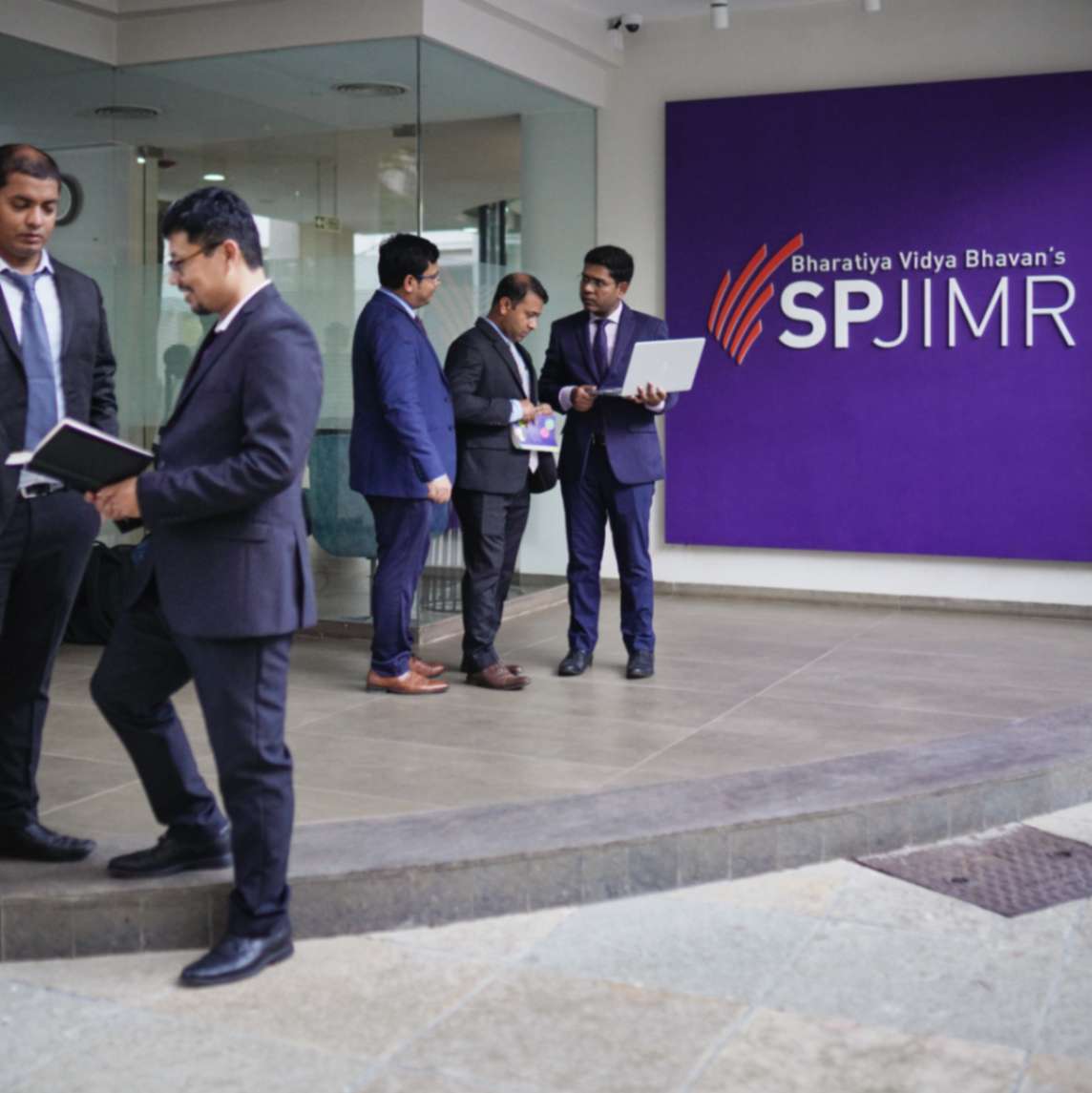
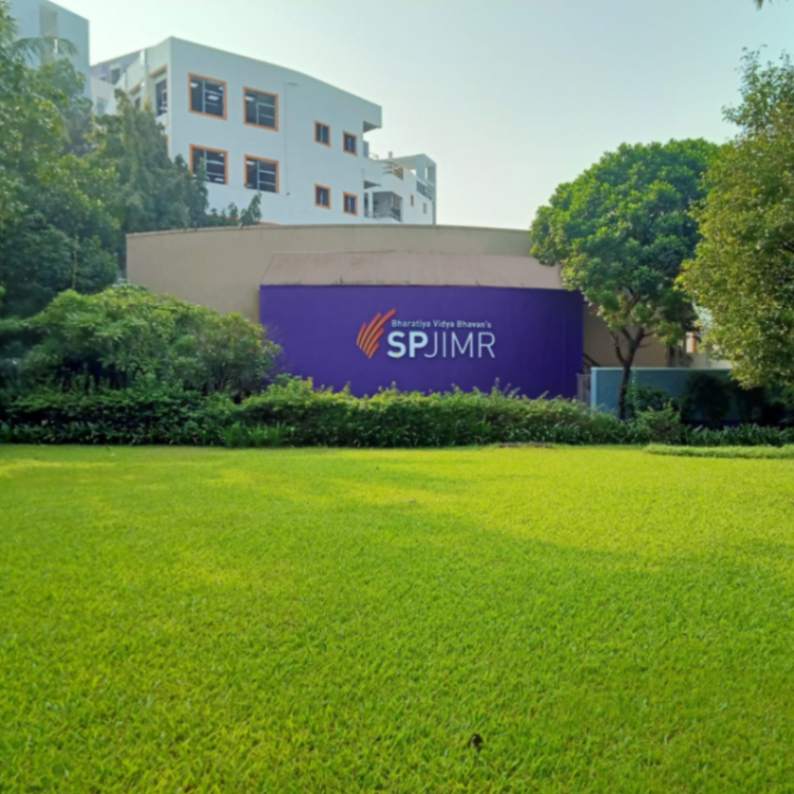
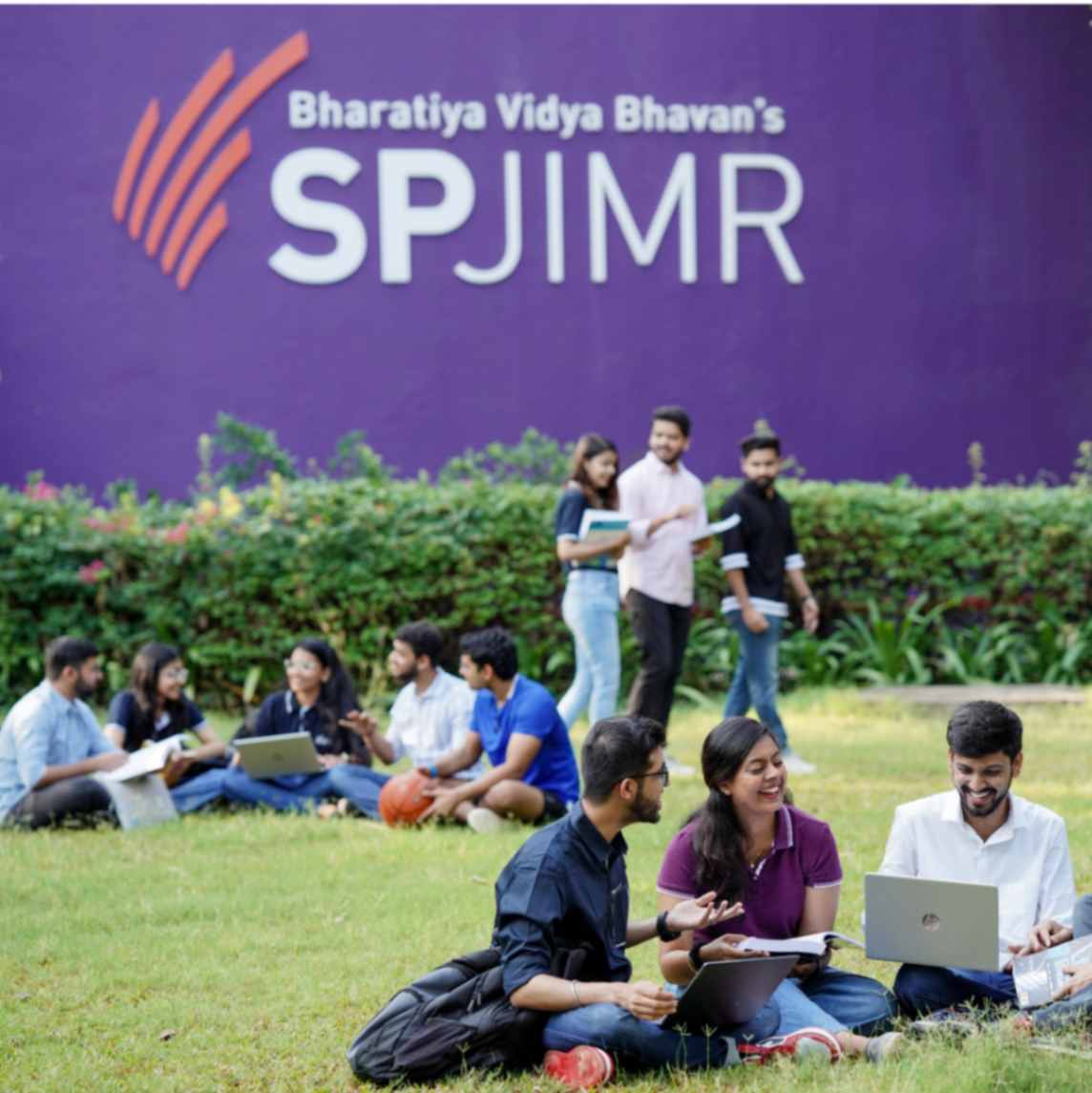
Campus Immersion at SPJIMR
-
Faculty and Expert Engagement
Learners engage directly with senior faculty through structured in-person sessions designed to deepen and consolidate their learning.
-
Peer Collaboration
Peer-led discussions and collaborative reviews bring together diverse perspectives from across the cohort.
-
Capstone Project Presentation and Mentoring
Learners present and refine their Capstone Projects with guidance from faculty mentors and industry practitioners.
-
Industry Interactions
Curated interactions with senior industry leaders and executives provide learners with exposure to real-world leadership challenges.

Program Curriculum
Delivered through a blend of weekly live sessions led by SPJIMR faculty, executive masterclasses by industry experts, assessments and hands-on projects.
Module 1: AI, Innovation & Business Strategy
This module establishes the broader strategic context within which AI operates. Building on the foundations of technological change and innovation, it examines how AI is reshaping industries, disrupting competitive positions, and accelerating business model transformation. Learners develop a strategic understanding of AI, Machine Learning, and related technologies from an executive perspective, while exploring how data has evolved into a critical enterprise asset. The module also traces the evolution from traditional automation to intelligent systems and equips learners to identify high-impact opportunities where AI can enhance business decision-making and competitive advantage.
Topics Covered
Module 2: Data, Analytics & Decision Science
This module focuses on the foundations that enable effective AI adoption, including enterprise data ecosystems, analytics, cloud infrastructure, and governance. Recognising that AI is only as effective as the data and infrastructure that support it, learners develop an intuitive understanding of how modern data architectures, cybersecurity considerations, and data governance practices drive organisational value. The module also builds analytical thinking and decision science capabilities, helping leaders interpret insights, evaluate evidence, and communicate data-driven recommendations with confidence.
Topics Covered
Module 3: Machine Learning for Competitive Advantage
This module explores how Machine Learning can be applied across business functions to drive competitive advantage. Learners will understand key ML techniques and their practical applications in areas such as forecasting, risk management, customer growth, and operational optimisation. The module develops the ability to interpret model outputs, evaluate when different analytical approaches are appropriate, and understand the trade-offs between statistical models and more complex AI systems. It also builds awareness of model bias, explainability, and responsible decision-making in AI-enabled environments.
Topics Covered
Module 4: Generative AI & Intelligent Automation
This module focuses on the transformative role of Generative AI in enhancing productivity, automating knowledge work, and redesigning enterprise workflows. Learners will explore how Large Language Models, conversational AI systems, and multimodal technologies are reshaping the way organisations create, communicate, and deliver value. The module also examines prompt engineering, workflow design, and intelligent automation approaches that enable effective human-AI collaboration. Particular emphasis is placed on practical enterprise adoption, including governance considerations such as hallucinations, data protection, and output validation.
Topics Covered
Module 5: Agentic AI
This module introduces Agentic AI and its ability to autonomously plan, reason, coordinate, and execute tasks across complex business environments. Learners will understand the conceptual foundations of autonomous agents, multi-agent systems, and agent orchestration frameworks that enable intelligent workflow execution. The module explores emerging enterprise use cases, ranging from customer service automation to sophisticated decision-support systems, while also examining the risks, governance requirements, and human oversight mechanisms necessary for responsible deployment.
Topics Covered
Module 6: Leading, Governing & Scaling AI
This module moves from understanding AI capabilities to leading AI-driven transformation at enterprise scale. It equips leaders with the skills required to formulate AI strategy, prioritise investments, manage AI portfolios, and drive measurable business outcomes. The module explores organisational design considerations, capability building, workforce transformation, and the development of AI-ready cultures that support sustainable adoption. It also addresses responsible AI practices, governance frameworks, ethical considerations, and risk management approaches that enable organisations to scale AI confidently and responsibly.
Topics Covered
Industry Specialisation Track (Choose 1 track)
This module enables learners to choose a domain from among the top industry-specific tracks and apply AI concepts within their selected domain, such as Finance, Marketing, or Manufacturing and Supply Chain. Each track is designed to deliver tailored, AI-driven business impact, allowing learners to explore domain-relevant use cases, frameworks, and decision-making approaches.
Financial Services & FinTech
Supply Chain / Operations
Digital Marketing & MarTech
Technology Leadership
Capstone Project
The Capstone Project provides learners with an opportunity to apply their learning to a real-world business problem within their chosen domain. Learners will identify a relevant use case, design an AI-driven solution leveraging appropriate tools and frameworks, and present their approach and outcomes. This ensures a strong focus on practical application, strategic thinking, and business impact.
Note: The curriculum listed above are indicative and subject to updates as technology evolves.
Hands-On Learning through Projects
Gain hands-on experience building AI solutions, including RAG systems and real use cases for impact

From Problem to AI Solution
AI Use Case Identification - Business Problem to AI Solution
Description
Identify a high-impact business problem in the organisation or domain and design a structured AI solution approach. Learners define the problem framing, required data, solution architecture, expected business impact, and an implementation roadmap.
Skills you will learn
- AI Solution Design
- AI Implementation Roadmapping

Turning Data into Executive Insights
Data Visualisation and Executive Storytelling
Description
Analyse a business dataset to uncover meaningful patterns and translate them into a structured executive narrative. The focus is on developing the ability to derive and communicate actionable insights from data.
Skills you will learn
- Data Visualisation

Building Intelligent Knowledge Systems
RAG-Based Knowledge Assistant
Description
Experience a Retrieval-Augmented Generation (RAG) assistant built over a curated document set. Learners evaluate the quality of responses, identify limitations, and develop an informed perspective on where RAG-based solutions add genuine enterprise value and where they require governance oversight.
Skills you will learn
- RAG

Designing Business Workflows
Agentic AI Process Design
Description
Map out an AI agent deployment for a complex business workflow. Learners define the decision logic, human oversight checkpoints, and governance safeguards, developing the managerial framework required to sponsor and oversee autonomous AI systems responsibly.
Skills you will learn
- Agentic AI Workflow Design


Note: The projects listed above are indicative and subject to updates to the curriculum.
Tools and Technologies Covered
Gain exposure to industry-relevant tools to lead AI-driven transformation
-
Claude Code
-
ChatGPT
-
Google AI Studio
-
Gemini Notebook
-
LangChain
-
LangGraph
-
Hugging Face
-
Google Colab









Note: The tools listed above are indicative and subject to updates as technology evolves.
Learn from SPJIMR Faculty
Learn from SPJIMR faculty with deep expertise in Strategic Business, GenAI and Agentic AI
-
Prof. Ashish Desai
Associate Professor, Information Management and Analytics
Ph.D. from IIM Kozhikode, MMS from JBIMS
27+ years building tech-driven finance across global markets
Know More
-
Prof. Debmallya Chatterjee
Professor, Operations, Supply Chain Management and Quantitative Methods
Ph.D. from IIT (ISM) Dhanbad, MTech from NIT Durgapur
20+ years of academic experience in teaching, training, and research
Know More
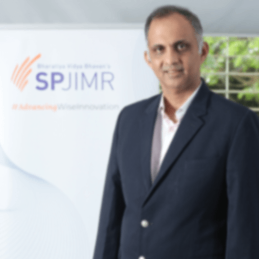

 LinkedIn Profile
 University Link
Course Fees
Invest in your career
-
No prior coding knowledge required
-
Industry-Focused Curriculum with Specialization Tracks for AI-Driven Impact
-
Earn a Certificate of Completion from SPJIMR
-
Build an AI project portfolio through hands-on projects and case studies


Selection Process
Registrations close once the required number of participants enroll. Apply early to secure your spot.
-
Application
Interested candidates can apply by filling out a simple online application form.
-
Interview Process
Wait for the admissions committee and faculty panel to review your application.
-
Join the Program
Selected candidates will receive an offer letter. They must pay the registration fee to confirm their seat and complete the registration.


Eligibility Criteria
- Candidates should hold a Bachelor’s or Master’s degree and have a minimum of 4 years of work experience.
Frequently Asked Questions
I'm a senior manager who wants to use AI to make better decisions. Is this Program designed to teach this without requiring a tech background?
Yes, the Executive Program in AI for Business Leaders offered by the S. P. Jain Institute of Management & Research (SPJIMR) is explicitly designed for your profile. It is a 7-month blended Program tailored specifically for mid-to-senior professionals, functional heads, and business unit leaders who want to leverage AI as a strategic enabler. The Program is primarily no-code and does not require any prior coding experience. It is specifically built for leaders who want to govern AI initiatives without having to become technical specialists.
What will I actually be able to do differently at work after completing an AI leadership Program?
After completing the Program, you will be able to confidently lead AI initiatives, identify high-impact business use cases, and make informed AI-driven decisions.
You will gain the skills to manage AI projects and technical teams, design workflow automation using Agentic AI, use tools like ChatGPT and Power BI for business problem-solving, implement responsible AI practices, and drive organisation-wide AI adoption and workforce transformation.
Depending on your specialisation, you will also learn to apply AI solutions in domains such as:
- Finance: Improve fraud detection, credit risk assessment, lending decisions, and customer personalisation using AI.
- Marketing: Build AI-powered customer segmentation, campaign automation, predictive analytics, and personalised customer experiences.
- Manufacturing & Supply Chain: Optimise production planning, predictive maintenance, quality management, and supply chain resilience with AI-driven insights.
- Technology Leadership: Shape enterprise AI strategy, evaluate AI platforms and vendors, govern AI systems, and lead organisation-wide digital transformation initiatives.
Will completing an executive AI Program from a top B-school help me access senior leadership roles or board-level networks?
Yes, completing the Executive Program in AI for Business Leaders from SPJIMR can
significantly enhance your access to senior leadership roles and elite professional networks.
Here is how the Program specifically supports your networking and career progression goals:
- Access to Global Leadership Roles
- Elite 18,000+ Alumni Network
- Board-Level and Senior Connections
- Peer-to-Peer Cross-Industry Learning and Networking Opportunities
Is SPJIMR a ranked business school?
Yes, SPJIMR is consistently ranked among the top 10 B-schools in India. Key 2025/2026 rankings include:
#1 in India and #74 in the World (Financial Times Global MBA Ranking 2026).
#20 in India (MHRD's NIRF Management Category 2025).
#3 in India (All-India Private B-School Business Today MDRA India’s Best B-Schools Ranking 2025)
Will I receive a certificate after completing this AI leadership Program?
Yes, upon successful completion, you will receive a Certificate of Completion from the S.P. Jain Institute of Management & Research, Mumbai. This AI leadership certificate Program validates your ability to lead AI initiatives, drive strategy, and implement AI solutions in real business environments.
How does an AI for leaders course help in business transformation?
An AI for leaders course helps professionals understand how to apply AI across functions like marketing, finance, and operations. This AI for business leaders course enables leaders to identify high-impact use cases, improve efficiency, and lead AI-driven innovation.
Why should senior executives choose an AI leadership certificate Program over technical Artificial Intelligence online courses?
Senior executives should choose an AI leadership certificate Program because it focuses on business impact, strategy, and governance rather than technical depth. While technical Artificial Intelligence online courses typically teach programming and deep algorithm development, an executive Program is designed specifically for non-technical leaders who need to drive AI transformation without becoming technical specialists themselves. The “Executive Program in AI for Business Leaders” by SPJIMR is one such executive Program, helping senior professionals move from conceptual AI awareness to actual business implementation.
Who are the faculty members for this Program?
The Program is led by distinguished experts, including:
- Prof. Ashish Desai: An expert in Information Management and Analytics with over 27 years of experience in tech-driven financial services and policy-making at NITI Aayog.
- Prof. Debmallya Chatterjee: A specialist in Operations and Supply Chain Management with two decades of experience in training and research.
How does the curriculum of this AI Leadership course address real business challenges like AI governance, risk, and building AI-ready teams, not just the technology?
The curriculum of the SPJIMR Executive Program in AI for Business Leaders is purposefully designed to move beyond technical programming and address the strategic, operational, and ethical challenges of implementing AI in a business environment. It tackles governance, risk, and team-building through dedicated modules and practical projects.
The Program directly addresses risk and compliance in the module: Responsible AI, Governance, and Enterprise Risk. This module equips leaders to make nuanced judgments about large-scale AI adoption by teaching them to assess ethical, regulatory, and governance risks. Key focus areas include bias mitigation, explainable AI, regulatory compliance, and establishing robust enterprise data governance frameworks. Furthermore, governance concepts are woven into the study of emerging technologies.
Can I customise my AI adoption strategy track for functional roles like Finance, Marketing, or Supply Chain?
Yes, you can customise your learning through Industry-Specific Tracks designed specifically for functional roles. After completing the core curriculum, the Program allows you to select a specialisation domain to apply AI concepts and frameworks directly to tailored, domain-relevant business use cases.
You can choose to specialise in one of the following functional areas:
- Financial Services and FinTech: Focuses on applying AI in UPI and real-time payments ecosystems, digital lending and alternative credit scoring, fraud detection, cyber analytics, and embedded finance.
- Digital Marketing and MarTech: Explores AI-driven customer segmentation, predictive analytics, personalised content and campaign automation, and omnichannel experience orchestration.
- Supply Chain / Operations: Covers Industry 4.0, IoT, digital twins, predictive maintenance, AI-driven production planning, quality analytics, and building intelligent supply networks.
(Note: The Program also offers a fourth track in Technology Leadership).
Which AI tools will actually help me work faster and make better decisions, and will I get hands-on practice with them?
You will definitely get hands-on practice with a curated set of industry-relevant AI tools designed to enhance productivity and executive decision-making. This Program provides guided exposure to platforms including Claude, ChatGPT, Google AI Studio, NotebookLM, LangChain, LangGraph, Hugging Face, Google Colab, and Power BI.
The core focus of using these tools is on prompt design, solution thinking, and practical business application rather than technical programming depth. This ensures non-technical leaders can confidently evaluate AI platforms and align technology with broader business priorities.
What real-world business applications and RAG-based projects will working professionals build in AI leadership course?
Participants will work on hands-on projects that focus on applying AI to real business challenges. These include evaluating a RAG-based knowledge assistant, identifying and designing AI solutions for business problems, creating Agentic AI workflows with governance safeguards, assessing data privacy and compliance risks, analysing AI-driven workflow automation, and using data visualisation for executive decision-making. The Program also includes a final industry-specific Capstone Project where participants design and present an AI solution for their domain, such as finance, marketing, manufacturing, or technology leadership.
As a senior professional, will the campus immersions give me access to peers and faculty I couldn't meet in an online classroom?
Yes, the campus immersions are specifically designed to provide in-person access to peers, senior faculty, and industry leaders that goes beyond what an online classroom can offer.
As a senior professional, you will participate in a four-day campus immersion at SPJIMR in Mumbai at the conclusion of your learning journey to deepen faculty engagement, present your Capstone Project, and network with peers. These immersions act as critical touchpoints to ensure your online learning translates into highly valuable, real-world executive connections.
I'm a functional head with 10+ years of experience but no AI background. Is an AI leadership Program still worth it at my stage?
Yes, an AI leadership Program is absolutely worth it at your stage. In fact, the SPJIMR Executive Program in AI for Business Leaders is explicitly designed for mid-to-senior professionals, business leaders, CXOs, entrepreneurs, and consultants who want to drive AI adoption, improve efficiency, and lead digital transformation within their organisations. No coding background is required, making it accessible for leaders focused on strategy, decision-making, and business impact rather than AI development.
What are the eligibility criteria for the AI Leadership course?
Candidates must hold a Bachelor's or Master's degree and have at least 4 years of work experience.
What is the admission process?
The selection process involves three steps:
1. Application: Fill out an online application form.
2. Interview: A review by the admissions committee and faculty panel.
3. Offer: Selected candidates receive an offer letter and must pay a registration fee to confirm their seat.
Can non-technical managers and business leaders learn AI effectively without coding experience?
Yes, non-technical managers and business leaders can effectively learn AI without any coding experience by focusing on strategic business applications rather than technical depth.
The Executive Program in AI for Business Leaders by SPJIMR is specifically designed as a primarily no-code experience, meaning participants can lead AI initiatives without needing to become technical specialists.
Instead of writing code, non-technical leaders learn to effectively harness AI through:
- Hands-on Prototyping
- Prompt Design and Solution Thinking
- Strategic Decision-Making
- Governing Technical Teams
Is investing in an AI leadership Program worth it for mid-career professionals and senior executives?
Yes, an AI leadership Program is highly valuable for mid-career professionals, senior executives, and CXOs who want to lead AI-driven transformation without becoming technical specialists. The Program focuses on strategic AI adoption, helping leaders identify high-impact business opportunities, drive ROI, manage AI governance and risk, and oversee technical teams confidently. Participants also gain hands-on exposure to industry tools, build domain-specific AI strategies, and expand their network through executive peer learning and SPJIMR Executive Alumni Status. Ultimately, the Program helps leaders move from basic AI awareness to making confident, business-focused AI decisions.
Is financial assistance or EMI available?
Yes, financial assistance is available through partners such as Propelld, Zest, Eduvanz, and LiquiLoans. These options are facilitated through Great Learning. Please reach out to your Program Manager for more details.
What are the career benefits of completing AI Leadership Program?
Graduates gain the ability to navigate the AI landscape, lead AI teams, and oversee deployment effectively. Additionally, becoming part of the 18,000+ SPJIMR alumni network provides access to high-impact leadership roles globally.
How can professionals learn AI without coding experience?
Professionals can learn AI through executive Programs that focus on business applications rather than technical depth. This Program is designed for non-technical leaders and emphasizes strategic thinking, use cases, and decision-making over coding
How does AI improve efficiency in organisations?
AI improves efficiency by automating workflows, enhancing accuracy, and enabling faster decision-making. Technologies like Machine Learning, Generative AI, and Agentic AI streamline operations, optimise processes, and reduce manual effort across functions like marketing, finance, and supply chain.
What is AI training for employees, and how does it benefit organisations?
AI training for employees equips teams to work alongside AI systems, interpret insights, and improve productivity. It helps organisations build cross-functional AI capabilities, enhance decision-making, and foster innovation. This Program specifically supports capability building across teams to sustain AI-led transformation.
How can companies improve workforce engagement with AI?
Companies can improve workforce engagement by leveraging AI for automation, decision support, and workflow optimisation. This Program teaches leaders how to implement AI-driven systems, manage change, and build AI-enabled teams that are more engaged and efficient.
How can AI start making decisions and taking actions on its own in my business, and is that something I need to manage as a leader?
Yes, AI can make decisions and take actions on its own through a specific branch of technology called Agentic AI, and as a leader, governing this technology is one of your most critical responsibilities.
How it works in your business: Unlike traditional AI that just answers questions or analyzes data, Agentic AI has the ability to "autonomously plan, reason, and execute tasks." In a business environment, this means Agentic AI can enable the "end-to-end automation of complex decision workflows." For example, in a process like loan underwriting, an AI agent can independently gather data, assess creditworthiness, and make an initial approval decision, significantly improving operational speed and efficiency.
Your role as a leader: Because these systems take independent action, they raise massive questions around "control and accountability." You absolutely must manage them. While you don't need to write the code, your role is to develop the "managerial framework required to sponsor and oversee autonomous AI systems responsibly."
 Application closes
20th Sep 2026
Application closes
20th Sep 2026

-
Johns Hopkins University
Certificate Program in AI and Agentic AI Engineering
22 Weeks · Mentored
-
Johns Hopkins University
Certificate Program in AI Business Strategy
10 weeks · Online
-
MIT Professional Education
No Code and Agentic AI
14 Weeks · Online · Weekend
Learn from MIT Faculty -
McCombs School of Business at The University of Texas at Austin
PG Program in Artificial Intelligence and Machine Learning: Business Applications
23 Weeks · Online · Weekend
-
MIT Professional Education
Applied AI and Data Science Program
15 Weeks · Live Online · Weekdays & Weekend
-
McCombs School of Business at The University of Texas at Austin
PG Program in Artificial Intelligence for Leaders
4 Months · Online · Weekend
No Programming Exp Required -
Johns Hopkins University
Applied Generative AI and Agentic AI
16 weeks · Online
-
12 weeks · Online
-
6 Weeks · Online · Weekend
Money Back Guarantee -
Microsoft Azure
Generative AI for Business with Microsoft Azure OpenAI Program
16 weeks · Online
-
Johns Hopkins University
AI and Agentic AI in Healthcare
10 weeks · online
-
Johns Hopkins University
Certificate Program in Agentic AI
18 Weeks · Online
-
McCombs School of Business at The University of Texas at Austin
PG Program in Artificial Intelligence and Machine Learning: Business Applications
23 Weeks · Online · Weekend
-
McCombs School of Business at The University of Texas at Austin
PG Program in Artificial Intelligence for Leaders
4 Months · Online · Weekend
No Programming Exp Required -
3 Months · Online
-
McCombs School of Business at The University of Texas at Austin
Chief Technology Officer (CTO) Program
6 Months · Blended
-
Johns Hopkins University
Certificate Program in Artificial Intelligence: Applied ML, GenAI, and Agents
5 Months · Online
-
McCombs School of Business at The University of Texas at Austin
Post Graduate Program in AI Agents for Business Applications
12 Weeks · Online
-
MBS School of Business
Master of Science (MSc) Artificial Intelligence (AI)
2 years · Mentored
-
McCombs School of Business at The University of Texas at Austin
Professional Certificate in Generative AI and Agents for Software Development
14 weeks · Mentored
-
Chicago Booth Executive Education
AI Transformation and Leadership
10 Weeks · Mentored
-
MIT Professional Education
AI and ML: Leading Business Growth
6 Months · Online
-
McCombs School of Business at The University of Texas at Austin
Postgraduate Program in AI Agents and Generative AI for Business Applications
3 Months · Mentored
-
Johns Hopkins University
No-Code Generative AI and Agentic AI
12 Weeks · Mentored
-
Deakin University
Master of Applied Artificial Intelligence (Global)
24 months · Mentored
-
Johns Hopkins University
AI for Senior Executives Program
6 Months · Blended
-
Johns Hopkins University
AI and Agentic AI in Finance
10 Weeks · Mentored
















Similar free courses for you
-

 Beginner
 1.0 Hrs
Cursor AI for Beginners
-

 Beginner
 1.0 Hrs
Introduction to Text Mining
-

 Beginner
 1.0 Hrs
AI Product Manager: Roles, Skills and Responsibilities
-

 Intermediate
 1.5 Hrs
Multilayer Perceptron
-

 Beginner
 1.0 Hrs
Deepfake Demo
-

 Beginner
 2.0 Hrs
AI Applications in Healthcare
-

 Intermediate
 1.5 Hrs
Batch Normalization
-

 Advanced
 12.5 Hrs
Master Artificial Intelligence
-

 Intermediate
 1.5 Hrs
Neural Network in R
-

 Beginner
 1.5 Hrs
Introduction to Computer Vision
.jpg "Cursor AI for Beginners")


.jpg "AI Product Manager: Roles, Skills and Responsibilities")





Explore latest trends & topics
-
Is AI Making Entry-Level Hiring Harder?
2026-06-09 08:45:15 UTC
-
How Much Coding Do AI and LLM Jobs Require?
2026-06-09 08:43:15 UTC
-
Should HR Learn AI and Automation Skills?
2026-06-09 08:40:31 UTC
-
Does Avoiding AI at Work Limit Career Growth?
2026-06-09 08:36:09 UTC
-
Best AI Degrees for Working Professionals
2026-06-09 07:35:40 UTC
-
Build No-Code Agents & Workflows for Any Role
2026-06-09 07:30:54 UTC






Hey there! Welcome back.

Forgot your password? No problem.

You are already registered. Please login instead.
Login
Forgot Password?
Enter your registered email and we'll send you a link to change your password.