A pharmaceutical company can manufacture a medicine, secure regulatory approval, and still struggle to bring it to market. Pricing decisions, distribution networks, supplier reliability, and market access all influence whether a product reaches patients.
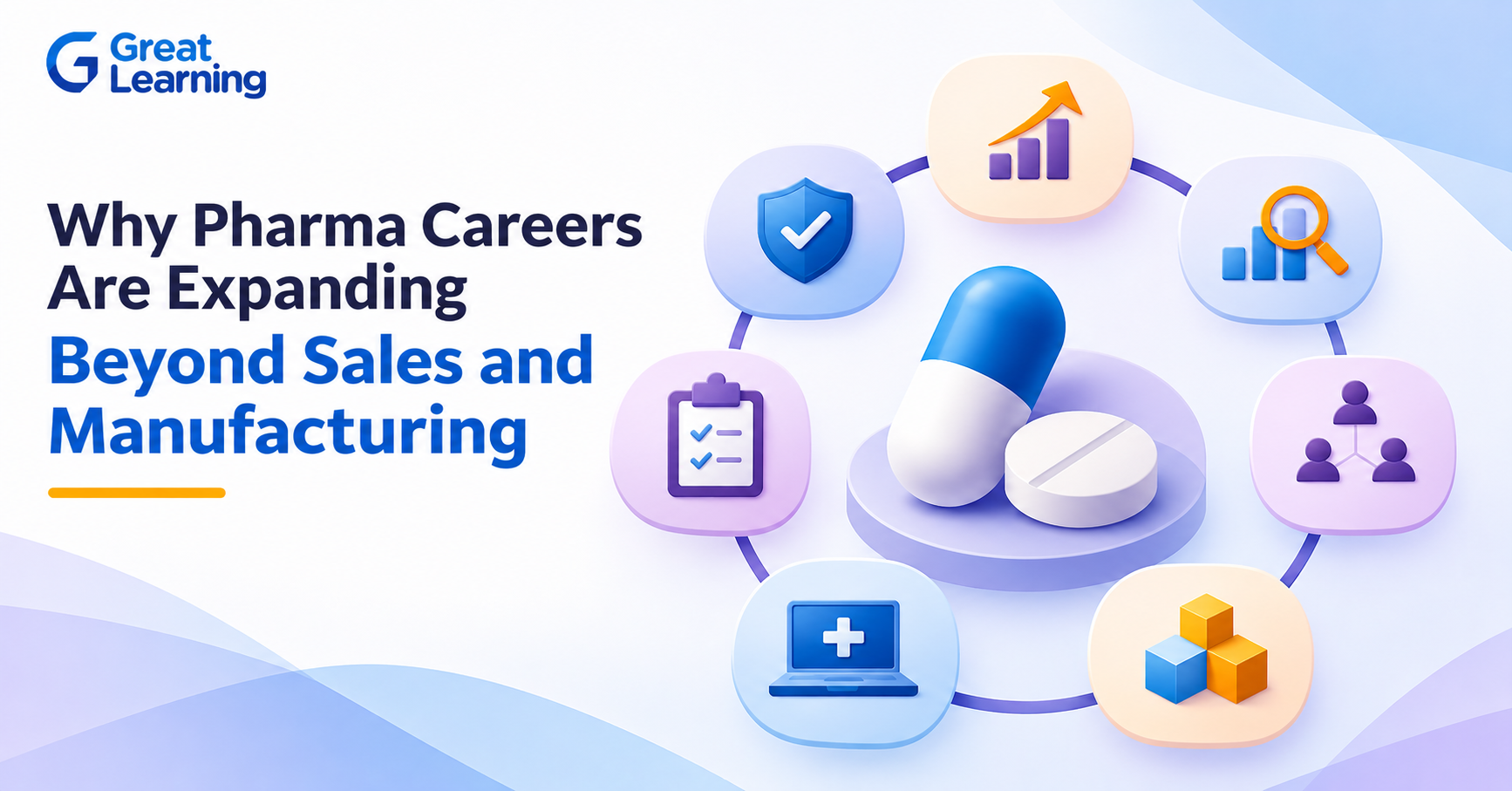
This is why the pharmaceutical industry needs more than researchers, production specialists, and medical representatives. As pharmaceutical businesses become more complex, opportunities are emerging in business strategy, analytics, project management, technology, and operations.
What's changing in India's pharmaceutical industry?
India's pharmaceutical industry is expanding its global footprint while moving towards more specialized products and services.
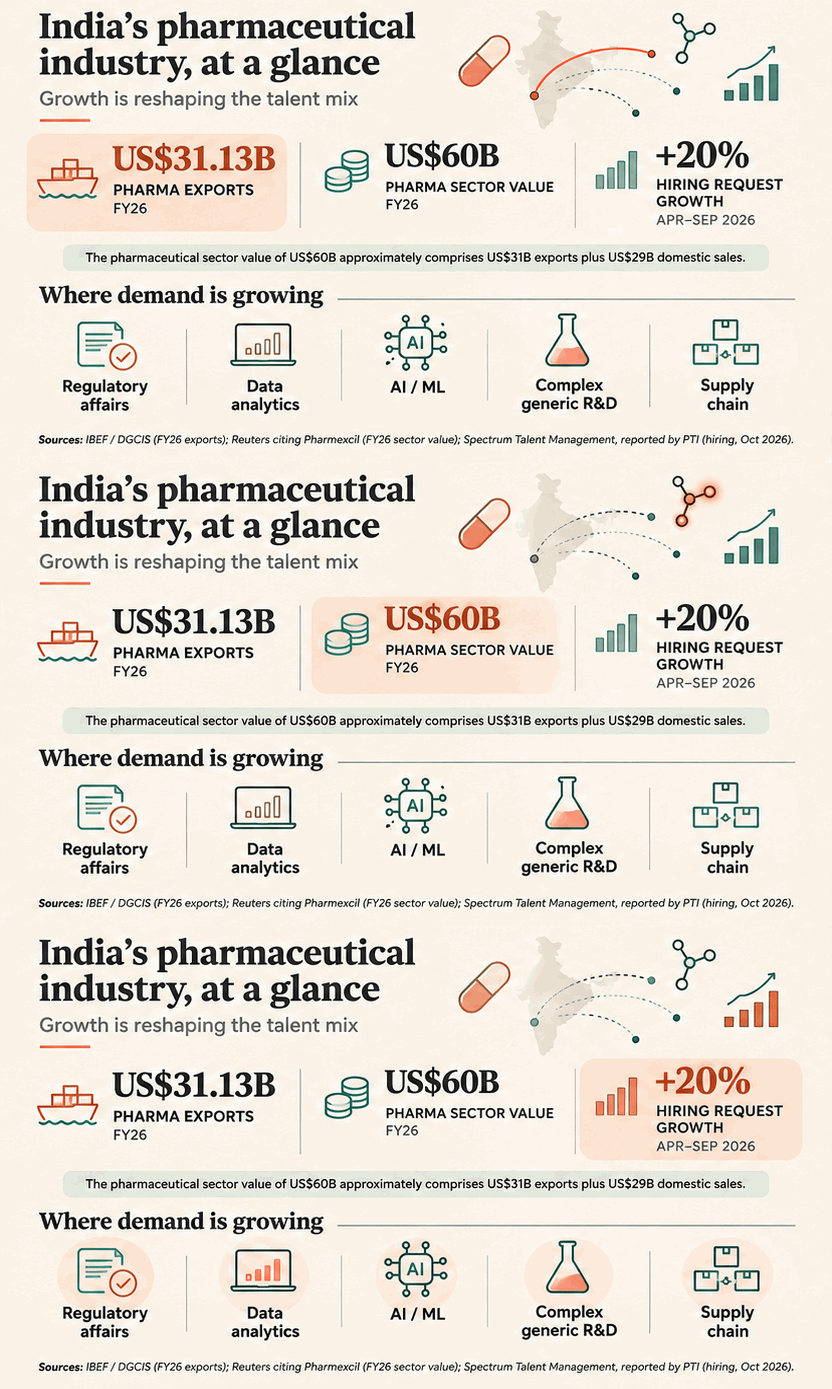
- Exports: India's pharmaceutical exports reached US$31.13 billion in FY26, compared with US$30.47 billion in FY25. In H1 FY27, exports grew 4.9% year on year to US$16.14 billion.
- Domestic demand: India's pharmaceutical market is valued at approximately US$60 billion and is projected to reach US$130 billion by 2030.
- Specialized hiring: Pharmaceutical and life sciences hiring requests increased 20% between April and September 2026, with demand spanning regulatory affairs, data analytics, AI/ML, complex generic R&D, and supply chain management.
Companies increasingly need professionals who can improve business processes, manage specialized functions, and work across teams.
Where are the new pharmaceutical career opportunities?
A medicine's journey from development to commercialization involves several business functions. Each creates opportunities beyond conventional pharma roles.
| Business function | Examples of roles | What these professionals do |
| Commercial strategy | Pharma Brand Manager, Business Development Manager | Product positioning, launch planning, portfolio expansion, and strategic partnerships. |
| Pricing and market access | Pricing Analyst, Market Access Manager, HEOR Analyst | Drug pricing, reimbursement, treatment economics, and patient access strategies. |
| Clinical research and project management | Clinical Project Manager, Clinical Operations Manager | Clinical trial execution, site coordination, research timelines, and budgets. |
| Regulatory affairs and drug safety | Regulatory Affairs Specialist, Pharmacovigilance Associate | Regulatory submissions, compliance, adverse-event reporting, and post-market drug safety. |
| Supply chain and operations | Supply Chain Analyst, Procurement Manager | API sourcing, supplier management, inventory planning, manufacturing coordination, and distribution. |
| Digital and business analytics | Pharma Business Analyst, Digital Transformation Manager | Business intelligence, data analysis, process automation, and technology implementation. |
These functions have different entry requirements. Regulatory affairs, pharmacovigilance, and clinical research often require relevant scientific or pharmacy qualifications. Commercial strategy, business development, analytics, and operations may also offer opportunities to management, engineering, and technology graduates.
What skills help professionals move into these roles?
Beyond pharmaceutical domain knowledge, employers increasingly value:
- Business skills: Financial analysis, market research, strategic planning, and commercial decision-making.
- Digital skills: Data analytics, AI fundamentals, automation, and business intelligence.
- Operational knowledge: Supply chain management, project coordination, quality systems, and regulatory awareness.
- Professional capabilities: Stakeholder management, communication, and cross-functional collaboration.
For example, a supply chain analyst needs to understand more than inventory data. Knowledge of API sourcing, manufacturing lead times, and product shelf life helps translate that data into practical decisions.
How can professionals prepare for emerging pharma careers?
The right preparation depends on the role. Life sciences graduates can build on their technical knowledge with business analytics, regulatory expertise, or project management. Professionals from management and technology backgrounds can explore commercial strategy, business development, and digital operations.
For professionals interested in pharmaceutical business management, the Online MBA in Pharmaceutical Management from SRM Institute of Science and Technology covers areas such as pharmaceutical regulations, supply chain management, digital health, and pharmaceutical business strategy. The curriculum combines management concepts with industry case studies, business simulations, weekend mentorship sessions, and an industry-focused end-term project.
SRMIST Online MBA in Pharmaceutical Management
Advance your career with SRMIST's UGC-entitled Online MBA in Pharmaceutical Management. Master pharmaceutical regulations, digital health, and supply chain management to prepare for leadership roles across pharma, healthcare, and life sciences.
The shift in pharmaceutical careers is not about replacing traditional roles. It is about recognizing that developing a medicine is only one part of running a pharmaceutical business. The opportunities increasingly lie in managing everything that makes that medicine commercially viable, accessible, and safe.